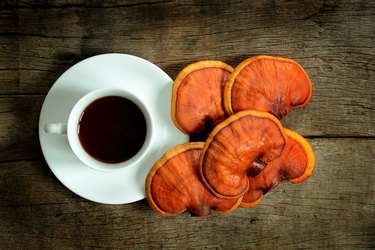
Reishi mushroom (Ganoderma lucidum) is a staple of traditional Eastern medicine. You can tell that this mushroom is believed to be a powerful remedy by its name in Chinese, ling zhi, which translates to "herb of spiritual potency," according to PeaceHealth.
They're included in supplements, extracts, tea blends and even in coffee products. But you'll want to talk to your doctor before taking any reishi mushroom — especially if you're on medications.
Video of the Day
Video of the Day
The Benefits of Reishi Mushrooms
1. It's Linked to Better Immunity
Animal and lab studies suggest that complex sugars found in these mushrooms called beta-glucans may improve immune response, per Memorial Sloan Kettering Cancer Center (MSKCC), including one small study of patients with late-stage cancer. More research is needed.
The reishi mushroom contains antioxidant properties and is linked to improved immune response.
2. It's Gut-Healthy
Edible mushrooms have medicinal properties.
These types of mushrooms can account for better prebiotics to stimulate the gut microbiota, according to a September 2017 study in the International Journal of Molecular Sciences. Prebiotics help support helpful bacteria and other organisms in the gut, leading to increased gut health.
The study explained that mushrooms contain various active polysaccharides and can act as immune-supporting agents to activate healthy gut microbiota. These types of mushrooms may play a significant role in regulating gut microbiota, which can improve gut health.
3. It Might Be Helpful for Cancer Therapy
An April 2015 study in Cochrane Database System Review studied reishi and other mushrooms as alternative medicine and complementary therapy for people with cancer to manage the symptoms and cope with the side effects of radiation and chemotherapy.
The study suggested promising results of these extracts as an immune system support supplement in cancer treatment that potentially had anti-tumor effects.
This was only one study though — MSKCC recommends avoiding reishi if you have cancer and are treating it.
4. It's Linked to Lower Blood Pressure
Taking reishi may help lower blood pressure, according to PeaceHealth. A clinical trial found taking 55 milligrams of reishi three times a day for four weeks resulted in lower BP.
Reishi Mushroom Tea Benefits
While reishi is linked to better immunity, gut health, cancer therapy and lower blood pressure, it's unclear how these findings would translate to reishi mushroom tea.
More research is needed to fully understand the purported benefits of reishi tea.
Side Effects of Reishi Mushrooms
Taking too much reishi mushroom may cause adverse effects such as the following, per MSKCC:
- upset stomach
- skin rashes
- nausea
Reishi mushroom's side effects may include nausea and insomnia in some people with cancer. In rare cases, liver toxicity was a reported side effect.
Chronic diarrhea in a man with non-Hodgkin's lymphoma following long-term use of a powdered reishi mushroom extract also occurred.
People Who Should Avoid Reishi
According to MSKCC, the following groups of people should avoid reishi or talk to their doctors before taking it.
- Those on blood thinners: Do not take reishi if you are currently taking blood thinners including warfarin, as it may increase bleeding.
- Those on immunosuppressants: Reishi can enhance immune response and might make your meds less effective.
- Those undergoing chemotherapy: It's theorized that reishi might make chemotherapy drugs less effective.
- Those on substrate drugs: If you are taking cytochrome P450 2E1, 1A2, and 3A substrate drugs, do not take reishi as lab studies suggest compounds in reishi may affect drug concentrations.
- Pregnant people: Talk to your doc before taking any reishi mushroom supplements.
Related Reading
- International Journal of Molecular Sciences: "A Critical Review on Health Promoting Benefits of Edible Mushrooms through Gut Microbiota"
- Memorial Sloan Kettering Cancer Care: "Reishi Mushroom"
- Cochrane Database System Review: "Reishi Mushroom for Cancer Treatment"
- International Journal of Mushrooms: "Hepatoprotective Effects of Aqueous Extract From Lingzhi or Reishi Medicinal Mushroom Ganoderma lucidum (higher basidiomycetes) on α-amanitin-induced Liver Injury in Mice"
Was this article helpful?
150 Characters Max
0/150
Thank you for sharing!
Thank you for your feedback!