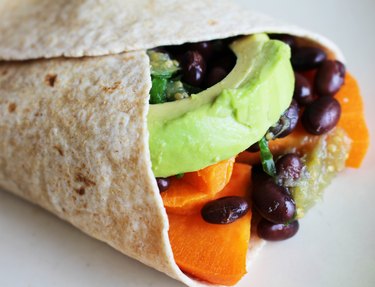
Eating more ice cream, milkshakes and cookies sure sounds like a good way to put on a few pounds, but they aren't the best choices. These foods may be high in sugar, but they're not the healthiest carbs to gain weight.
Nutritionally, a diet to gain weight isn't all that different from a diet to lose weight — but you're allowed to eat more when you're trying to gain weight.
Video of the Day
Video of the Day
Upping your intake of carbs can help, but it's important to eat a balanced diet which also includes protein and healthy fats. Consult your doctor or dietitian for help in finding a diet that fits your specific needs.
Read more: List of Good Carbohydrates to Eat
Healthy Carbs to Gain Weight
Most of the calories in your diet should come from carbs. According to the National Academies of Sciences, this should be from 45 percent to as much as 65 percent of your calories.
Carbs are the body's primary source of energy, and you need more energy in the form of calories when you're trying to gain weight.
Eating 500 calories per day more than you usually do may help you gain 1 pound a week, according to the University of Colorado. It doesn't matter if those extra calories come from carbs, protein or fat, but it does matter if they come from healthy foods.
Add Healthy High-Calorie Carbs
A healthy high-calorie carbohydrate food is not only calorie dense, but nutrient dense — packed with vitamins and minerals. Grains are good, high-calorie choices for your high-carb, weight-gain diet.
According to the USDA, a cup of cooked quinoa has 222 calories, while a cup of cooked brown rice has 238 calories. Barley, amaranth and buckwheat are also good choices for adding healthy variety to your dishes.
Dried fruits, such as apricots, raisins, figs and dates, are also nutrient-dense and rich in calories. A 1/2-cup serving of raisins has 217 calories, and the same serving of dates has 208 calories.
Adding starchy vegetables to your plate can also boost your calorie and carb intake. A medium baked russet potato has 164 calories, while a cup of corn cut from the cob has 120 calories.
Beans, including garbanzo beans, black beans and kidney beans, are a good source of protein and carbs, and can help add calories to salad, soup or grain dishes. A 1-cup serving of canned kidney beans has 215 calories.
Focus on Balanced Nutrition
Focusing on carbs can help you add the calories you need to gain weight, but don't forget the other important nutrients in your diet — protein and healthy fats. Protein is important for building muscle, especially if you're working out to gain muscle weight. Healthy fats help your body produce important hormones.
Healthy high-cal sources of protein include fatty fish such as salmon and tuna, eggs, milk, yogurt and cheese. Fat is a concentrated source of calories, which makes it beneficial for weight gain. Olive oil, canola oil, nuts, seeds and avocados are healthy fats — low in saturated fats — to include in your weight-gain diet.
- National Academies of Sciences: "Macronutrients"
- University of Colorado: "Eating Strategies to Gain Weight"
- USDA FoodData Central: "Raisins"
- USDA FoodData Central: "Quinoa, Cooked, Fat Not Added in Cooking"
- USDA FoodData Central: "Rice, Brown, Cooked, Fat Not Added in Cooking"
- USDA FoodData Central: "Dates"
- USDA FoodData Central: "Potatoes, Russet, Flesh and Skin, Baked"
- USDA FoodData Central: "Corn"
- USDA FoodData Central: "Beans, Kidney, All Types, Mature Seeds, Canned"