What does fact checked mean?
At Healthfully, we strive to deliver objective content that is accurate and up-to-date. Our team periodically reviews articles in order to ensure content quality. The sources cited below consist of evidence from peer-reviewed journals, prominent medical organizations, academic associations, and government data.
The information contained on this site is for informational purposes only, and should not be used as a substitute for the advice of a professional health care provider. Please check with the appropriate physician regarding health questions and concerns. Although we strive to deliver accurate and up-to-date information, no guarantee to that effect is made.
How to Use Turmeric for Staph Infections
Staph infections are caused by the bacteria staphylococcus, a germ that is found on the skin of most people, healthy or ill 1. Most staph infections amount to relatively mild skin infections, but in some cases, infection can be severe and will require a doctor's visit 1. Turmeric is an effective herbal treatment for mild cases of staph. The orange-colored herb widely used in Indian cooking has been celebrated for centuries in ayurvedic healing as an antiseptic and anti-inflammatory agent. Although many health food stores sell turmeric capsules, the powdered form sold as a spice works just as well.
If you are experiencing serious medical symptoms, seek emergency treatment immediately.
Mix 1 tsp. turmeric powder in 4 to 6 oz. of warm water and consume with a meal or on an empty stomach. You can also mix it with the same amount of milk or a serving of yogurt. The active ingredient in turmeric, called curcumin, works internally to fight the bacteria that causes staph infections 1.
What Is the Difference Between Cellulitis & Mrsa?
Learn More
Repeat three times a day for 7 to 10 days or until your staph infection subsides. If your condition shows no signs of improvement after seven days, make an appointment to see your doctor.
Drink plenty of water throughout the day, as turmeric might cause dehydration.
Tips
You may use turmeric in powder or capsule form on a daily basis to prevent recurrent staph infections, but always check with your doctor first.
Warnings
Individuals with congestive heart failure, gallstones, obstructive jaundice, acute bilious colic or toxic liver disorders should not use turmeric.
Speak to your physician before using turmeric if you are pregnant or nursing, trying to become pregnant, have a history of infertility problems, have a blood-clotting disorder, are taking any type of medication or have any health problems.
Related Articles

What Is the Difference Between Cellulitis & Mrsa?
Learn More
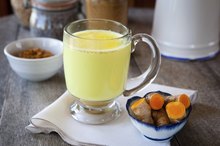
How to Use Turmeric to Reduce Inflammation and Pain
Learn More
What Is the Difference Between Cellulitis & Mrsa?
Learn More

What Happens to Sugar Levels in the Blood While Fasting?
Learn More
How to Get Rid of a Bruise From Cellulitis
Learn More
How to Get Rid of Oral Thrush With Natural Herbs
Learn More

How to Care for Sunburned Skin
Learn More

How to Lose 3-9 Pounds With a One Day Liver Detox
Learn More
Ginger for Chest Congestion
Learn More
Turmeric for Bronchitis
Learn More
References
- MayoClinic.com: Staph Infections
- Earth Clinic: Cure Boils, Staph Infections and MRSA
- MRSAstaphinfection.com: Natural Remedies For Staph
- King JM, Kulhankova K, Stach CS, Vu BG, Salgado-pabón W. Phenotypes and Virulence among Staphylococcus aureus. USA100, USA200, USA300, USA400, and USA600 Clonal Lineages. mSphere. 2016;1(3). doi:10.1128/CMR.00134-14
- Cleveland Clinic. (September 2019). Staph Infection (Staphylococcus Infection)
- Tong SY, Davis JS, Eichenberger E, Holland TL, Fowler VG Jr. Staphylococcus aureus infections: epidemiology, pathophysiology, clinical manifestations, and management. Clin Microbiol Rev. 2015 Jul;28(3):603-61. doi:10.1128/CMR.00134-14
- Sukumaran V, Senanayake S. Bacterial skin and soft tissue infections. Aust Prescr. 2016;39(5):159-163. doi:10.18773/austprescr.2016.058
- Bush L. (Modified June 2019). Merck Manual Consumer Version. Staphylococcus aureus Infections. (Staph Infections)
- De oliveira TH, Amorin AT, Rezende IS, et al. Sepsis induced by Staphylococcus aureus: participation of biomarkers in a murine model. Med Sci Monit. 2015;21:345-55. doi:10.12659/MSM.892528
- Harris A (Updated January 2019). Patient education: Methicillin-resistant Staphylococcus aureus (MRSA) (Beyond the Basics). Lowy FD, ed. UpToDate. Waltham, MA: UpToDate.
- Centers for Disease Control and Prevention. Invasive Methicillin-Resistant Staphylococcus aureus Infections Among Persons Who Inject Drugs. Six Sites, 2005–2016.
- Hassanzadeh P, Hassanzadeh Y, Mardaneh J, Rezai E, Motamedifar M. Isolation of Methicillin-Resistant Staphylococcus aureus (MRSA) from HIV Patients Referring to HIV Referral Center, Shiraz, Iran, 2011-2012. Iran J Med Sci. 2015;40(6):526-30.
- Chu C, Wong MY, Tseng YH, et al. Vascular access infection by Staphylococcus aureus from removed dialysis accesses. Microbiologyopen. 2019;8(8):e00800. doi:10.1002/mbo3.800
- Tong SY, Davis JS, Eichenberger E, Holland TL, Fowler VG Jr. Staphylococcus aureus infections: epidemiology, pathophysiology, clinical manifestations, and management. Clin Microbiol Rev. 2015 Jul;28(3):603-61. doi:10.1128/CMR.00134-14
- Romero-gómez MP, Cendejas-bueno E, García rodriguez J, Mingorance J. Impact of rapid diagnosis of Staphylococcus aureus bacteremia from positive blood cultures on patient management. Eur J Clin Microbiol Infect Dis. 2017;36(12):2469-2473. doi:10.1007/s10096-017-3086-5
- Missiakas DM, Schneewind O. Growth and laboratory maintenance of Staphylococcus aureus. Curr Protoc Microbiol. 2013;Chapter 9:Unit 9C.1. doi: 10.1002/9780471729259.mc09c01s28
- Kobayashi SD, Malachowa N, Deleo FR. Pathogenesis of Staphylococcus aureus abscesses. Am J Pathol. 2015;185(6):1518-27. doi:10.1016/j.ajpath.2014.11.030
- Centers for Disease Control and Prevention. (2019). Deadly Staph Infections Still Threaten the U.S.
- Centers for Disease Control and Prevention. (2011). Staphylococcus aureus in Healthcare Settings.
Tips
- You may use turmeric in powder or capsule form on a daily basis to prevent recurrent staph infections, but always check with your doctor first.
Warnings
- Individuals with congestive heart failure, gallstones, obstructive jaundice, acute bilious colic or toxic liver disorders should not use turmeric.
- Speak to your physician before using turmeric if you are pregnant or nursing, trying to become pregnant, have a history of infertility problems, have a blood-clotting disorder, are taking any type of medication or have any health problems.
Writer Bio
Jody Braverman is a health and fitness professional and writer in Seattle. She has been a personal trainer and yoga instructor for almost a decade and is passionate about movement and helping people lead active, healthy lives.