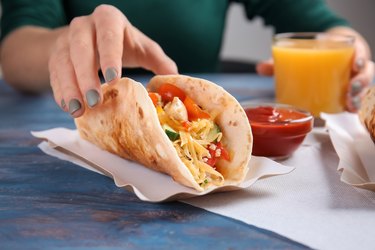
Hemorrhoids, also called piles, are swollen veins in the lower rectum. Some types bleed, while others cause pain or itching, notes the Mayo Clinic. None of this is pleasant, and you'd like to avoid symptoms. So, are spicy foods a no-no? While they won't cause hemorrhoids, they may make them worse.
Causes of Hemorrhoids
Video of the Day
There are many potential causes of hemorrhoids, from chronic constipation to straining during bowel movements. Even lifestyle factors, such as eating processed foods or spending too much time sitting on the toilet, can contribute, according to a September 2019 article in the Cleveland Clinic Journal of Medicine.
Video of the Day
While spicy foods don't cause hemorrhoids, they can aggravate them, says Will Bulsiewicz, MD, a gastroenterologist in Mount Pleasant, South Carolina, and author of "Fiber Fueled."
Jason Rubinov, MD, medical director at the Gastroenterology Center of New York and a clinical instructor of medicine at the Icahn School of Medicine at Mount Sinai, concurs. "Spicy foods are a known stimulant of the digestive tract and have been frequently associated with diarrhea," he says. "By causing diarrhea, they can pose as a potential irritant in a patient with symptomatic hemorrhoids."
But the main cause of hemorrhoids is a change in bowel habits, according to Dr. Bulsiewicz. "Many people are aware that constipation with straining can bring out the worst in our piles, but even a change towards diarrhea could do the same," he explains. "So whether it's diarrhea or constipation, a change in bowel habits puts our anal barrier at risk."
And since it goes without saying that spicy foods can elicit a change in bowel movements, it stands to reason that overdoing it with the habaneros may lead to hemorrhoid flare-ups.
Another culprit for hemorrhoid issues is a condition called pruritus ani, Dr. Bulsiewicz says. This is when the bottom itches intensely, he explains, often causing people to shift in their chair or even disappear to the bathroom to scratch it. In addition to caffeine, alcohol, citrus and chocolate, pruritus ani can be aggravated by spicy foods, according to Dr. Bulsiewicz.
Preventing Hemorrhoids
Avoiding spicy foods won't prevent hemorrhoids but may help prevent the symptoms. "By avoiding spicy foods, diarrhea may be avoided, and in turn symptoms from hemorrhoids can be reduced," says Dr. Rubinov.
Dr. Bulsiewicz agrees. "But with that said," he explains, "most people who do not have an ongoing hemorrhoidal issue can enjoy their spicy foods, of course in moderation, without living in fear of anal breakdown." On the flip side, he says, if you are chronically experiencing relapsing hemorrhoids, then avoiding spicy foods is unlikely to be enough to prevent future flare-ups.
The better approach, according to Dr. Bulsiewicz, is to have a procedure to fix the hemorrhoids. "Sounds cringeworthy, I know, but the good news is that hemorrhoid treatment has come a long way in recent years," he says. "It literally takes less than a minute and is pain free now to make dramatic improvements to the hemorrhoidal problem."
And since constipation is a major cause of hemorrhoids, any measures you can take to avoid constipation are recommended. "Constipation leads to hard stools, which can cause straining when passing bowel movements," says Dr. Rubinov. "Straining increases the pressure in the veins within the rectum and can aggravate existing hemorrhoids and develop new hemorrhoids."
Both experts cite the crucial role of fiber in your diet. "We know that fiber is absolutely critical to colon health, and the same is true when it comes to our hemorrhoids," Dr. Bulsiewicz says. "In my clinic, all of my hemorrhoid patients use a daily fiber supplement. Of course, I would like them to also get fiber in their diet in the form of fruits, vegetables, whole grains, seeds, nuts and legumes."
Another tip from the experts is to avoid sitting for prolonged periods of time — including on the toilet. "The guy who reads a magazine for 20 minutes on the toilet shouldn't be surprised to have a hemorrhoid issue," says Dr. Bulsiewicz.
Also, while it may sound obvious, when you have the urge to go, do it. "It is important to go as soon as you get the urge to defecate, which will prevent stool from drying out and becoming harder to pass," says Dr. Rubinov.
Read more: Does Coffee Irritate Hemorrhoids?
- Will Bulsiewicz, MD, gastroenterologist, Lowcountry Gastroenterology, Mount Pleasant, South Carolina, and author, Fiber Fueled
- Jason Rubinov, M.D., gastroenterologist, medical director, Gastroenterology Center of New York, and clinical instructor of medicine, Icahn School of Medicine at Mount Sinai
- Mayo Clinic: “Hemorrhoids”
- Cleveland Clinic Journal of Medicine: “Hemorrhoids: A Range of Treatments”
Is this an emergency? If you are experiencing serious medical symptoms, please see the National Library of Medicine’s list of signs you need emergency medical attention or call 911.