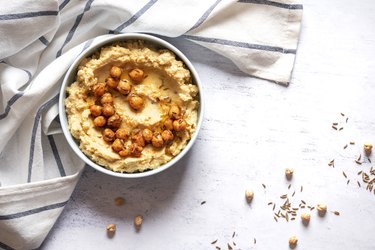
Acid reflux, a painful condition that can cause burning in the chest and behind the breastbone, typically stems from eating certain foods like hummus. People who enjoy eating hummus could potentially still incorporate the dip into their diet by following a low-acid hummus recipe.
Read more: Hummus & Constipation
Video of the Day
Video of the Day
Acid Reflux Symptoms and Characteristics
Acid reflux — or gastroesophageal reflux disease (GERD, as the health condition is often referred) — is a condition characterized by the regurgitation of stomach contents back into the esophagus. This causes pain ranging from slight irritation near the heart region to severe burning in the chest and sometimes neck.
Occasional GERD is normal, especially if you eat something abnormal or more food than you typically consume, but you should talk to your doctor if you experience any of the following, according to About GERD, the International Foundation for Gastrointestinal Disorders:
- Your heartburn occurs more than twice a week.
- You feel like your heartburn is getting worse than when the condition first started.
- You wake up at night in pain.
- You find swallowing difficult.
- Your heartburn causes a disruption in your quality of life, as the pain interferes with your regular activities.
Your doctor will confirm your acid reflux with pH monitoring. This measures levels of acid moving back into the esophagus.
You should also stay aware of other evidence of GERD you might experience. According to a January 2018 study from Gut and Liver, GERD might be present with other symptoms such as belching, nausea, bloating and sudden excess of saliva.
About GERD says you could find symptom relief by using proton pump inhibitors, or PPIs, which reduce acid that builds up in your stomach. You can purchase these over-the-counter treatments under the names omeprazole (Prilosec), lansoprazole (Prevacid 24 HR) and esomeprazole (Nexium).
In addition, Gut and Liver says that you can manage reflux disease through certain lifestyle changes and behaviors, which include the following:
- Losing weight and keeping a body mass index (BMI) in the healthy range.
- Sleeping with your head raised at the end of the bed.
- Turning off the lights when going to bed to maximize your potential for a good night's sleep.
- Avoiding meals within three hours of bedtime to allow time for proper digestion.
- Removing foods such as citrus juices, spicy meals, fatty meals, chocolate, carbonated beverages, alcohol and mint from your diet, which tend to exacerbate GERD-related symptoms.
Hummus Heartburn
According to a December 2016 study from Nutrients, hummus is a dip classically made with chickpeas, a heavy dose of garlic, oil, lemon and tahini, although the ingredients vary. The significant amounts of both oil and tahini paste in hummus means that this food is fairly high in fat.
The USDA states that if you eat a 2-tablespoon serving of store-bought hummus, you can expect to consume 2.5 grams of fat, which is about 4 percent of the daily value.
According to an August 2014 study from BMC Gastroenterology, people with acid reflux should avoid fatty foods. The spices used in classic hummus recipes can also trigger the onset of acid reflux. This makes hummus and GERD quite common.
By creating your own homemade hummus, you can make variations to the traditional recipe and reduce the amount of fat and spice. For example, consider replacing some of the olive oil and tahini paste in hummus for fat-free yogurt, per the National Heart, Lung, and Blood Institute. You could also substitute olive oil for soybean oil because the fatty acid composition isn't as high, according to a May 2018 article from Consumer Reports.
Because you should avoid spicy foods, the spices used in hummus recipes, such as garlic, cumin and red pepper flakes, should be removed. This makes for a much tamer version for your stomach, while keeping the hummus flavorful.
Read more: Dessert Hummus?! Don't Knock It Until You Try It
- Gut and Liver: “Current Trends in the Management of Gastroesophageal Reflux Disease”
- United States Department of Agriculture: “Hummus”
- BMC Gastroenterology: "Dietary Guideline Adherence for Gastroesophageal Reflux disease"
- Consumer Reports: “Is Hummus Good for You?”
- About GERD: “Overview: Symptoms of GERD”
- National Heart, Lung, and Blood Institute: "Food Exchange Lists"
- Nutrients: "The Nutritional Value and Health Benefits of Chickpeas and Hummus"