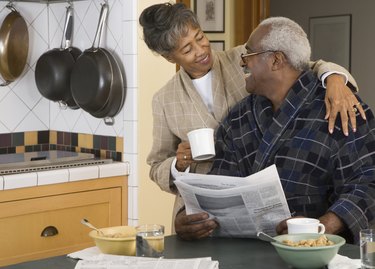
As you age, it's important that your daily meals are low in fat, refined sugar and sodium, and high in essential nutrients such as fiber, vitamins and minerals. Doing so may help you avoid gout, stroke, high blood pressure, heart disease arthritis, cancer, respiratory disorders, obesity and type 2 diabetes. A nutrient-rich diet for a moderately active 70-year-old couple should supply a woman with 1,800 calories per day and a man with 2,200 to 2,400 calories, according to Health.gov.
Try Grains, Dairy and Fruit for Breakfast
Video of the Day
A 70-year-old couple could begin the day with a breakfast of low-sugar, whole-grain cereal mixed with sliced fresh fruit, low- or nonfat milk and a whole-wheat bagel or English muffin topped with reduced-fat margarine or cream cheese. A woman on a 1,800-calorie diet should limit herself to a 1-cup serving of cereal, 1 cup of milk, 1/2 cup of fruit and half of the bagel or muffin, while a man consuming 2,200 calories daily can consume the entire whole-grain item. Women need more calcium as they age. An elderly woman who doesn't eat dairy products should choose a calcium-fortified non-dairy milk to ensure that she's getting enough.
Video of the Day
Work in Plenty of Vegetables at Lunch
A man in his 70s needs plenty of potassium to help reduce his risk of high blood pressure. A produce-rich lunch of mixed dark leafy greens like spinach and romaine topped with cooked navy beans, grilled chicken breast, several cups of chopped raw vegetables and reduced-calorie salad dressing along with a piece of whole fresh fruit can help him reach his daily requirement. He should plan on approximately 1/2-cup of beans, 6 ounces of chicken and at least 2 total cups of vegetables. Registered dietitian Susan Bowerman says that his 70-year-old female partner can consume a similar meal on a 1,800 calorie diet.
Choose Seafood With Dinner
Dinnertime for a 70-year-old couple might consist of grilled salmon, brown rice, steamed vegetables such as asparagus and a salad, says registered dietitian Delia A. Hammock. Seafood like salmon is a good source of vitamin B-12, a nutrient elderly women may lack. While a woman at this age can aim for 3 ounces of the fish, 2/3 cup of rice, 3/4 cup of cooked vegetables and 1 1/2 cups of lettuce leaves served with toppings like a sectioned fresh tangerine, chopped scallions and 1 tablespoon of chopped nuts like almonds, 70-year-old men consuming 2,200 calories daily can have the same meal, but with 4 ounces of fish. Light ice cream can serve as dessert: 1 cup for him and 1/2 cup for her.
Keep Snacks Healthy
Mid-morning, afternoon or evening snacks can help 70-year-olds fulfill all of their nutritional requirements without excess fat or calories if they choose wisely. Yogurt and dried fruit are good choices since they can provide the fiber a man needs along with vitamin D for the woman. Hammock suggests that a woman on an 1,800-calorie diet could have five dried apricot halves and a cup of tea seasoned with lemon as a morning snack followed by 8 ounces of low- or nonfat yogurt and three low-sugar cookies like vanilla wafers in the afternoon. Her partner can have the same, but with the addition of two fig bar cookies in the morning.
- Health.gov: Older Adult Health Facts
- Good Housekeeping: The Meal Plan That Has It All
- Good Housekeeping: The Meal Plan That Has It All for Men
- University of Florida Extension: Healthy Meal Plans
- Discover Good: Sample Menus for a 2,200 Calorie Diet Plan
- Virtual Medical Centre: Nutrition in the Mature Woman
- Academy of Nutrition and Dietetics: Nutrition for Older Men