"Oh!" You've got an ache gnawing away at your upper abdomen, not to mention a sense of nausea and the feeling you're going to vomit. These and other symptoms of gastritis aren't fun to deal with, and they're killing any appetite you have on the erosive gastritis diet.
You know you have to feed yourself, but if you're going to eat, you want to make sure it's something that makes your condition better, not worse. The good news is that an erosive gastritis diet is not very restrictive. There are, however, a few times when you might want to avoid certain vegetables or even adopt a bland diet.
Video of the Day
Video of the Day
What Is Gastritis?
Gastritis, also called dyspepsia, is an inflammation or swelling of the stomach lining. Gastritis can have a number of causes, but the most common ones are heavy alcohol use, stress, certain medications (anti-inflammatory drugs or aspirin) and infection from a type of bacteria called Helicobacter pylori (H. pylori), which lives in the mucus lining of the stomach.
The lining of the stomach is normally coated in a thick layer of mucus that protects it from acidic digestive juices that break down food. When the stomach lining is inflamed, it produces less digestive juices but also less mucus to protect itself.
Erosive gastritis is when the stomach lining wears away and can result in sores called stomach ulcers. This is usually caused by long-term use of medications and will go away when you stop taking the drugs. Erosive gastritis is sometimes seen in conjunction with Crohn's disease and sarcoidosis, according to the National Organization for Rare Disorders.
Eating for Gastritis
Your diet does not cause or prevent either gastritis or stomach ulcers, according to the National Institute of Diabetes and Digestive and Kidney Diseases.
But that doesn't mean food and nutrition can't help, as the University of Iowa Hospitals & Clinics recommends a healthy diet full of fruits, vegetables and whole grains to heal your inflammation.
You should also avoid eating or drinking anything that could irritate your stomach, such as alcohol or food that is spicy, acidic, fried or fatty. Additionally, milk has been lauded as bringing temporary relief but it actually increases stomach acid and makes symptoms worse.
Eating smaller meals more frequently will help ease the effects of stomach acid and help prevent frequent indigestion.
Erosive Gastritis Diet and Fiber
Although spicy, acidic and fatty foods are the ones commonly listed as irritants in the case of gastritis, you might have reservations about loading up on fiber in your diet when your stomach is hurting.
But according to a study published in October 2014 by the Brazilian Archives of Digestive Surgery, fibrous foods are an important part of recovery from ulcers caused by H. pylori bacterium.
Many people with peptic ulcers have diets that are lacking in fiber and antioxidants, and getting at least 20 to 30 grams is essential for proper bowel function and treatment of digestive problems. Fiber acts as a buffer and reduces the concentrations of bile acids in the stomach. It also reduces the time that food spends moving through the digestive tract, so there is less bloating and discomfort.
So now you're wondering about your favorite fiber-rich vegetables and how they fit into a gastritis diet. What about cauliflower and gastritis, sweet potato and gastritis, cabbage and gastritis or even corn and gastritis?
The Brazilian Archives study did lay out certain foods that are safe and certain foods that can be problematic for people with ulcers.
These vegetables you can have in abundance:
- Leafy greens
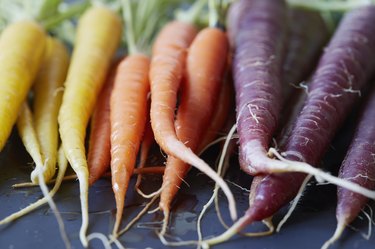
- Carrots
- Beets
- Green beans
- Spinach
- Kale
- Radishes
- Zucchinis
- Leeks
These are vegetables you can eat, but you should eat cautiously. Eat them in small amounts and see how you feel:
- Broccoli
- Cauliflower
- Cabbage
- Cucumber
- Onion
- Red pepper
Here's what you should avoid:
- Spicy peppers, such as black pepper and chilies
Fruits like apples, melons and bananas are safe, but acidic or citrus fruits, such as oranges or pineapples, should be consumed with caution. Lemons can cause irritation and should be avoided.
Soluble fiber is important for increasing the viscosity of food broken down in the intestines, whereas insoluble fiber increases stool bulk, making it easier and faster for patients to pass a stool, and contributing to overall digestive health.
Diets for Other GI Problems
Even if certain foods aren't a problem for gastritis, they might be off the list for other gut problems.
Eating foods that are hard to process, such as those that are high in fiber, is a cause of indigestion, which could be mistaken for gastritis because they have many of the same symptoms, according to the American Association of Family Physicians.
The AARP notes that many gastrointestinal problems have overlapping symptoms, so unless your gastritis is diagnosed, it could be something else. Some conditions, such as irritable bowel syndrome (IBS), require tracking the diet to see which foods trigger a reaction.
Gassy foods like beans or cruciferous vegetables (cabbage, cauliflower, broccoli) and fructose in root vegetables like sweet potatoes could bring on an attack; however, if constipation is a problem associated with your gastrointestinal distress, fiber will be helpful in relieving your symptoms.
Another condition commonly associated with gastritis, one that is even attributed to causing it, is Crohn's disease, which also involves inflammation of the digestive tract.
While gastritis is caused by inflammation of the stomach, Crohn's could be caused by inflammation primarily in the intestines and bowels. Dairy products and high-fiber vegetables could be problem foods for people with Crohn's disease.
When to Try Bland Diets
If you have to undergo stomach or intestinal surgery, your doctor might recommend you go on a bland diet. This eating pattern will consist of foods that are soft, low in fiber and not spicy. Many gassy vegetables (broccoli, cabbage, cauliflower, cucumber, green peppers and corn) are prohibited on this diet.
Bland diets also encourage eating smaller meals more frequently, and chewing slowly. A doctor will be able to guide you on how to plan a bland diet in a healthy way, and how to go adding foods back in once you have recovered.
Read more: Pickles & Gastritis
Vegetables and fiber are important parts of any balanced diet, which is necessary for avoiding and recovering from certain medical conditions. Even though some vegetables can cause gas or discomfort, you should talk to your doctor before eliminating them from your diet, as gastrointestinal conditions have many overlapping symptoms, and you will need professional insight to help you determine which one you have.
- National Institute of Diabetes and Digestive and Kidney Diseases: "Gastritis"
- Cleveland Clinic: "Gastritis"
- National Institute of Diabetes and Digestive and Kidney Diseases: "Peptic Ulcers (Stomach Ulcers)"
- NIH News in Health: "Gut Feelings About Gastritis"
- National Organization for Rare Disorders: "Gastritis, Chronic, Erosive"
- University of Iowa Hospitals & Clinics: "Gastritis"
- Mayo Clinic: "Gastritis"
- Brazilian Archive of Digestive Surgery: "Nutritional Care in Peptic Ulcer"
- American Academy of Family Physicians: "Indigestion (Dyspepsia)"
- AARP: "How to Fix 6 Common Digestive Problems"
Is this an emergency? If you are experiencing serious medical symptoms, please see the National Library of Medicine’s list of signs you need emergency medical attention or call 911.