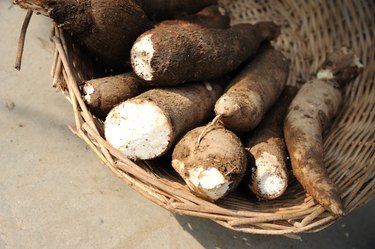
Cassava is widely cultivated as a food crop in tropical and subtropical areas of Africa, Asia and Latin America. The starchy roots of this plant are used to make tapioca and many other foods. If cassava is not properly prepared, it contains toxic compounds that may increase your risk of developing diabetes. However, cassava may be a healthier choice for people with diabetes than some other starches because of its relatively low glycemic index.
Nutrition
Video of the Day
The edible part of the cassava plant is a starchy tuber which has similar nutritional properties to other root crops such as potatoes, taro, and yams. One ounce of cassava contains nearly 11 g of carbohydrates, but less than 1 g each of protein and fat. This portion size provides 10 percent of the Recommended Daily Allowance for vitamin C. It is a poor source of most other vitamins and minerals.
Video of the Day
Diabetes
In an 1994 article for the journal "Acta Horticulturae," A.O. Akanji says that cassava has been suspected of causing diabetes. However, several studies have shown a low incidence of diabetes in Africans who eat cassava regularly. In one study published in the December 2006 issue of "Fundamental & Clinical Pharmacology," none of the 1,381 subjects had diabetes, even though cassava accounted for a full 84 percent of their caloric intake. A second study, published in the October 1992 issue of "Diabetes Care," noted that Tanzanians who ate cassava regularly had a lower incidence of diabetes than those who rarely ate it.
Toxicity
Cassava can be harmful if it not properly prepared to remove a toxic compound called hydrogen cyanide. According to A. O. Akanji, some researchers believe that the cyanide in cassava could cause diabetes, or that it could worsen the health of people who already suffer from diabetes. You can minimize your risk of toxicity by choosing a sweet-tasting variety of cassava. Cyanide levels can also be greatly reduced through soaking and other processing techniques.
Glycemic Index
The glycemic index is a rating system that can help people with diabetes predict how different foods will affect their blood sugar levels. Cassava has a low glycemic index of 46, which means that it is less likely than some foods to cause a rapid rise in blood glucose levels. If you have diabetes, cassava could be a healthier choice than white potatoes, which have a high glycemic index of 85, according to DietAndFitnessToday.
Recommendations
Starches are grain products, including bread, cereal, and pasta, as well as starchy vegetables such as cassava. Because carbohydrates raise blood glucose levels, you should monitor your consumption of starches if you have diabetes. However, you do not need to eliminate starches provided that you eat a balanced diet. If cassava is properly prepared to remove toxic compounds, it is an acceptable alternative to white potatoes and other starches.
- International Society for Horticultural Science: Cassava Intake and Risk of Diabetes in Humans
- American Diabetes Association: Diabetes is not caused by cassava toxicity
- DietAndFitnessToday: Glycemic Index for Cassava, boiled, with salt (Kenya, Africa)
- DietAndFitnessToday: Glycemic Index for russet Burbank potatoes, Mean of 4 studies
- Encyclopedia Britannica: Cassava
- Purdue University: Cassava