Hawthorn Berry Herb as a Diuretic
Diuretics are a class of medicines used to treat kidney disorders, osteoporosis, high blood pressure, congestive heart failure, glaucoma and edema, or water retention. These agents can take the form of prescription medications, over-the-counter dietary supplements, herbs, homeopathic preparations and even natural foods. Whatever the origin, diuretics perform the same function: increase urine output and facilitate the removal of excess sodium and water from the bloodstream. Natural health advocates believe that diuretic herbs, such as hawthorn berry, can help the body eliminate excess fluid. However, check with your physician before using hawthorn berry as a diuretic, especially if you have a chronic condition or take other medications.
Herb Profile
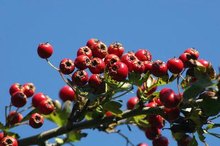
Hawthorn, also known as English hawthorn, is a member of the Crataegus genus, which makes this thorny and shrub-like perennial a cousin to the common rose. Hawthorn produces white flowers in May, which has earned the plant the additional nicknames May tree and May blossom. After flowering, the plant produces berries known as “haws” that resemble tiny apples. The writings of Gerard, Culpeper and other herbalists and physicians of medieval Europe described hawthorn berries as diuretic and recommended them to treat kidney and bladder stones. Today, hawthorn preparations are used to address congestive heart failure and other coronary disorders, such as angina.
Chemical Composition
What Herbs Are Similar to Metoprolol?
Learn More
The “Physicians’ Desk Reference for Herbal Medicines” lists several active flavonoid compounds in the leaves, flowers and fruit of hawthorn, most notably the glycosides hyperoside and rutin, which are present in concentrations of 0.28 and 0.17 percent, respectively. The University of Maryland Medical Center says that the plant contains oligomeric procyandins, which are potent antioxidants also found in grapes. Since the leaves and flowers are thought to possess more of these flavonoids than the berries, standardized hawthorn preparations are now formulated without the berries. However, the dried leaves, flowers and berries are used to make a traditional and somewhat bitter-tasting diuretic herbal tea.
Pharmacological Effects
The National Center for Complementary and Alternative Medicine says there is evidence that preparations made from hawthorn flowers and leaves effectively counter symptoms of mild heart failure, but notes that study results are conflicting. According to the University of Maryland Medical Center, an extract containing compounds from hawthorn berry, leaf and flower improved blood flow to the heart and exercise endurance in an early study involving people with angina.
Safety Considerations
Herbs That Would Act As a Natural Beta Blocker
Learn More
Hawthorn may increase the effects of heart medications, including digoxin, beta-blockers and calcium channel blockers. Hawthorn berry extract specifically reduces the effectiveness of phenylephrine, a drug commonly found in nasal decongestants. Although this herb is considered safe at therapeutic dosages, you should not self-treat a serious condition like heart disease or high blood pressure without medical supervision.
Related Articles
What Herbs Are Similar to Metoprolol?
Learn More
Herbs That Would Act As a Natural Beta Blocker
Learn More
The Best Dosage of Passionflower for Treating Anxiety
Learn More
Is Hawthorn Berry Safe?
Learn More
Ginseng's Effect on Your Urine Flow
Learn More
Cough Expectorant Home Remedies
Learn More

What Are the Health Benefits and Side Effects of Hawthorn Berry?
Learn More
Herbs for Dissolving a Blood Clot
Learn More
The Side Effects of Magnolia Bark Extract
Learn More
Dosage for Hawthorn Berries
Learn More
References
- National Center for Complementary and Alternative Medicine: Hawthorn
- “Physicians’ Desk Reference for Herbal Medicines”; Thomas Brendler, et al.; 2007
- University of Maryland Medical Center: Hawthorn
Writer Bio
Karyn Maier is a seasoned columnist and feature writer. Since 1992, her work has appeared in Mother Earth News, The Herb Quarterly, Better Nutrition and in many other print and digital publications. She is also the author of five books, and is published in six languages.