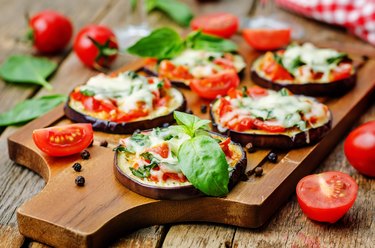
Lectins are naturally occurring proteins are found in most plants — with beans, peanuts, lentils, tomatoes, potatoes, eggplant, wheat and other grains containing higher amounts, according to the Mayo Clinic.
Lectins work to protect plants as they grow. Lectins could be bad for you in really high amounts, but most diets do not contain the levels of lectins that would cause concern, per the Mayo Clinic. Plus, foods containing lectins actually have numerous health benefits — so the fact that they should always be avoided is one big lectins myth.
Video of the Day
Video of the Day
For starters, lectins may help stabilize blood sugar by slowing down digestion and the absorption of carbohydrates, per the Harvard T.H. Chan School of Public Health. Large population studies also show that lectin-rich foods like legumes, nuts and whole grains may help to control weight and cut the risk of heart disease and type 2 diabetes.
Lectins have also been researched in anticancer treatments, according to an August 2013 study in the journal Cell Proliferation, and there's some evidence that lectins may cause cancer cell death. Lectins also show potential as both diagnostic and treatment tools in digestive system cancers, per a July 2017 study in the International Journal of Molecular Sciences.
Still, some people who are at high risk for diseases related to mineral deficiencies (like osteoporosis with calcium deficiency or anemia with iron deficiency) may want to keep an eye on their diet for anti-nutrients like lectins, per the Harvard T.H. Chan School of Public Health.
Lectins are considered anti-nutrients because they can interfere with the absorption of calcium, iron, phosphorus and zinc. But, cutting out lectins altogether is not recommended, as they also have health benefits.
Is There a Daily Limit for Lectins?
Because it’s not widely believed that lectins can cause harm when eaten in normal amounts, there is no established Daily Value (DV) for lectins. It’s rare to eat foods with a high amount of active lectins, according to the Harvard T.H. Chan School of Public Health.
Find the top foods high in lectins below.
1. Beans
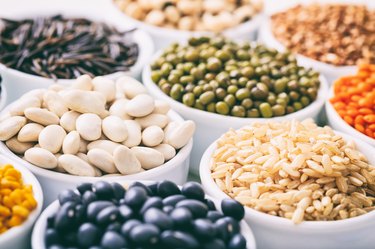
Although beans are considered a food high in lectins, you probably won't eat them in a way that will cause harm.
Dried beans, such as kidney beans, are typically soaked and then boiled for hours. This inactivates most lectins, which are largely found on the exterior of a food and are water-soluble, meaning they're removed when they come in contact with water, per the Harvard T.H. Chan School of Public Health. Your body also produces enzymes during digestion that break down some lectins.
Raw kidney beans contain 20,000 to 70,000 hemagglutinating units (hau), a measure of lectins, while fully cooked beans contain only 200 to 400 hau, per the FDA. Try them in these deliciously easy recipes using canned beans.
2. Peanuts
Although peanuts are legumes that are high in lectins, they also provide a wide range of other health benefits. One ounce of dry-roasted peanuts contains 7 grams of protein and important minerals like magnesium and zinc.
Dry-roasted or oil-roasted peanuts contain 0.4 to 144.7 micrograms of lectins per gram — in other words, a very small amount.
3. Lentils
Lentils are sometimes considered one of the many foods high in lectins to avoid, but you really shouldn't cut them out of your diet.
Several studies have shown that eating lentils is connected to a lower risk of diseases such as diabetes, obesity, cancers and heart diseases, due to the bioactive compounds in lentils, per a November 2017 review in the International Journal of Molecular Sciences.
Try lentils in these comforting lentil recipes with more protein than chicken.
4. Tomatoes
Tomatoes are high in lectins and part of the nightshade family, along with eggplant, potatoes and other healthy foods. Some diets shun tomatoes because of their lectin content, but the fruit provides a whole host of healthy nutrients: Just one tomato offers nearly 20 percent of your DV of vitamin C, plus vitamin A and B vitamins.
What's more, tomatoes contain lycopene, a natural compound that research has shown may be linked to a lower risk of certain cancers and stroke, per Harvard Health Publishing. Try them in these tomato recipes that aren't salads.
5. Potatoes

Although potatoes are typically shunned on lectin-free diets, they provide a number of health benefits. Just one baked potato contains 3.6 grams of fiber (13 percent of the daily value), along with 24 percent of the DV for vitamin C and 20 percent of the DV for potassium.
Plus, lectins in general can act as antioxidants that protect cells from free radicals, per the Harvard T.H. Chan School of Public Health. Try them in these creative potato recipes under 300 calories.
6. Eggplant
Another member of the nightshade family, lectin-rich eggplant is a healthy vegetable that's filled with beneficial compounds. Not only does eggplant provide volume that fills you up, but it also offers protective antioxidants like phenols and flavonoids (including anthocyanins), per the Cleveland Clinic.
Anthocyanins are responsible for eggplant's purple hue and are linked to lower rates of chronic diseases like heart disease, cancer and diabetes, per an August 2017 study in the journal Food & Nutrition Research. Try eggplant in these delicious recipes that aren't eggplant parm.
7. Wheat
Wheat is high in lectins, but you likely don't need to avoid it for that reason alone. In fact, people without celiac disease who avoid gluten (a protein in wheat) might have an increased risk of heart disease because they don't eat enough whole grains, per a May 2017 study in BMJ.
If you're experiencing digestive distress from wheat products, there can be a variety of causes: Although lectin toxicity or sensitivity is one possible explanation, you may also have a food allergy or intolerance — or another gastrointestinal issue. Work with your doctor or a registered dietitian to determine the root cause before deciding to eliminate lectin from your diet (or any food group or ingredient, for that matter).
Raw wheat germ has around 300 micrograms of wheat lectins per gram, but those are nearly completely removed by cooking. Cooked pasta, for instance, has less than 0.4 micrograms per gram.
8. Sunflower Seeds

Lectins have been founds in the seeds of about 500 plant species, including oilseeds such as sunflower seeds, according to Tufts University.
Although seeds are one of the several foods high in lectins, they provide several perks. They contain iron (which helps make proteins that transport oxygen-rich blood throughout your body), calcium (important for bone health), magnesium (helps with hydration, bowel and brain health) and phosphorus (important for repairing cells), according to the Cleveland Clinic.
Americans don't tend to get enough magnesium — but lectin-rich seeds are one good way to squeeze it into your diet.
- Mayo Clinic: "Mayo Clinic Q and A: What are dietary lectins and should you avoid eating them?"
- Harvard T.H. Chan School of Public Health: "Are anti-nutrients harmful?"
- Harvard T.H. Chan School of Public Health: "Lectins"
- U.S. Food and Drug Administration: "Bad Bug Book"
- MyFoodData: "Dry Roasted Peanuts"
- The Peanut Institute: "Lectins in Peanuts and Other Foods"
- International Journal of Molecular Sciences: "Polyphenol-Rich Lentils and Their Health Promoting Effects"
- Cell Proliferation: "Could plant lectins become promising anti‐tumour drugs for causing autophagic cell death?"
- International Journal of Molecular Sciences: "Plant Lectins as Medical Tools against Digestive System Cancers"
- MyFoodData: "Tomatoes"
- Harvard Medical School: "Lycopene-rich tomatoes linked to lower stroke risk"
- MyFoodData: "Baked Potatoes"
- Cleveland Clinic: "Recipe: Easy-Bake Eggplant With Marinara"
- Food & Nutrition Research: "Anthocyanidins and anthocyanins: colored pigments as food, pharmaceutical ingredients, and the potential health benefits"
- Circulation: "Fruit and Vegetable Intake and Mortality: Results From 2 Prospective Cohort Studies of US Men and Women and a Meta-Analysis of 26 Cohort Studies"
- United States Department of Agriculture: "2020-2025 Dietary Guidelines for Americans"
- BMJ: "Long term gluten consumption in adults without celiac disease and risk of coronary heart disease: prospective cohort study"
- Nutrients: "Amount of active WGA in wheat-derived products"
- Cleveland Clinic: "The 6 Best Seeds to Eat"
- Mayo Clinic: "Nuts and your heart: Eating nuts for heart health"
- The Journal of the American Medical Association: "Association Between Dietary Factors and Mortality From Heart Disease, Stroke, and Type 2 Diabetes in the United States"
- Archives of Medical Research: "Lectins in fruits having gastrointestinal activity: their participation in the hemagglutinating property of Escherichia coli O157:H7"
- Planta: "Fruit-specific lectins from banana and plantain"