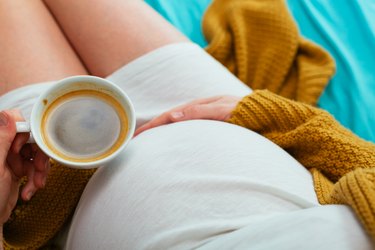
Everyone wants to eat healthy during pregnancy, but sometimes it can seem as if every bite or sip you take is fraught with peril. Luckily, there's good news when it comes to your morning cup of joe or steaming mug of tea.
Nothing you can eat or drink, including these caffeinated beverages, will affect the risk of autism in your baby — and science backs this up.
Video of the Day
Video of the Day
"Studies have failed to show a direct and specific cause-and-effect of consuming caffeine during pregnancy and autism," Jodie Horton, MD, a board-certified ob-gyn in Washington, DC, tells LIVESTRONG.com.
The fact is, autism, which falls under the broader term autism spectrum disorder (ASD), is an extremely intricate health condition with widely varying symptoms and very likely no single cause.
Still, because it's normal to worry about diet and nutrition during conception and pregnancy, here's more about how this misguided link came into being, whether caffeine can be used to treat symptoms of autism and the true causes of autism spectrum disorder in children.
Tip
Caffeine consumption during pregnancy may pose a risk of miscarriage or preterm birth, according to the American College of Obstetricians and Gynecologists, but research suggests that less than 200 milligrams of caffeine per day (that's one 12-ounce cup of coffee) is safe.
Why Is There a Supposed Link Between Caffeine and Autism?
It's not clear how this rumored connection began, but it doesn't help that other similar purported causes of autism have been falsely touted over the years.
For example, even though the lone study that tried to link autism with childhood vaccines was discredited years ago — and subsequent studies on the topic also turned up no evidence to connect the two — some people still insist that the annual shots given to babies can cause autism later in childhood.
It's also well known that maternal nutrition is linked to child development, adds Dr. Horton.
"Along with folate, mercury, omega-3s and iron, caffeine consumption and its proposed link to neurodevelopment and autism has also been an area of interest," she explains.
Caffeine crosses the placenta and the fetal blood-brain barrier, she continues, so "it could theoretically affect the fetus." But because there's no concrete evidence, the link between caffeine and autism doesn't really exist.
"Due to the prevalence of ASD, the urgency to act early and the continued need for research to better understand the causes, many people are looking to connect common exposures like food, vaccines and drinks to make sense of why a child is developing differently than expected. But association does not equal causation," Kristin Sohl, MD, a board-certified pediatrician and expert in the evaluation and treatment of kids with autism, tells LIVESTRONG.com.
Can Caffeine Treat Autism — or Make It Worse?
Just as there are some folks who feel a fetus's diet can affect whether ASD will develop down the road, "there are many who believe that diet plays a role in the treatment of autism," Dr. Horton says.
But while caffeine stimulates the central nervous system and can worsen cases of anxiety and insomnia, there's little to no credible research that points to caffeine as potentially beneficial for someone with autism.
"Caffeine affects everyone differently, including those with autism," Dr. Horton notes. "But if the case of ASD is accompanied by ADHD (attention deficit hyperactivity disorder), reducing or eliminating caffeine as part of an overall restricted diet may improve symptoms."
What Really Causes ASD?
The number of children with autism has risen over the years, though it's not clear whether this is due to more and better screening or the actual emergence of larger case numbers. And, as mentioned before, ASD is a complex condition that likely does not have a singular cause.
There are, however, certain factors that can increase a child's risk of developing autism, including the ones below, per the Mayo Clinic:
- Sex: Sex matters in this case, as people assigned male at birth have ASD at four times the rate of people assigned female at birth.
- Genetics: If one child in the family has ASD, the risk goes up for siblings.
- Other syndromes: Having certain medical conditions such as fragile X syndrome, tuberous sclerosis and Rett syndrome can also up the risk of autism spectrum disorder.
- Extreme prematurity: Infants born very early (before 26 weeks of gestation) are also at risk.
- Older parents: There may be an association between older parents and their babies developing ASD, but more studies are needed to determine whether this link is definitive.
Finally, Dr. Sohl stresses that "it's important to seek guidance from your pediatrician when you have questions about your child's development or about your health during pregnancy."
Was this article helpful?
150 Characters Max
0/150
Thank you for sharing!
Thank you for your feedback!
Is this an emergency? If you are experiencing serious medical symptoms, please see the National Library of Medicine’s list of signs you need emergency medical attention or call 911.