How to Remove Bumps on Tongue
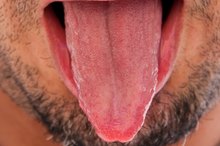
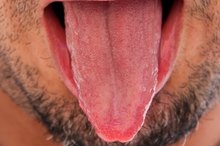
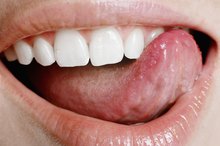
A layer of small bumps known as papillae cover the surface of the tongue. According to the National Institutes of Health's MedlinePlus service, the papillae provide a home for the taste buds, which reside between papillae 125. Numerous conditions may cause changes in the tongue’s appearance, including herpes and oral lichen planus; however, if you notice large, painful bumps on your tongue, you may have developed mouth ulcers, also known as canker sores 4.
If you are experiencing serious medical symptoms, seek emergency treatment immediately.
Practice effective oral hygiene each day. According to Mehmet C. Oz, MD, and Michael F. Roizen, MD, on the Real Age website, brushing your tongue with your toothbrush is an important and simple way you can reduce the severity of the canker sore symptoms.
How to Get Rid of a Cold Sore on the Tongue
Learn More
Gently scrape the tongue using a tongue scraper. According to Oz and Roizen, this helps to remove food particles from the around the canker sores and keep the tongue clean 4.
Soothe the canker sore or sores with topical antihistamine ointment 4. You can rub the ointment directly onto the sore, albeit gently, according to the MedlinePlus.
How to Heal Tongue Sores
Learn More
Avoid eating spicy foods until the canker sore has healed. Also be sure to watch the temperature of foods and drink going into your mouth. Hot tea or coffee, for example, can cause the pain to intensify.
Call your doctor or health care provider if three weeks to a month have passed with no improvement to your canker sore. Also, if you find that you have recurring canker sores, see your physician or health care practitioner right away 4.
Tips
A handy home remedy for canker sores, according to the alternative medicine information website Home Remedies, is to gargle with salt water. You can also prepare a mouthwash at home using three parts water to every one part of hydrogen peroxide.
Warnings
If other symptoms such as fever, chills, muscle aches, fatigue, warmth in the tongue or a spreading inflammation within the mouth accompany the bumps on your tongue, you may have developed cellulitis. This refers to a common skin infection caused by bacteria living on the skin, particularly staphylococcus and streptococcus. See your doctor immediately if any or all of these symptoms apply.
Related Articles

How to Get Rid of a Cold Sore on the Tongue
Learn More
How to Heal Tongue Sores
Learn More
How to Get Stains Off the Tongue
Learn More
How to Get Rid of Swollen Taste Buds
Learn More
How to Get Rid of Tongue Sores
Learn More

How to Eat With a Tongue Ring
Learn More
Foods to Avoid With Tongue Piercings
Learn More

How to Boil your Mouth Guard
Learn More
Causes of Small Bumps on the Tongue
Learn More
The Best Ways to Water Clean Teeth
Learn More
References
- National Institutes of Health: MedlinePlus - Tongue Problems
- National Institutes of Health: MedlinePlus - Mouth Ulcers
- Real Age: Get Healthy Inside, Look Better Outside
- Home Remedies: Canker Sores
- National Institutes of Health: MedlinePlus - Cellulitis
- Edgar, N., Saleh, D., and R. Miller. Recurrent Aphthous Stomatitis: A Review. Journal of Clinical and Aesthetic Dermatology. 2017. 19(3):26-36. PMID: 28360966
- Ziaudeen, S., and R. Ravindran. Assessment of Oxidant-Antioxidant Status and Stress Factor in Recurrent Aphthous Stomatits Patients: Case Control Study. Journal of Clinical and Diagnostic Research. 2017. 11(3):ZC01-ZC04. doi: 10.7860/JCDR/2017/22894.9348
- Weller, Richard P. J. B., Hamish J.A. Hunter, and Margaret W. Mann. Clinical Dermatology. Chichester (West Sussex): John Wiley & Sons Inc., 2015.
- Edgar, N., Saleh, D., and R. Miller. Recurrent Aphthous Stomatitis: A Review. Journal of Clinical and Aesthetic Dermatology. 2017. 19(3):26-36.
Writer Bio
Emma Cale has been writing professionally since 2000. Her work has appeared in “NOW Magazine,” “HOUR Magazine” and the “Globe and Mail.” Cale holds a Bachelor of Arts in English from the University of Windsor and advanced writing certificates from the Canadian Film Centre and the National Theatre School of Canada.