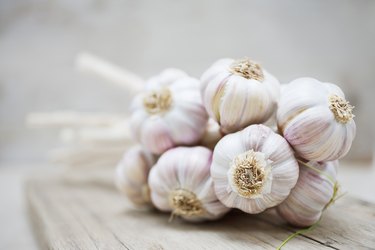
When you think of garlic, stomach pain probably isn't the first thing to come to mind. While garlic can be an excellent way to flavor a dish and even make it healthier, it can also cause abdominal pain and other unwanted symptoms in some people.
Tip
Irritable Bowel Syndrome (IBS), fructan intolerance or garlic intolerance may explain why garlic causes stomach pain.
Video of the Day
Garlic Exacerbates Irritable Bowel Syndrome
If you have noticed that you seem to have a garlic sensitivity, there's a good change IBS may be to blame. Harvard Health Publishing reports that one in 10 people in the United States has IBS. When people with IBS eat certain foods, they can have gastrointestinal symptoms such as:
Video of the Day
- Abdominal cramping
- Bloating
- Gas
- Diarrhea
While each person with IBS has unique trigger foods, many physicians recommend that patients avoid consuming too many Fermentable Oligosaccharides, Disaccharides, Monosaccharides And Polyols (FODMAPs). The list of high-FODMAP foods is lengthy, varied and includes:
- Lactose
- Gluten
- High-fructose foods
- High-fructan foods
- Legumes
Garlic is one of the foods that is high in fructans, which can trigger IBS symptoms. It's important to note that not all patients who follow a low-FODMAP diet see improvement in IBS symptoms. A January 2017 comprehensive review in Gastroenterology and Hepatology found that between 50 and 86 percent of people with IBS lessened their symptoms with this program.
Garlic and Fructan Intolerance
According to Tufts Medical Center, fructans are natural carbohydrates found in high concentrations in foods such as:
- Garlic
- Wheat
- Onions
- Shallots
- Asparagus
- Artichoke
While many people's bodies break fructans down without issue, some people experience abdominal discomfort when they consume foods that are high in fructans. This is known as fructan intolerance. People with this intolerance may associate raw or cooked garlic with stomach pain, but they also have pain with other high-fructan foods. Symptoms of fructans intolerance are similar to those with IBS, and people can have both disorders.
In some cases, people may believe they have non-celiac gluten sensitivity (NCGS) when they actually have fructan intolerance. A February 2018 study in Gastroenterology found that many people with self-reported NCGS actually reacted to fructans rather than gluten. If you believe you have NCGS but seem to also have a garlic sensitivity, fructan intolerance may be the underlying issue.
Garlic Intolerance and Allergy
If IBS and fructan intolerance are not the source of your garlic sensitivity, you may have a garlic intolerance or allergy. People often use the terms "intolerance" and "allergy" interchangeably as they relate to food. After all, both are bodily reactions to specific foods.
However, food allergies and intolerances are different phenomena and cause different types of symptoms. The Mayo Clinic reports that food intolerances are more common and typically less serious than allergies. A garlic intolerance, or intolerance to any food, may cause surprising symptoms such as fatigue and headache.
A food allergy can cause similar symptoms as well as anaphylaxis, which is immediately life-threatening. If you experience severe symptoms from a food, seek immediate medical attention. If a specific food seems to cause painful symptoms, see your doctor as soon as possible to determine if you have a garlic sensitivity or other issue.
- Harvard Health Publishing: "Try a FODMAPs Diet to Manage irritable Bowel Syndrome"
- Gastroenterology and Hepatology: "Controversies and Recent Developments of the Low-FODMAP Diet"
- Tufts Medical Center: "Fructan Intolerance"
- Gastroenterology: "Fructan, Rather Than Gluten, Induces Symptoms in Patients With Self-Reported Non-Celiac Gluten Sensitivity"
- Mayo Clinic: "Food Allergy vs. Food Intolerance: What's the Difference?"