Diet for Throat Cancer Patients
Cancer of the throat can significantly impact your diet and eating habits. Treatment options for throat cancer include surgery, radiation, chemotherapy or all three. The combination of cancer and treatment will most likely affect your appetite and ability to consume certain foods. Maintaining proper nutrition during treatment is essential to prevent weight loss and promote optimal health outcomes.
Common Symptoms
If you have cancer of the throat, you may experience lip or mouth sores, a lump on the mouth or throat, unusual bleeding, swelling, changes in your voice, ear pain, a chronic sore throat, painful swallowing, the feeling of something is caught in your throat, difficulty chewing, fatigue, lack of appetite, vomiting, nausea or a lowered immune system. Depending on the type of treatment you receive and the symptoms you experience, you may need swallowing therapy to help you adjust to the structural changes in your throat.
Increased Needs
Can I Eat Yogurt During Chemotherapy?
Learn More
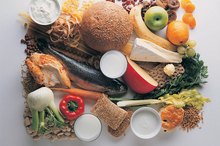
Dietary recommendations during treatment for throat cancer focus on eating foods high in calories, protein and micronutrients. Maintaining adequate nutrition stores and a healthy weight will increase your ability to tolerate the impact of treatment and recover more quickly. Additional protein is necessary for your body to repair tissues and maintain a healthy immune system. To increase your calorie and protein intake, choose lean meats, fish and poultry, low-fat margarine, butter, yogurt and cheese, dried peas and beans, peanut butter and eggs. Increase fiber with fresh fruits and vegetables, oatmeal, whole grains, nuts and seeds. If you are unable to consume adequate energy and protein to maintain an optimal weight, you may need liquid supplements in addition to oral nutrition.
- Dietary recommendations during treatment for throat cancer focus on eating foods high in calories, protein and micronutrients.
Oral Nourishment
Optimal nutrition is necessary to improve your quality of life and the treatment outcomes of throat cancer. Ideally, oral nutrition is the preferred method of feeding and should be used whenever possible. Specific strategies can increase your acceptability of oral nutrition. For instance, if you have throat lesions, soft or liquefied foods served at room temperature are gentler and less painful. If you have dry mouth, consume high-moisture-content foods. Altered taste acuity can cause anorexia, so you may benefit from the use of extra flavoring and seasoning during food preparations. Appetite stimulants improve the acceptability and tolerance of food, and can also help you gain weight.
- Optimal nutrition is necessary to improve your quality of life and the treatment outcomes of throat cancer.
- Altered taste acuity can cause anorexia, so you may benefit from the use of extra flavoring and seasoning during food preparations.
Tube Feeding
Symptoms of Oral Chlamydia
Learn More
You may require alternate feeding methods, such as tube feeding, if you are unable to meet your nutritional needs with oral nourishment, you continue to lose weight or your nutritional stores are severely depleted. If you experience prolonged anorexia, dysphagia or obstructions, you may not be able to get all the nutrition you need from eating whole foods.
In this case, you need to consider more aggressive kinds of nutritional support. Benefits of tube feeding include gut integrity, minimal infections, easy administration, cost and efficient nutrient metabolism and utilization. Tube feeding is especially helpful if you experience difficulty swallowing.
- You may require alternate feeding methods, such as tube feeding, if you are unable to meet your nutritional needs with oral nourishment, you continue to lose weight or your nutritional stores are severely depleted.
Related Articles

Can I Eat Yogurt During Chemotherapy?
Learn More

Symptoms of Oral Chlamydia
Learn More

Foods to Eat After a Tonsillectomy & Adenoidectomy
Learn More

Why High Levels of Potassium in Burn Patients?
Learn More

A Cancer Patient's Weight Gain Diet
Learn More
Non-Hodgkin's Lymphoma Diet
Learn More

Children's Diet After Adenoid Surgery
Learn More

Thickened Liquid Diet
Learn More

How to Gain Weight When Your Jaw Is Wired Shut
Learn More

How to Gain Weight After Chemotherapy
Learn More
References
- Stanford Medicine: Information About Oral Cancer
- National Cancer Institute: Nutrition Therapy; December 9, 2010
- MacMillan Cancer Support; A Healthy Eating Guide; December 1, 2009
- “Clinical Nutrition for Oncology Patients”; Mary Marian, M.S., R.D., CSO and Susan Roberts, M.S., R.D., LD, CNSD; 2010
- “Krause’s Food Nutrition and Diet Therapy”; L. Kathleen Mahan, M.S., R.D., CDE and Sylvia Escott-Stump, M.A., R.D., LDN; 2007
- National Institutes of Health. Cancer - Throat or Larynx. Updated 28 Feb 2011.
- Gleeson M, Herbert A, Richards A. Management of lateral neck masses in adults. BMJ. 2000;320(7248):1521-1524. doi:10.1136/bmj.320.7248.1521
- Memorial Sloan Kettering Cancer Center. Throat Cancer Causes & Risk Factors.
- Freedman ND, Schatzkin A, Leitzmann MF, Hollenbeck AR, Abnet CC. Alcohol and head and neck cancer risk in a prospective study. Br J Cancer. 2007;96(9):1469-74. doi:10.1038/sj.bjc.6603713
- Paul BC, Chen S, Sridharan S, Fang Y, Amin MR, Branski RC. Diagnostic accuracy of history, laryngoscopy, and stroboscopy. Laryngoscope. 2013;123(1):215-9. doi:10.1002/lary.23630
- Memorial Sloan Kettering Cancer Center. Throat Cancer Treatment.
- Yamazaki H, Suzuki G, Nakamura S, et al. Radiotherapy for laryngeal cancer-technical aspects and alternate fractionation. J Radiat Res. 2017;58(4):495-508. doi:10.1093/jrr/rrx023
- American Cancer Society. What Is Cancer?
- National Institutes of Health. Cancer - Throat or Larynx. Updated 28 Feb 2011.
Resources
Writer Bio
Erica Wickham covers health, exercise and lifestyle topics for various websites. She completed an internship in dietetics and earned a Master of Science in dietetics from D’Youville College in Buffalo, N.Y. Wickham now serves as a registered dietitian.