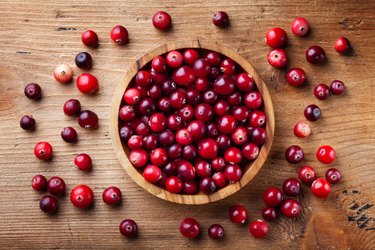
While we often think of cranberries as an ingredient in cranberry sauce or fall and winter baked goods, you can actually eat fresh, raw cranberries. Cranberries have numerous health benefits, including a high concentration of antioxidants.
According to South Dakota State University, 60 percent of all cranberries consumed in the United States are grown in Wisconsin. During the fall, bags of bright red berries appear on store shelves. The inner flesh of the berry is pale and you may even find white cranberries available at times.
Video of the Day
Video of the Day
While most of us are used to cooked or dried cranberries, integrating raw berries or 100 percent cranberry juice into your diet is an ideal way to increase your intake of valuable antioxidants.
Fresh, raw cranberries contain more of their health-boosting properties, but they are quite tart when consumed in that state. You can use raw cranberries to add a tart flavor to fresh relishes and salads, or sweeten them to reduce their natural sour taste.
How to Eat Raw Cranberries
Sweeten them up: Cranberries are too tart for most people to want to eat them out of hand, but you can sweeten them and use them along with other fruits in a fruit salad or toss a handful into a lightly sweetened smoothie.
Chop cranberries and toss with sugar, then allow to macerate briefly if you would prefer a sweeter taste.
Tip
If you prefer to avoid sugar, try sweetening your berries with stevia or an artificial sweetener.
- Try stirring sweetened raw cranberries into yogurt for a healthy breakfast
- Toss a few on top of your morning cereal.
- Try this Cranberry Crumble Oatmeal
- Experiment with cranberry spreads
- Add them to homemade baked goods
- Use them in a trail mix
- Try this Sweet-Tart Cranberry Sauce
- Try making a tasty relish by combining fresh cranberries, apple, orange and sugar. Add pecans, Grand Marnier or maple syrup if desired. Process together in a meat grinder or food processor. Serve with turkey, or even as a spread on biscuits, pancakes or scones.
Related Reading
Why You Should Eat Fresh Cranberries
Fresh, raw cranberries retain all of their phytochemicals and antioxidant properties that provide health benefits. However, according to an article published in November 2013 by Advances in Nutrition, processing cranberries into dried fruit or juice significantly reduces their phytochemical content.
Many have claimed that cranberries may protect against urinary tract infections, but research to support this claim is inconclusive. Cranberries also have antiviral and antibacterial properties. Including raw cranberries in your diet is one of the best ways to take advantage of all the tiny berry has to offer.
However, cranberry products such as cranberry juice can interact with certain medications. For example, people who take blood-thinning medications should not drink cranberry juice, according to Mayo Clinic.