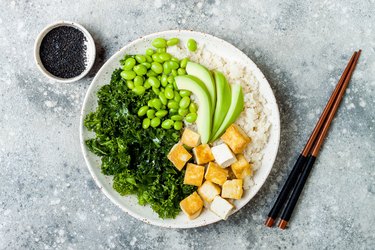
Soy is a top source of protein and a useful and versatile component of a healthy plant-based diet. However, reports about the effects of soy on hormones make some people wary about eating it. Fortunately, based on up-to-date research, most experts agree that soy is safe.
Tip
Soy protein-containing foods, like tofu, textured vegetable protein and edamame, do not significantly increase estrogen levels in people of any sex. Soy may have mild, beneficial anti-estrogenic or estrogenic effects, depending on your time of life.
Video of the Day
Soy and Hormones
As explained by the Centers for Disease Control and Prevention (CDC), soy-based foods are the biggest dietary suppliers of isoflavones, which when consumed and metabolized have the potential to act as phytoestrogens, a class of compounds with weak estrogenic effects.
Video of the Day
The CDC says soy estrogens, such as edamame or tofu estrogens, are much less potent than the hormone produced by the human body, but depending on your diet can be present in much greater quantities in the blood.
For example, infants who consume soy-based formula can have blood concentrations of isoflavones that are 13,000 to 22,000 times higher than the natural level of estrogen in babies not fed infant formula. This might seem like a worry, but followed through to adolescence and young adulthood, soy-fed babies show no adverse reproductive effects.
Neither does consuming soy, estrogens appear to have a negative effect in people assigned male at birth (AMAB). An August 2018 study in Scientific Reports found that when men (the language used in the study) combined soy protein supplementation with resistance exercise training, there were no changes to their levels of sex hormones.
Read more: Is Eating Soy Actually Bad for Your Health?
Soy Benefits for Women
According to Harvard Health Publishing, the effects of soy on hormones in people assigned female at birth (AFAB) can be to either increase or decrease the effects of estrogen, which may benefit both those who are younger and older.
People who have not gone through menopause have much higher circulating levels of estradiol — the main type of estrogen hormone — than those who have gone through menopause, and in this younger age group soy isoflavones may compete with the actual hormone for receptor sites in the body, damping down the effect of excess estrogen. As too much estrogen can be linked with abdominal weight gain, fibroids, fatigue and anxiety, this may be beneficial for people who have not gone through menopause.
Around menopause, when estrogen levels dramatically fall, isoflavones can switch roles and are thought to help modestly supplement low levels of estrogen, which might have benefits for this group. Results are mixed, but a December 2014 review in the journal Climacteric found that plant estrogens, including soy estrogen, helped reduce the frequency of hot flashes in those going through menopause, without harmful side-effects.
Read more: 13 Surprising Vegetarian Sources of Protein
Soy Estrogen and Breast Cancer
The big question for most people wondering whether soy is safe is whether or not it can contribute to breast cancer.
In fact, far from being a breast cancer risk, the Mayo Clinic says that soy is one of the foods that can reduce breast cancer risk. Those who eat plenty of soy products from an early age reduce their risk of breast cancer in later life. This protective effect is less dramatic for people AFAB who eat smaller amounts of soy or who start eating soy later in life.
Even if you are a breast cancer survivor, it's OK to carry on eating soy products and to do so may be beneficial. A June 2017 study in Cancer surveyed more than 6,200 American and Canadian women (the language used in the study) with breast cancer and found those who ate the highest amounts of isoflavones had a lower risk of dying from any cause.
Expert advice from the American Cancer Society is that soy foods are healthy and safe. But soy supplements contain much higher isoflavone concentrations than food and aren't recommended until more research is carried out on them.
- Centers for Disease Control and Prevention: "Isoflavones and Lignans"
- Scientific Reports: "Soy Protein Supplementation Is Not Androgenic or Estrogenic in College-Aged Men When Combined With Resistance Exercise Training"
- Harvard Health Publishing: "Straight Talk About Soy"
- Climacteric: "Efficacy of Phytoestrogens for Menopausal Symptoms: A Meta-Analysis and Systematic Review"
- Mayo Clinic: "Will Eating Soy Increase My Risk of Breast Cancer?"
- Cancer: "Dietary Isoflavone Intake and All-Cause Mortality in Breast Cancer Survivors: The Breast Cancer Family Registry"
- American Cancer Society: "Soy and Cancer Risk: Our Expert’s Advice"
Was this article helpful?
150 Characters Max
0/150
Thank you for sharing!
Thank you for your feedback!
Is this an emergency? If you are experiencing serious medical symptoms, please see the National Library of Medicine’s list of signs you need emergency medical attention or call 911.