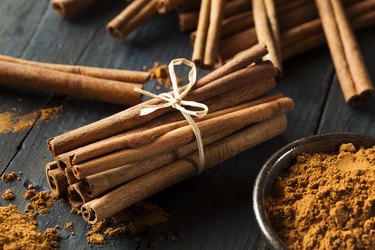
Cinnamon's sweet taste and cozy aroma are recognizable from almost anywhere — regardless of which variety of cinnamon you choose (yes, there's more than one type!).
Here's what you should know about Ceylon cinnamon vs. cassia cinnamon and which type is the better one.
Video of the Day
Video of the Day
What Is Cinnamon?
Cinnamon is a spice that's been used for centuries for its warm, sweet flavor as well as for medicinal purposes. It comes from the bark of cinnamon trees, which is rolled into sticks and ground into a fine powder.
Cinnamon gets its distinct aroma and taste from the essential oil cinnamaldehyde. It's also thought that cinnamaldehyde is responsible for many of cinnamon's potential health benefits — including its antioxidant, anti-inflammatory and antimicrobial effects, per an April 2014 review in Evidence Based Complementary Alternative Medicine.
There are two main types of cinnamon: Ceylon cinnamon and cassia cinnamon, and each has its own distinct color, taste and smell. (Though if you're not familiar with both, you might not notice the difference.)
What Is Ceylon Cinnamon?
Different varieties of cinnamon hail from different types of cinnamon trees. Ceylon cinnamon — sometimes called "true" cinnamon — is grown primarily in Sri Lanka, according to the National Center for Complementary and Integrative Health (NCCIH).
The bark has a slightly soft texture, and the ground cinnamon has a mildly sweet texture and medium-brown color. Ceylon cinnamon is more expensive than its cousin cassia, and it's a little tougher to find.
Another important difference: Ceylon cinnamon contains lower levels of coumarin, a compound that can be harmful to the liver in large amounts (more on that later). But it also contains less of the essential oil cinnamaldehyde, according to an October 2013 review in BMC Complementary Medicine and Therapies.
What Is Cassia Cinnamon?
If you have a jar of ground cinnamon in your pantry, chances are it's cassia cinnamon, the most common (and least expensive) variety of cinnamon.
Cassia has a spicier, more bitter flavor than Ceylon cinnamon and a darker, reddish-brown color. It hails from southeastern Asia, according to the NCCIH.
Cassia cinnamon is higher in cinnamaldehyde than Ceylon, per the BMC Complementary Medicine and Therapies review. It's notably higher in coumarin, too. Eating the stuff in moderate amounts — think: a daily sprinkle on your oatmeal — probably isn't a big deal for most people, but it might be worth paying attention to your intake if you have liver problems, according to the NCCIH.
Large amounts of coumarin can also potentially interact with drugs like warfarin, according to a June 2015 study in the journal Pharmacognosy Research. If you're on a blood thinner, talk to your doctor about whether you should think about capping your cinnamon intake.
Ceylon Cinnamon vs. Cassia Cinnamon: How are They Different?
Ceylon has a sweeter, more delicate flavor than cassia does, which may make it preferable in cinnamon desserts and lighter dishes. But the more important distinction is the difference in the amount of coumarin.
Cassia cinnamon has much higher concentrations of the chemical than Ceylon. The coumarin content of your cinnamon likely isn't a major concern if you don't have any health conditions and only take cinnamon in moderation.
But if you eat spoonfuls of the stuff every day, have a preexisting liver or kidney condition, or take blood thinners, it may be worth switching to Ceylon to curb your coumarin intake.
The Benefits of Cinnamon
It's perfectly safe to eat cassia cinnamon in moderate amounts, like a dash in your oatmeal or in your favorite cinnamon tea recipe, per the NCCIH.
But when it comes to picking a healthier variety, "It's difficult to make that distinction," says dietitian Brittany Brockner, RD. "Both Ceylon and cassia have demonstrated a variety of health benefits."
Here's how cassia and Ceylon cinnamon benefit the body.
Blood Sugar Control
Cassia and Ceylon cinnamon may be good for blood sugar control: The spice, regardless of which type, has been linked to reduced fasting blood sugar levels in people with diabetes, per an April 2019 review of 18 studies in the journal Complementary Therapies in Medicine.
What's more, supplementing with cinnamon was observed to lower blood triglycerides and total cholesterol, but did not lower LDL and HDL, per a November 2017 analysis of 13 studies in the Journal of Clinical Lipidology.
Cinnamon for Weight Loss
Research shows cinnamon might help with weight loss. Adults with overweight who took 2 grams of cinnamon daily for 12 weeks were observed to lose body fat and reduce their waist circumference, found a January 2020 review of 12 trials in the journal Clinical Nutrition.
While there seems to be a link between cassia or Ceylon cinnamon and weight loss, you still don't want to load up on the spice.
Tip
No matter what type of cinnamon you choose, more isn’t always better. Cinnamon isn’t a proven treatment for diabetes, high cholesterol or other health conditions. And eating large quantities of cinnamon, especially for long periods of time, can lead to stomach problems or allergic reactions, according to the NCCIH. Stick with a sprinkle instead of a big spoonful.
Concerns About the Coumarin in Cinnamon
"There are liver concerns with regards to coumarin, a compound naturally found in cinnamon, which may be harmful," Brockner says.
Coumarin is in a wide variety of plants with pleasant flavors, including vanilla bean, but one of the main sources in the human diet is cinnamon, according to a May 2020 paper in the journal Foods. Adverse effects, such as dizziness, diarrhea and vomiting after taking coumarin, are rare and typically associated with eating high amounts.
The amount of coumarin in cassia cinnamon is very high and can pose health risks, such as liver damage, if taken regularly and in large quantities, per older research published in October 2013 in BMC Complementary Medicine and Therapies.
Just 1 teaspoon of cassia cinnamon powder contains around 5.8 to 12.1 milligrams of coumarin, a relatively wide range. Even so, this amount is often above the Tolerable Daily Intake of 0.1 milligram/kilogram of body weight each day set by the European Food Safety Authority.
"However, Ceylon contains the least amount of this compound when compared to other species of cinnamon," Brockner says. Ceylon cinnamon only contains traces of coumarin, about 0.004 percent compared to cassia's 1 percent, states The Scientific World Journal article.
So from a safety point of view, Ceylon cinnamon may be the better choice if you tend to sprinkle with abandon.
And if you're taking a blood thinner, such as warfarin, caution is in order. Some foods and herbs could interfere with your medication and be harmful, according to the American Heart Association. If you're on medication, it's best to discuss your diet and any supplements — cinnamon included — with your doctor.
- BMC Complementary and Alternative Medicine: Medicinal Properties of 'True' Cinnamon (Cinnamomum Zeylanicum): A Systematic Review
- The Spice Council: Cinnamon
- International Journal of Preventive Medicine: Effects of Cinnamon Consumption on Glycemic Status, Lipid Profile and Body Composition in Type 2 Diabetic Patients
- Diabetic Medicine: Efficacy and Safety of 'True' Cinnamon (Cinnamomum Zeylanicum) as a Pharmaceutical Agent in Diabetes: A Systematic Review and Meta-Analysis
- Scientific World Journal: Assessment of Coumarin Levels in Ground Cinnamon Available in the Czech Retail Market
- Molecular Nutrition and Food Research: Toxicology and Risk Assessment of Coumarin: Focus on Human Data
- Analytic and Bioanalytic Chemistry: New Identification of Proanthocyanidins in Cinnamon (Cinnamomum Zeylanicum L.) Using MALDI-TOF/TOF Mass Spectrometry
- Diabetes Care: Cinnamon Improves Glucose and Lipids of People With Type 2 Diabetes
- Brittany Brockner, RD, registered dietitian, blogger, “Dietitian Brockner,” New York
- Canadian Society of Intestinal Research: “Cinnamon: The Good, the Bad, and the Tasty"
- Journal of Dietary Supplements: “Cassia cinnamon supplementation reduces peak blood glucose responses but does not improve insulin resistance and sensitivity in young, sedentary, obese women”
- The Ceylon Medical Journal: “Health benefits of Ceylon cinnamon (Cinnamomum zeylanicum): a summary of the current evidence”
- The Scientific World Journal: “Assessment of Coumarin Levels in Ground Cinnamon Available in the Czech Retail Market”
- BMC Complementary Medicine and Therapies: “Medicinal properties of ‘true’ cinnamon (Cinnamomum zeylanicum): a systematic review"
- American Heart Association: “A Patient's Guide to Taking Warfarin”
- National Center for Complementary and Integrative Health: "Cinnamon"
- Evidence Based Complementary Alternative Medicine: "Cinnamon: A multifaceted medicinal plant"
- Complementary Therapies in Medicine: "The impact of cinnamon on anthropometric indices and glycemic status in patients with type 2 diabetes: A systematic review and meta-analysis of clinical trials"
- Journal of Clinical Lipidology: "The effects of cinnamon supplementation on blood lipid concentrations: A systematic review and meta-analysis"
- Clinical Nutrition: "Cinnamon supplementation positively affects obesity: A systematic review and dose-response meta-analysis of randomized controlled trials"
- Pharmacognosy Research: "Cinnamon: Mystic powers of a minute ingredient"
- Biomedicine and Pharmacotherapy: "Proanthocyanidins: A comprehensive review"
- Foods: "Coumarins in Food and Methods of Their Determination"