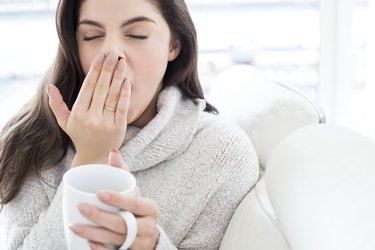
Congratulations on giving sugar the boot! Eliminating sugar and other simple carbs from refined and processed foods will have wide-reaching effects on your health — so much so that you'll wonder why you ever ate the sweet stuff. But before you see the benefits, you'll likely experience some low-carb diet side effects as your body adapts to the change, and those may include sleepiness and night sweats.
Tip
Limiting carbs and cutting out sugar may cause a slew of side effects, which may include night sweats and sleepiness. Consult with your doctor for advice before making any drastic changes to your diet.
Video of the Day
Low-Carb Flu
Do you feel tired, achy, nauseous and have a headache? You may have what's referred to as the keto "flu." While not an actual virus with a medical diagnosis, the keto flu is a recognized cluster of symptoms that may occur in the first week or so of reducing your carb intake.
Video of the Day
Sleepiness is one of the most common symptoms people experience. Because carbs are normally your main source of energy, suddenly lowering your intake can leave the body scrambling for another energy source, which can leave you yawning at your desk all day. Other symptoms you might experience with the low-carb flu include:
- Nausea
- Vomiting
- Headache
- Dizziness
- Reduced exercise tolerance
- Constipation or diarrhea
- Bad breath
- Weakness
- Muscle cramps
- Insomnia
- Skin rash
Which side effects you'll experience and how bad they will hit you depends on a few factors:
- How low in carbs your new diet is
- How many carbs you were used to eating
- What your diet was like before you cut carbs
- Your own sensitivity to carb reduction
If you're hopping on the keto bandwagon and you've cut your carbs to just 20 grams a day, you can expect to feel worse than someone who has only lowered their carb intake to 80 grams a day. This is especially true if you ate a lot of carbs before — and even more so if those carbs came from simple sugars and refined grains.
If you're particularly sensitive to a lack of carbs, just like some people are more sensitive to caffeine, your experience might be fairly miserable. But cheer up, because in most cases it's just temporary!
Read more: 10 Things to Do to Get Better Sleep
Keto Night Sweats
Night sweats are not a commonly reported symptom of a low-carb diet, however, there is anecdotal evidence that some people do experience increased sweating at night on the keto diet. The causes of night sweats are various; why they might occur in tandem with cutting carbs isn't documented. However, taking a look at the list of symptoms of the keto flu, night sweats aren't out of the realm of possibility.
Myriad factors could be at play causing you to wake in the night with damp sheets:
Trouble sleeping: Although daytime sleepiness is a common symptom, nighttime wakefulness is also a problem for some people. If you're tossing and turning all night and in and out of fitful sleep, night sweats could be concurrent.
Low blood sugar: You haven't had a serious carb in what feels like days and your body is not happy about it. This could cause your blood sugar to drop. If your blood sugar levels drop very low, this can cause sweating, according to Mayo Clinic.
Withdrawal symptoms: Maybe you've heard sugar is addictive and thought pshaw. Actually, it's true. According to research published in the journal Plos One in February 2015, sugar and refined carbs have characteristics similar to drugs of abuse, causing addictive-like eating behaviors. And, according to a research review published by Harvard University in April 2012, sugar withdrawal has symptoms similar to those of opiate withdrawal. One of those is — you guessed it — night sweats.
Dehydration: A steep drop in carbs can cause loss of fluids, which can result in dehydration if you're not careful. Proper hydration helps your body control its internal thermostat, according to Deputy Director of the Center for Deployment Psychology Dr. Bill Brim. Being dehydrated could cause your body temperature to rise while you're sleeping and lead to a hot night — and not in a good way.
Fixing Night Sweats and Fatigue
If you can hold out for a few more days, you will likely see improvement in your symptoms. Your body adapts quite quickly to the lack of carbs and sugar and reestablishes homeostasis.
In the meantime, you can take some steps to limit your fatigue and reduce your night sweats:
Drink plenty of water: Make hydration your second job. Sufficient hydration can help fatigue and promote a drier night's sleep. Try to drink 8 ounces of water every hour or two.
Keep exercise light: This isn't the week to run a marathon. Some light activity, such as a brisk walk, can help you feel alert, but intense exercise will drain you.
Eat high-quality fats: This is key on the keto diet at any time, but especially during these early days, so make sure your body is getting the best nutrition possible. Eggs, avocado, olive oil, grass-fed butter, nuts and seeds are all sources of quality fats and nutrients that will promote energy and a good night's sleep.
Get your veggies: Low carb doesn't mean low veggies. Eating plenty of non-starchy vegetables will boost your nutrition, energy and hydration. Leafy greens, cucumber, zucchini, bell peppers, radishes and broccoli are all good choices.
Get enough electrolytes: Along with fluid loss, your body can also lose electrolyte minerals such as potassium, sodium, magnesium and calcium. Deficiencies in any one of these minerals can make your low carb flu symptoms worse. Simply eating the foods recommended above can help you get a lot of what you need. You can also sprinkle a little extra salt on your foods for added sodium.
Eat smaller, more frequent meals: Rather than eating two or three large meals, eat small meals every few hours, which can help keep your energy levels up. You can also have a small snack before bed to prevent low blood sugar.
Prepare for restful sleep: Unwind before bed with a cup of herbal tea, some relaxing music or a book. Avoid your phone, tablet, computer and TV, and get your exercise in at least five hours before bed. Wear comfortable, sweat-wicking clothing and make sure your bedroom is cool, quiet and dark.
Chill out: Now is not a good time to take on a lot of extra responsibility or deal with major decisions. Take some time for yourself to relax, meditate, walk in nature and appreciate the good steps you're taking for your health.
- Mayo Clinic: "Low-Carb Diet: Can It Help You Lose Weight?"
- StatPearls: "Ketogenic Diet"
- Mayo Clinic: "Hypoglycemia"
- Plos One: "Which Foods May Be Addictive? The Roles of Processing, Fat Content, and Glycemic Load"
- Digital Access to Scholarship at Harvard: "Food Addiction: Current Understanding and Implications for Regulation and Research"
- Uniformed Services University: "Staff Perspective: Night Sweats - About Nocturnal Hyperhidrosis"
Is this an emergency? If you are experiencing serious medical symptoms, please see the National Library of Medicine’s list of signs you need emergency medical attention or call 911.