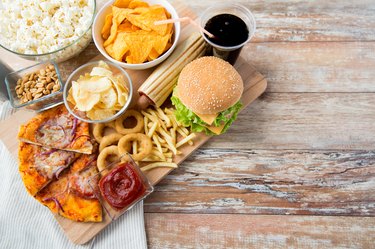
Processed food tends to be cheap, tasty and filling. However, it's been associated with a variety of issues, like diabetes, heart problems and obesity. If the effects of processed food on your health are so negative, why are fast foods and processed foods so popular? In short, there are four main reasons why gas stations are paired with convenience marts and people step up to counters on a regular basis for their fix of burgers and fries: availability, convenience, cost and flavor.
Eating Processed Food
Video of the Day
Processed food includes foods that many enjoy — from bags of chips to chocolate and even chicken nuggets. But they're considered bad for you because, more often than not, these processed foods offer primarily empty calories, using refined foods or cooking methods that minimize their nutritional value.
Video of the Day
The Convenience of Processed Food
Regardless of the individual item, processed food and fast-food products are generally easy to grab and take with you. This ease is a major draw for many, especially people who work long hours or need to grab a snack on the go. The rapid production (like with French fries) and easy storage (as with any packaged convenience store product, including soda) are major reasons why so many people eat processed food: it's just so convenient.
It would be highly unusual to meet someone who hasn't at least heard of processed food. It's found in virtually every convenience store and supermarket. Chains like McDonald's can reliably be found outside many schools and workplaces, providing meals in under a minute. Today, one in three Americans eats fast food each day. The combination of availability and convenience means that just about everyone everywhere has eaten processed food. As a result of so many negative effects, these foodstuffs are starting to be restricted and are even being taxed.
The Affordability of Processed Food
Cost is a massive component of the draw to processed food. It tends to be extremely cheap. In fact, it costs three times as much to have a healthful diet as it does to eat processed food and fast-food products. When processed food is so accessible, affordable and convenient, it becomes easy to forgo nutritious food. To top it off, it's tasty. The high sodium and sugar content may not be good for you, but they make these foods appealing to the taste buds.
The reasons people consume processed food and fast-food products are not unreasonable. Why wouldn't you want to eat a tasty, cheap snack, after all? It's important to realize that these foods can be occasional snacks and treats. You should just make an effort to watch your portion sizes and make sure that processed foods and fast foods aren't a major or regular part of your diet.
Read more: The 10 Worst Foods You Can Buy
Processed Food’s Effects on Health
Processed food and fast-food products are tasty, accessible foods. Occasional consumption of these food products in an otherwise healthy diet is unlikely to negatively impact your health. In excess, however, these food products essentially constitute an unhealthy diet.
The effects of unhealthy eating can cause problems with your digestive system, skin and weight. Certain unhealthy diets, like those linked to too much fast food, can result in obesity and related diseases. According to the Centers for Disease Control, an unhealthy weight can increase the risk for various diseases, including diabetes, heart disease, osteoarthritis and many other conditions. High-carbohydrate and high-fat foods can definitely contribute to an unhealthy diet. This is often even worse in convenience store processed food products that are rarely cooked fresh and are primarily carbohydrates with high sugar or sodium content.
- Food Chemistry: Health Benefits of the Potato Affected by Domestic Cooking
- Public Health Nutrition: Association Between Junk Food Consumption and Fast-Food Outlet Access Near School Among Quebec Secondary-School Children: findings from the Quebec Health Survey of High School Students (QHSHSS) 2010-11
- VOX: The Soda Tax as a Measure for Sustained Change in Consumption
- Edinburgh Research Explorer: Did the Junk Food Tax Make the Hungarians Eat Healthier?
- Food, Culture & Society: From “Junk Food ” to “Treats”
- The University of Bradford Institutional Repository: Correlates of Food Choice in Unemployed Young People: The Role of Demographic Factors, Self-Efficacy, Food Involvement, Food Poverty and Physical Activity
- Health, Education and Behavior: Potato Chips, Cookies, and Candy Oh My! Public Commentary on Proposed Rules Regulating Competitive Foods
- Appetite: Food Availability, Modeling and Restriction: How Are These Different Aspects of the Family Eating Environment Related to Adolescent Dietary Intake?
- CDC: Fast Food Consumption Among Adults in the United States, 2013–2016
- CDC: Disability and Obesity
- Plos One: The Growing Price Gap between More and Less Healthy Foods: Analysis of a Novel Longitudinal UK Dataset
- Journal of Urban Health: Storing Empty Calories and Chronic Disease Risk: Snack-Food Products, Nutritive Content, and Manufacturers in Philadelphia Corner Stores