
Stretching and Warm-Up Exercises for Obese People
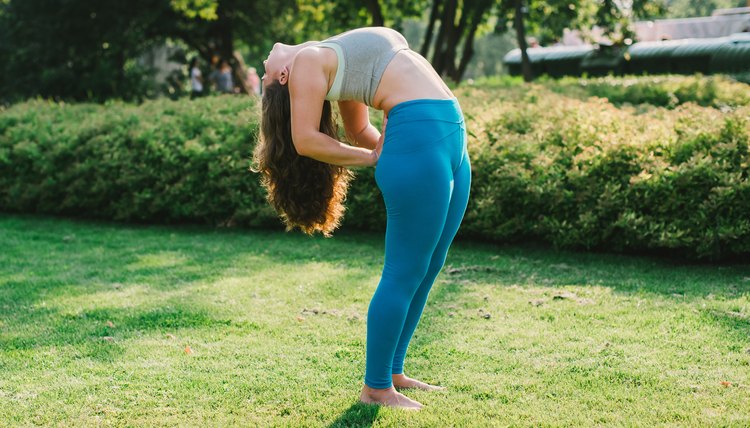
Prolonged inactivity will make it more difficult for obese people to exercise and lead a more active lifestyle. When you find that it is getting harder to walk and stand up, exercise will help you to flex and stretch your muscles to help your mobility and lose extra weight. It will be difficult at first, but your determination and persistence will pay off if you want to reduce weight and revive muscle tone. Stretching and warmup exercises will help you gradually ease into keeping a regular exercise routine. These exercises will add flexibility and condition your muscles to prevent cramps and muscle injuries.
Walking
According to a University of Colorado at Boulder study presented in 2005, walking a mile at a leisurely pace is likely to burn more calories than if you walk a mile at a normal pace. The study also stated that leisurely walking may reduce the risk of joint injury or arthritis. Walking is one of the most recommended forms of warmup and stretching exercises for obese people because you can control the pace. Walk around the room or outside the house slowly to increase your heart rate and improve your cardiovascular system. Swing your arms wider in time with your steps to loosen up the joints. You can also bend your arms at the elbows alternately while you walk, like you are lifting dumbbells. Introduction of movement to different parts of your body will help condition your joints and warms up your muscles prior to stretching exercises.
Shoulder Rolls
A shoulder roll is a yoga stretching exercise that is done to relieve tension on the shoulders and upper back. You can do this stretching exercise standing up or sitting down, just try to keep your back straight. Stand with your feet shoulder width apart and place your hands on your hips or let them hang by your side. Lift one shoulder up while inhaling and exhale as you bring the shoulder, back, down and forward in three full movements before repeating on the other side.
Neck Stretch
The neck stretch is a good exercise for compressed or stiff neck. This can also help tighten the sagging muscles on your neck and give your neck better definition, which is lost due to excess fat around the neck. Sit upright and forward on a chair and align your head directly with your spine. Breathe in as you lift your head, feeling the stretch and exhale as you drop your right ear toward the right shoulder, without lifting your shoulder. Hold for several seconds, breathing in and out before moving your head to the original position and repeat for the left shoulder. Do it slowly so you do not feel dizzy and hold on to the side of the hair with one hand to keep your balance.
Knees to Chest Pose
This exercise is meant to give relief to the excess wind in the stomach and intestines and to gently massage the digestive system. While the knees to chest pose releases toxins, it also helps relieve back pain and discomfort. Lie on the floor with your knees bent and your feet as close to your buttocks as you can get them and your hands by your sides. Inhale as you lift one knee, and exhale as you bring your knee slowly to your chest. Hold the pose for five to six seconds before you bring the knee down. Rest for a few seconds, and repeat on the other side. Keep your lower back flat on the floor as you bring your knee up.
Hamstring Stretch
Most obese people complain of lower back and leg pain due to excess weight and inactivity. Stretching the hamstrings improves mobility and flexibility, helps alleviate lower back pain and strengthens the legs. Stand near a sturdy chair, fence railing or stairs. Raise one foot on the railing, bending the knee slightly, and allow your heel to drop off the edge. Place your hands over your raised thigh and move your chest toward your raised leg while keeping your back straight. Hold the pose for 20 to 30 seconds before repeating on the other side. Do two to three repetitions for each leg.
Tips
Stretching exercises can be combined with warmup exercises, but remember that you should do warmup exercises for 10 minutes before the stretching exercises. Do not attempt to do too much initially so you do not put too much strain on your muscles. Make sure that you are comfortable and that the movements do not hamper circulation or breathing. Get a physical checkup or consult with your doctor before you attempt any form of exercise.
References
Writer Bio
Cindy Hamilton is the creator of Family-Health-And-Nutrition.com. Hamilton has been writing on the topic of healthy living on a budget since 2007 and has been featured on Mamapedia.com. In 2009 Family-Health-And-Nutrition.com was named one of the 100 best websites for healthy parents by onlinenursingprograms.net. Hamilton holds a Bachelor of Science from Capital University in Columbus, Ohio.