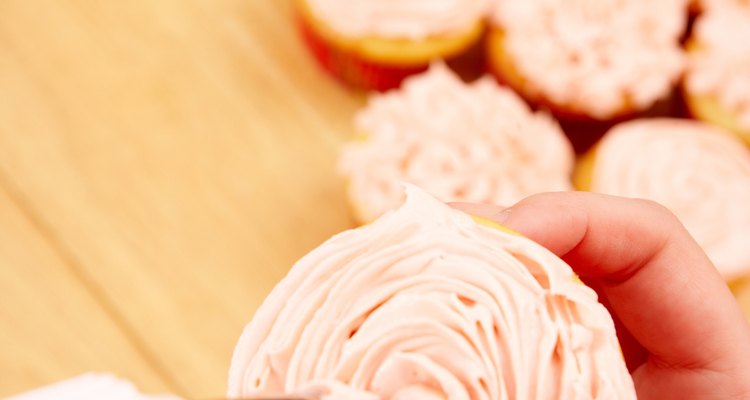
You can add fresh strawberries to a basic buttercream or cream cheese frosting recipe for an eye-catching, rosy pink topping. This brightly colored frosting gets its characteristic hue and unmistakable flavor from fresh strawberries. Simply slice the berries thinly and they'll easily break down in the frosting as you beat it. Use this frosting with your favorite cupcake recipe. For a matching garnish, top the frosted cupcakes with a few strawberry slices.
Step 1
Beat together the softened butter, vanilla extract and sliced strawberries with an electric hand mixer or stand mixer. You'll need 1 stick of butter, 1 teaspoon of vanilla extract and 1/2 cup of sliced strawberries to frost 12 cupcakes. To make strawberry cream cheese frosting, add 8 ounces of softened cream cheese to the mixture. Beat until the strawberries have broken down and the mixture is smooth.
Step 2
Gradually beat the powdered sugar into the mixture. You'll need about 4 cups of powdered sugar for every stick of butter.
Step 3
Beat the frosting until it is light and fluffy. Add extra powdered sugar if necessary until the frosting reaches your desired consistency.
Related Articles
How to Make Toasted Bread Sticks With ...
How to Freeze Empanadas

How to Make a Lip Mask for Extremely ...

How to Freeze Tzatziki
How Long Does Banana Bread Stay Fresh?

How to Cook Fresh Broccoli in a Slow ...

How to Make a Fruit Reduction

How to Flavor White Cake Mix With ...
How Fast Does Cooked Spaghetti Squash ...

Nutrition Information on Blueberries

The Carbohydrates in Blueberries
How to Substitute Dried for Fresh Dill ...

How to Improve Jar Spaghetti Sauce With ...

How to Make Really Good Lemonade

How to Bake Boneless Skinless Tilapia

How to Make Gel Moisturizer

How to Clean Scuffed Up Rain Boots

How to Blanch Kale for Freezing
How to Make a Tasty Drink for Kids From ...

How to Make Elderberry Jam
References
Writer Bio
Irena Eaves began writing professionally in 2005. She has been published on several websites including RedPlum, CollegeDegreeReport.com and AutoInsuranceTips.com. Eaves holds a Bachelor of Science in journalism from Boston University.
Photo Credits
Jupiterimages/Photos.com/Getty Images