Children's Diet After Adenoid Surgery
Adenoids are lymph tissues that are located high in the throat behind the nose and soft palate of the mouth. Adenoids are responsible for trapping bacteria and producing antibodies to fight infection. Children may suffer from repeated adenoid infection or obstruction in the nose and mouth from adenoids that are too large, states Akron Children’s Hospital 1. Removing the adenoids, known as an adenoidectomy, may be performed for these reasons. Rest and following a special diet are important for your child’s recovery after adenoidectomy.
If you are experiencing serious medical symptoms, seek emergency treatment immediately.
Liquids
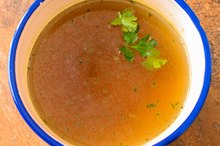
When adenoids are surgically removed from the back of the throat, the surgery leaves wounds in the delicate throat tissue. Wound healing occurs faster if throat tissue is disturbed as little as possible. Your child's physician may put him on a liquid diet for the first few days following surgery. Liquids are gentle on throat tissue and allow for less disruption of wound healing. You can begin with clear liquids like broth, water, apple juice or prepared flavored drink mix. Your child may prefer cold or lukewarm liquids; however, avoid very hot liquids. Adenoid surgery may be painful and your child may resist taking anything by mouth in the first days following surgery. Encourage your child to take small, frequent sips of liquids to prevent dehydration. Avoid using a straw as suction from the sucking motion may increase throat pain.
- When adenoids are surgically removed from the back of the throat, the surgery leaves wounds in the delicate throat tissue.
- Adenoid surgery may be painful and your child may resist taking anything by mouth in the first days following surgery.
Soft Foods
Diet After a Frenectomy
Learn More
Your physician may recommend that your child try soft foods as soon as she feels able to tolerate them. Soft foods slip easily through the throat without disrupting healing throat tissue. Your child may prefer pudding, ice cream, cream soups, scrambled eggs, mashed potatoes, cooked cereal, yogurt or apple sauce. Encourage your child to consume a combination of liquids and soft foods.
- Your physician may recommend that your child try soft foods as soon as she feels able to tolerate them.
- Encourage your child to consume a combination of liquids and soft foods.
Foods to Avoid
Some foods may irritate your child’s throat or even cause damage to healing throat tissue. Refrain from giving your child foods that are rough, crunchy or hard for 1 to 2 weeks after surgery as these kinds of foods may cause bleeding. Rough foods include popcorn, chips, pretzels, nuts or cold cereal.
Diet Advancement
What to Do for a 2 Year Old's Sinus Congestion
Learn More
Two weeks after surgery, your child may feel ready to resume a normal diet. Allow your child to lead the way into a regular diet. Try one new food at a time until your child is able to eat without pain or fear of pain from swallowing. If your child continues to feel discomfort or experiences bleeding when trying to advance his diet, contact your pediatrician for advice and recommendations.
- Two weeks after surgery, your child may feel ready to resume a normal diet.
Related Articles

Diet After a Frenectomy
Learn More

What to Do for a 2 Year Old's Sinus Congestion
Learn More

Foods to Eat After Wisdom Tooth is Pulled
Learn More
Foods to Eat After a Tonsillectomy & Adenoidectomy
Learn More
What to Eat Three Weeks After Gastric Bypass
Learn More
Foods to Eat After Getting a Tongue Ring
Learn More

Foods That Help Your Braces Not to Hurt
Learn More

Sensory Diet Ideas for Oral Sensory Seeking Behaviors in Children
Learn More
Canker Sores From Food Allergies
Learn More
Diet After a Vocal Cord Surgery
Learn More
References
- Children’s Hospital of Michigan: Adenoidectomy
- Mitchell RB, Archer SM, Ishman SL, et al. Clinical Practice Guideline: Tonsillectomy in Children (Update)-Executive Summary. Otolaryngol Head Neck Surg. 2019;160(2):187-205. doi: 10.1177/0194599818807917
- Miller BJ, Gupta G. Adenoidectomy. Treasure Island (FL): StatPearls Publishing; 2020 Jan-.
- Adenoid Removal. Medline Plus.
- Enlarged Adenoids. Nemours Foundation.
- Paradise, J.L., Tonsillectomy and adenoidectomy in children. (subscription required)
Writer Bio
Elizabeth Otto has been writing professionally since 2003. She is a licensed emergency medical technician-intermediate with over 10 years of experience in the field. She has worked as a clinical assistant in family health and emergency medicine since 1995. Otto is a freelance writer for various websites and holds an Associate of Science in medical assisting from Commonwealth College.