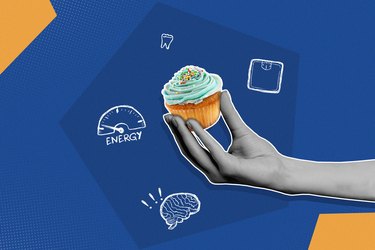

What Really Happens to Your Body When examines the head-to-toe effects of common behaviors, actions and habits in your everyday life.
You've heard it all over the news: Refined sugar is bad for you. But refined or added sugar is basically everywhere, from sweet treats like cake, cookies and pie to cereal, flavored yogurt and energy drinks. It's even in products like tomato sauce and salad dressing.
So it's not surprising that the average American consumes nearly 17 teaspoons of added sugar every day, according to the University of California San Francisco. While that may not seem like a lot, it's three times the amount the American Heart Association recommends for women (6 teaspoons) and more than double the recommended amount for men (9 teaspoons), Jerlyn Jones, RDN, LD, spokesperson for the Academy of Nutrition and Dietetics, tells LIVESTRONG.com.
Video of the Day
Video of the Day
Refined sugar includes sugar that's been processed from sugar cane or sugar beet (think white and brown sugar) as well as high-fructose corn syrup and even agave syrup. It's often referred to as processed sugar because the original sources are stripped of fiber and other good-for-you compounds.
"We process and refine these sugars until all of the plant material is gone except for the pure sugar. In doing so we have concentrated the sugar down to being more sugar than our bodies have the ability to handle safely," Kimber Stanhope, PhD, RD, research nutritional biologist at University of California Davis, tells LIVESTRONG.com.
That's the key difference between added and natural sugars: While your body can't necessarily tell the difference, added sugars are typically much more concentrated and often come in packages void of redeeming nutrients like fiber and vitamins, according to Harvard University.
While you know that you probably should cut back on your added sugar intake, you may wonder what exactly happens when you eat refined sugar. It turns out — a lot. Here are all the effects of sugar on the body.
Your Brain
If it feels like your body needs sugar from time to time, it's not all in your head. Refined sugar activates the brain's reward system, according to an October 2013 study in The American Journal of Clinical Nutrition, which can make you want more and more of it.
While tools to study the reward system in the human brain are still relatively new technology, a March 2014 study in Neurochemical Research found that the receptors that help regulate the reward system were altered in rats that were fed high-sugar diets, which may explain the addictive-like nature of sugar.
Refined sugar can also affect your mental health. Research published in August 2014 in The American Journal of Clinical Nutrition found that women who consumed approximately 16 teaspoons of sugar a day, on average, were at 23 percent greater risk for clinical depression compared to women who consumed 3.5 teaspoons of sugar daily.
This holds true for men, too. Men who ate 13.4 teaspoons or more of sugar a day had a 23 percent greater risk for depression, per a July 2017 study in Scientific Reports.
Related Reading
Your Teeth
It's true: Consuming refined sugar can increase your risk for dental cavities. According to a January 2016 study in the Journal of Dental Research, high sugar consumers had a 66 percent higher prevalence of cavities compared to those who consumed a low amount of sugar.
But it's not sugar itself that leads to the breakdown in the tooth's enamel. It's what happens after you consume sugar that's to blame. According to a October 2015 study also published in the Journal of Dental Research, sugar feeds bacteria in the mouth, encouraging these colonies to grow and form hard, sticky plaque. And when these bacteria flourish, they produce acids that leech minerals from your tooth enamel — the hard surface protecting your teeth. This can wear down and weaken the enamel and lead to cavities.
Your Heart and Cardiovascular System

Consuming refined sugar puts you at greater risk of dying from heart disease, according to an April 2014 study published in JAMA Internal Medicine. Researchers found that over the course of the 15-year study, people who consumed between 17 and 21 percent of their total calories as added sugar had a 38 percent higher risk of dying from cardiovascular disease compared to those whose diet was comprised of just 8 percent added sugar.
While it may surprise you, there are a few reasons why refined sugar may damage your cardiovascular system. For one, when your liver is overloaded with refined sugar, particularly fructose, it converts sugar to fat. "The extra liver fat increases the amount of triglyceride and cholesterol that gets sent into the blood and that increases risk for cardiovascular disease," Stanhope says.
A frequently cited April 2010 study in JAMA found that sugar intake was significantly associated with higher levels of triglyceride and LDL cholesterol (aka the "bad" cholesterol) and lower levels of HDL cholesterol (the "good" cholesterol).
Not only that, but added sugar can ramp up inflammation in the body, which can — you guessed it — increase your risk for heart disease. For example, consuming sugar-sweetened beverages, which are full of refined sugars, increases levels of high-sensitivity C-reactive protein, an inflammatory marker in the body, according to a small December 2014 study in the journal Lipids in Health and Disease.
Your Liver
After you eat refined sugar, it travels from your intestines to your liver, which takes the brunt of sugar's ill effects. When refined sugar breaks down into glucose and fructose, the liver decides what to do with it.
While the liver has an enzyme to control how much glucose comes in and how much gets diverted to the bloodstream, it doesn't have an on-off switch for fructose, Stanhope says. That means nearly all the fructose we ingest is pulled into the liver, even when we don't need it. "We end up with a huge overload of fructose in the liver, especially if we just drank an extra-large soda," she says.
The liver converts some fructose to energy, some for storage as glycogen and some to lactate. But excess fructose gets converted to fat, which can be problematic over time. In fact, a May 2018 study in the Journal of Hepatology suggests that refined sugar such as fructose is a major driver of non-alcoholic fatty liver disease.
Your Energy

If you feel an afternoon slump coming on, your first instinct may be to grab a cookie or soda. After all, a jolt of sugar is just what you need to get through the day, right? Not quite.
It's true that added sugar can give you a quick energy boost. The sugar in these types of foods enters your bloodstream quickly, causing your blood glucose levels to spike. In response, your pancreas releases insulin, which helps to convert glucose to energy and stabilize your blood sugar levels. But there's a downside: "The high insulin levels can lead to a rapid fall in blood sugar," Jones says, which can leave you feeling even more tired and depleted in the long run.
Your Hormones
Over time, too much sugar can make your body resistant to insulin, meaning the hormone doesn't do its job well. A March 2013 study of 55 men published in the journal Obesity found that just one week of excess refined sugar was enough to decrease insulin sensitivity.
Insulin resistance doesn't just put you a risk for type 2 diabetes — it can also instigate or exacerbate other chronic conditions like high blood pressure, metabolic syndrome and cardiovascular disease, Stanhope says.
Your Weight

Not only does insulin cause your blood sugar to undulate like a roller coaster, the sudden dip in blood sugar can cause a rebound effect. "The low blood sugar levels signal to the body that it needs more energy," Jones says. "It triggers your appetite and encourages you to eat and keep eating."
And when you continue to eat more calories than your body needs, it can lead to weight gain. In fact, according to a January 2013 systematic review and meta-analysis in the BMJ, increased sugar intake was associated with a gain of 1.7 pounds in less than eight weeks and 6 pounds over more than eight weeks.
Plus, when you ingest more glucose than your body needs, your body converts the glucose and stores it as fat, Marilyn Cornelis, PhD, assistant professor at Northwestern University Feinberg School of Medicine, tells LIVESTRONG.com.
Your Gut
It's been said that the key to overall health is diversity — in your gut microbiome that is. Your body depends on this diverse ecosystem of trillions of microorganisms residing in your gastrointestinal tract. But it turns out that refined sugar can throw your microbiome out of whack.
A September 2012 review published in Obesity Reviews highlighted that sugar, especially fructose, led to an overgrowth of "bad" microorganisms and loss of microbial diversity, altering the microbiome as a whole.
According to an August 2014 study in Cell Metabolism, a diet high in refined sugars changes the production of short-chain fatty acids in the gut, which have been shown to play a role in maintaining the gut barrier function and have anti-inflammatory effects in the body.
Your Skin
If you've ever looked in the mirror after a night of overindulging in sweets packed with refined sugar, you know that sugar doesn't just affect the organs and systems inside your body. It can affect your skin, too, which may end up looking dull and puffy.
Refined sugar can cause inflammation throughout the body, and that includes your skin. Consuming a large amount of the sweet stuff can make inflammatory conditions like acne worse. Research has found a connection between foods and beverages high in sugar and acne. Elevated blood sugar increases the body's production of insulin, which in turn can stimulate the production of oil in the skin and acne, according to an August 2015 study published in Advances in Dermatology and Allergology.
Plus, sugar may hasten the skin's aging process too. A November 2015 paper from the Baylor College of Medicine's Department of Dermatology suggests that a diet high in sugar can lead to the formation of advanced glycation end products (AGEs). In the skin, these molecules can damage collagen and elastin — which help keep the skin smooth and plump — making them stiff and brittle instead. This can lead to wrinkles, sagging and older-looking skin.
Tips to Nix Refined Sugar From Your Diet

If you're trying to reduce the amount of refined sugar in your diet, you don't have to go cold turkey. Sure, you want to consume smaller portions of high-sugar foods and eat them less frequently, but small tweaks are the name of the game. Jones suggests starting with one or two of these helpful tips to slowly tame your sweet tooth.
1. Skip the sugar-sweetened beverages. One quick fix to reduce the amount of refined sugar in your diet? Quit drinking soda, sports drinks and other sugar-sweetened beverages, which make up 47 percent of our added sugar intake, according to Jones. Try switching to water, seltzer or unsweetened tea and coffee.
2. Read nutrition labels. The nutrition facts label on packaged foods and beverages provides a wealth of information, including the amount of added sugar in a product. Added sugars on the nutrition facts label indicates the amount of sugar added during food processing (like sucrose) as well as sugars from syrups, honey and concentrated fruit and vegetable juices (aka refined sugars).
3. Switch up your afternoon snack. Instead of grabbing a candy bar or other sweet treat when that 3:00 slump hits, Jones recommends rethinking your snack choices. Stick with foods that are higher in complex carbohydrates and combine them with protein. Plain yogurt with berries and nuts is a filling snack that keeps your energy levels high, she says. "It doesn't put you in that vicious cycle where your blood glucose levels drop."
4. Choose sugars from natural sources. Next time you're craving something sweet, grab a piece of fruit. "The natural sugar in fruit, that is most likely a level of sugar that our bodies can easily handle without any negative metabolic effects," Stanhope says. "Not only that, that piece of fruit contains thousands of bioactives that in general are very good for our bodies. And don't forget the fiber, which slows the speed in which sugar races to our liver and our blood." If you choose canned fruit, look for those canned in water, not natural syrups, Jones adds.
5. Don't forget your spice rack. Instead of adding sugar to your meals to make them taste better, try experimenting with spices, Jones suggests. Think cinnamon, nutmeg, ginger, allspice and even vanilla extract, which can add a little sweetness.
- University of California, San Francisco: "How Much is Too Much?"
- Circulation: "Low-Calorie Sweetened Beverages and Cardiometabolic Health: A Science Advisory From the American Heart Association"
- Journal of Hepatology: "Fructose and sugar: A major mediator of non-alcoholic fatty liver disease."
- Obesity: "Effects of fructose and glucose overfeeding on hepatic insulin sensitivity and intrahepatic lipids in healthy humans"
- American Diabetes Association: "All About Insulin Resistance"
- BMJ: "Dietary sugars and body weight: systematic review and meta-analyses of randomised controlled trials and cohort studies"
- JAMA Internal Medicine: "Added Sugar Intake and Cardiovascular Diseases Mortality Among US Adults"
- JAMA: "Caloric sweetener consumption and dyslipidemia among US adults"
- Lipids in Health and Disease: "Acute effects of feeding fructose, glucose and sucrose on blood lipid levels and systemic inflammation"
- The American Journal of Clinical Nutrition: "Relative ability of fat and sugar tastes to activate reward, gustatory, and somatosensory regions"
- Neurochemical Research: "Neuroadaptations in the Striatal Proteome of the Rat Following Prolonged Excessive Sucrose Intake"
- The American Journal of Clinical Nutrition: "High glycemic index diet as a risk factor for depression: analyses from the Women's Health Initiative"
- Scientific Reports: "Sugar intake from sweet food and beverages, common mental disorder and depression: prospective findings from the Whitehall II study"
- Nature Reviews Microbiology: "The gut microbiota — masters of host development and physiology"
- Obesity Reviews: "Gut microbial adaptation to dietary consumption of fructose, artificial sweeteners and sugar alcohols: implications for host-microbe interactions contributing to obesity"
- Cell Metabolism: "Starving our Microbial Self: The Deleterious Consequences of a Diet Deficient in Microbiota-Accessible Carbohydrates"
- Advances in Dermatology and Allergology: "Insulin resistance in severe acne vulgaris"
- Skin Therapy Letter: "Sugar Sag: Glycation and the Role of Diet in Aging Skin"
- Journal of Dental Research: "Sugar Consumption and Changes in Dental Caries from Childhood to Adolescence"
- Journal of Dental Research: "Diet and Dental Caries: The Pivotal Role of Free Sugars Reemphasized"
- Harvard University: "Natural and Added Sugars: Two Sides of the Same Coin"