
If you've ever shopped for cooking oils, then you know there's no shortage of options. Avocado oil, extra-virgin olive oil, canola oil, cold-pressed flaxseed — the list goes on.
When you're deciding on what type of oil to select, there are a few factors worth noting:
Video of the Day
Video of the Day
- It's important to consider how the oil holds up to heat or its smoke point, which is the temperature at which the oil begins to create smoke and break down.
- You should consider whether or not you want the oil to add flavor to your food. Some oils will shine through a dish, while others are more neutral in taste.
- You'll also want to consider the nutritional profile of your oil. Some oils contain antioxidants and other beneficial compounds.
Here are the ins and outs of various cooking oils, including wholesome options and less healthy options that you may want to limit.
The 7 Healthiest Cooking Oils to Use
These healthy oils are great to keep on hand in your pantry or fridge. They all have different flavors and uses.
1. Extra-Virgin Olive Oil
A mainstay in the Mediterranean diet (one of the healthiest eating plans around), the consensus is clear that EVOO does a body good. The oil contains high levels of monounsaturated fats and phenolic compounds, according to a January 2018 review in Endocrine, Metabolic & Immune Disorders.
The paper found that extra-virgin olive oil increases HDL cholesterol levels (the good kind) while lowering total and LDL cholesterol (the bad kind). It can also help lower blood pressure, decrease markers for inflammation and improve blood glucose control.
While it's commonly believed that extra virgin olive oil has a low smoke point, making it best for dressings and dipping, this just isn't true. EVOO has a medium-high smoke point (350 to 410 degrees Fahrenheit), deeming it great for most types of cooking, according to the North American Olive Oil Association. And, because they're more refined, regular olive oil and extra-light olive oil have an even higher smoke point of 390 to 468 degrees Fahrenheit.
Brands We Love
2. Avocado Oil
Pressed from the creamy flesh of avocados, this oil has a mild flavor. It also has one of the higher smoke points of all cooking oils — 500 degrees Fahrenheit for pure and 375 degrees for extra-virgin.
The fat profile of avocado oil is nearly identical to that of olive oil: 74 percent monounsaturated fat (MUFA), 9 percent polyunsaturated (PUFA) and 14 percent saturated fat. This composition secures avocado oil a spot on the heart-healthy list.
Avocado oil may have some other health benefits. A small study found that replacing avocado oil for butter over the course of just six days let to an improvement in insulin, total cholesterol, LDL cholesterol and triglycerides levels, per a June 2019 review in Molecules. A reduction in C-reactive protein and interleukin-6 — two markers for inflammation — was also observed.
Brands We Love
3. Flaxseed Oil
Many of the health benefits of the actual flaxseed, such as plant-based omega-3s and monounsaturated fats, are present in the oil, too. In fact, flaxseed oil has the highest levels of omega-3s compared to all other cooking oils: A tablespoon has more than 7 grams. For reference, a 3-ounce serving of cooked salmon has about 2 grams.
Alpha-linolenic acid (ALA), the type of omega-3 found in flaxseed oil, needs to convert to EPA and then DHA to be beneficial in the body. Its conversion is limited — only about 10 to 15 percent ends up having omega-3s benefits, per Harvard Health Publishing. Still, that's about 700 milligrams, which is a solid amount, especially when you consider it's an omega-3 option for vegans and there's no concern over mercury levels like there is with fish.
Flaxseed oil should not be heated, so it's best for enjoying as a dressing or for dipping. In fact, you'll want to keep the oil refrigerated to prevent it from going rancid.
Brands We Love
4. Walnut Oil
Just like the nut of its origin, walnut oil has also been linked to reduced risks of heart disease.
In a small clinical trial published in June 2013 in Nutrition, researchers found that walnut oil helped improve endothelial function even better than whole walnuts did. Endothelial function is linked to the development of plaque buildup in our artery walls.
Walnut oil has the rich, nutty taste you would expect from the oil of cold-pressed walnuts. When cooked, however, the flavor can become bitter. Instead, use this oil for salad dressings and cold prep. Walnut oil should be stored in the refrigerator.
Brands We Love
5. Sesame Oil
Sesame oil has a rich, nutty flavor that complements tofu, rice and vegetables used in stir-fries.
It's typically found in two varieties: toasted and regular. Toasted is best for finishing dishes because of its lower smoke point and already-rich flavor. Regular sesame oil has a medium to high smoke point — opt for this variety when cooking.
When it comes to nutritional properties and health benefits, sesame seeds are often overshadowed by chia and flaxseeds. Turns out, they're pretty healthy, too, which translates to their oil form as well. Sesame oil is rich in lignans, which act as antioxidants, per a December 2014 paper in Food Science and Agriculture.
Brands We Love
6. Canola Oil
Canola oil comes from the canola plant, a crop with yellow flowers that grows three to five feet tall. The plant contains pods, from which the seeds are harvested and then crushed to create the oil.
Canola is considered a healthy oil because of its high monounsaturated to saturated fat ratio (it has about nine times the former) and about 10 percent of the oil's fat comes from heart-healthy omega-3s.
Most canola oil, however, is refined, so it loses its antioxidant properties when it's heated during processing. And because of the high amounts of ALA, it's considered more fragile. So, although it has a high smoke point (468 degrees Fahrenheit), there's concern over potentially toxic compounds forming when it's heated to about 350 degrees, per Today's Dietitian.
Brands We Love
7. Other Vegetable Oils
Sunflower, safflower, corn and soybean oils are fairly similar in their fatty acid breakdown: They're primarily made up of polyunsaturated fats, followed by monounsaturated fat and then a small amount of saturated fat. This fatty acid makeup is part of what makes them a healthy cooking oil option, according to a July 2018 meta-analysis in Lipid Research.
The analysis, which included 54 trials of more than 2,000 people, determined that when replacing saturated fat sources like butter and lard, these vegetable oils were effective in reducing total cholesterol, LDL cholesterol and triglyceride levels while boosting HDL cholesterol levels.
These oils catch a lot of flak because they're high in omega-6s. Maintaining a healthy omega-3 to omega-6 ratio is important for our health, but the trouble is, we eat a lot of omega-6 fatty acids (mostly through processed foods) and not enough omega-3s.
Still, omega-6s are heart-healthy, per Harvard Health Publishing, so here's the bottom line: We should aim to eat more omega-3 foods while cutting down on highly processed foods versus skipping vegetable cooking oils just because they're rich in omega-6s.
Brands We Love
- Flora Organic 100% Pure Cold-Pressed Sunflower Oil ($9.47 on Amazon)
- Spectrum Organic Safflower Oil ($8.99 on Amazon)
- Veri Soybean Oil ($29.99 on Vericookingoil.com)
2 Unhealthy Cooking Oils to Limit
Try to use these oils less frequently in your cooking (but you shouldn't feel limited because there are so many healthy oil options!).
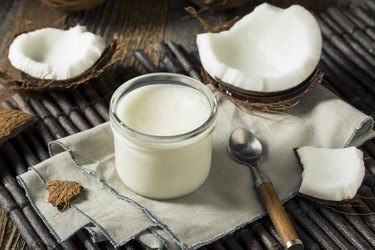
1. Coconut Oil
Coconut oil can be part of a healthy diet, but it's not as healthy as other oils like extra-virgin olive oil and avocado oil, so its use should be limited.
The oil, pressed from the meat of coconuts, is about 93 percent saturated fat. There's a lot of debate about whether the type of saturated fat found in coconut oil is actually healthy, unhealthy or if it has a neutral effect. The truth is, we still don't know for sure, per a November 2018 review in the Journal of the American College of Nutrition. More human clinical trials and observational studies need to be conducted to say with certainty.
Coconut oil is relatively heat-stable, although it depends on the type you're using. Virgin coconut oil, also called expeller-pressed or cold-pressed, has a smoke point of 350 Fahrenheit, while refined coconut oil has a smoke point of 400 to 450 degrees.
2. Palm Oil
Palm oil is extracted from the fruit of a palm tree and is 52 percent saturated fat, while palm kernel oil, taken from the palm seed, is 86 percent saturated fat. Because of its higher saturated fat content, this is an oil you'll want to limit. The saturated fats give palm kernel oil a longer shelf life, which is why it's typically used in more commercially processed foods.
Almost 80 percent of the world's palm oil comes from Malaysia and Indonesia, where rainforests have been devastated to make way for palm plantations. Sadly, this large-scale production is threatening the habitat of the orangutan, an animal that advocacy groups say risks extinction.
In an effort to combat these effects, the Roundtable on Sustainable Palm Oil (RSPO) has established criteria for companies to source sustainable palm oil. Products that comply have the RSPO certification.
- Endocrine, Metabolic & Immune Disorders: "Extra Virgin Olive Oil and Cardiovascular Diseases: Benefits for Human Health"
- Today's Dietitian: "Heart-Healthy Oils: They're Not All Created Equal"
- North American Olive Oil Association: "Understanding Cooking Oil Smoke Points"
- Nutiva: "Organic Avocado Oil"
- MyFoodData: "Avocado Oil"
- Molecules: "Avocado Oil: Characteristics, Properties, and Applications"
- MyFoodData: "Flaxseed Oil"
- MyFoodData: "Wild Atlantic Salmon (Cooked)"
- Harvard Health: "Why Not Flaxseed Oil?"
- Journal of Nutrition: "Acute Consumption of Walnuts and Walnut Components Differentially Affect Postprandial Lipemia, Endothelial Function, Oxidative Stress, and Cholesterol Efflux in Humans with Mild Hypercholesterolemia"
- Journal of Food Science and Agriculture: "Sesame Oil"
- MyFoodData: "Canola Oil"
- Food and Drug Administration: "Qualified Health Claims: Letter of Enforcement Discretion - Unsaturated Fatty Acids from Canola Oil and Reduced Risk of Coronary Heart Disease"
- Today's Dietitian: "Healthful Oils: The Canola Controversy"
- Journal of Lipid Research: "Effects of Oils and Solid Fats on Blood Lipids: A Systematic Review and Network Meta-analysis"
- Harvard Health: "No Need to Avoid Healthy Omega-6 Fats"
- MyFoodData: "Coconut Oil"
- Journal of the American College of Nutrition: "Health Effects of Coconut Oil—A Narrative Review of Current Evidence"
- MyFoodData: "Palm Oil"
- MyFoodData: "Palm Kernel Oil"
- Roundtable on Sustainable Palm Oil: "RSPO Certification"
- USDA: "Avocado oil"