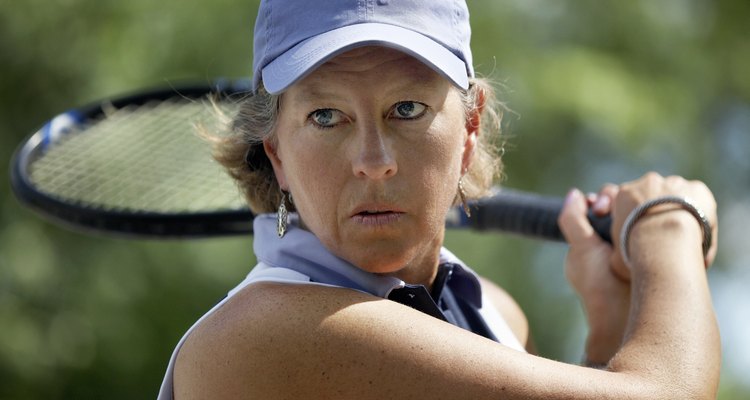
Purestock/Purestock/Getty Images
Blisters form when the skin is exposed to prolong irritation through pressure or chafing. For tennis players, the racket handle is a common cause of blisters because they rub on the hands and fingers, which causes chafing. A typical match will involve hundreds of shots, and even a small rotation of the racket in your hand can cause blisters.
Choose the correct grip size when selecting a tennis racket. Grip sizes are measured from the middle of your palm, up to the tip of your ring finger. This distance, in inches, is equal to your correct grip size. If you are between grip sizes, choose the smaller, which you can adjust to make larger through the use of overgrips.
Use a fresh overgrip every time you play. As you play, a grip's tackiness deteriorates, making it harder to hold onto the racket and encouraging slipping. Slipping causes friction and eventually blisters. An overgrip is put on over your normal tennis grip to provide a disposable, tacky grip.
Dry your grip and hands with a towel between games and sets. A wet grip is harder to hold onto, encouraging slipping and friction.
Wear a sweat band on your forearm to prevent sweat from dripping down your arm and onto your hand during play.
Place a cushioned bandage on areas that start to become irritated.
Related Articles
Callus From Pullups

How to Wear a Nose Hoop
How to Put On Seamless Pantyhose
How to Make Sock Garters

Blisters After Golf

How to Fix Ripped Leather Gloves
How to Connect Wedding Bands Without ...

How to Make Your Arms Not Hurt in ...
How to Put Out a Match
How to Repair a Split Sole on Shoes
Differences Between Wide & Close Seated ...

How to Fix Thong Sandals
How to Stop Sweat from Staining Golf ...

How to Gauge Your Ears Without Tapers
How to Use Proxabrush
How to Fix Holes in Pantyhose

How to Prevent Chapping of the Skin ...

How to Keep a Cuff Bracelet From Sliding

How to Make Custom Clip-On Sunglasses
How to Repair a Split Rubber Sole
References
Warnings
- Don't let a blister pop during play. A draining blister is akin to an open wound and is prone to infection.
Writer Bio
Patrick Hutchison has been doing freelance work since 2008. He has worked as a physical therapy aide and as a writer for various websites including Destination Guides and several travel-related companies. Hutchison has a Bachelor of Arts in history and anthropology from the University of Washington.
Photo Credits
Purestock/Purestock/Getty Images