
Voyagerix/iStock/Getty Images
You desperately want to smooth out that dimpled, orange peel-like appearance on your thighs, belly and upper arms. Proper hydration, good nutrition and overall weight management helps keep this cellulite to a minimum. Exercise, including yoga, can help tighten muscles so you look leaner and less jiggly.
However, cellulite affects 80 to 90 percent of adult women, as well as some men, pointed out a research review published in a 2015 issue of the American Journal of Clinical Dermatology. You'll likely notice it even if you're not overweight.
Yoga can help you with weight control and muscle development to reduce cellulite's appearance. But, you can't Down Dog or Eagle away this pesky subcutaneous fat, just like you can't use a cream or laser to smooth it away either. Unfortunately, if you have cellulite, it's here to stay — cellulite can be minimized, but not banished completely.
The Science of Cellulite
Cellulite is a layer of fat that lies just below the skin; its dimpled appearance is a result of the fat pressing against connective tissue, which results in puckered skin. Cellulite becomes more apparent as you age, largely because a protein in the skin called collagen that resists this puckering starts to break down.
Some collagen-firming creams and lasers do help mitigate the dimpled look, as pointed out by a review in a 2006 issue of the Journal of Cosmetic Science, but can't completely stop this part of the natural aging process. Yoga doesn't have this power, either.
Exercise and Cellulite
The more fat you have on your body, the more cellulite you'll likely accumulate. So, simple tactics to keep your weight in a healthy range helps keep cellulite at bay. Yoga, especially an active flowing vinyasa or Power class, helps burn calories so you keep don't end up eating more than you expend on a regular basis.
Even a slow-moving practice, such as Restorative yoga, though, can increase your mindfulness and make you more aware of sensations of fullness, so you're less likely to overstuff your gut and accumulate fat.
Resistance exercise also helps diminish the appearance of cellulite because bodies with a higher degree of muscle tone just look firmer. Yoga strength poses, such as Warrior I and II, Chaturanga and Boat help develop muscle, but may not be enough to really create the lean frame you're after. Most likely, you'll need to augment yoga with weight training outside the yoga studio.
Read more: Foods that Get Rid of Cellulite
fizkes/iStock/Getty Images
How Yoga Might Help
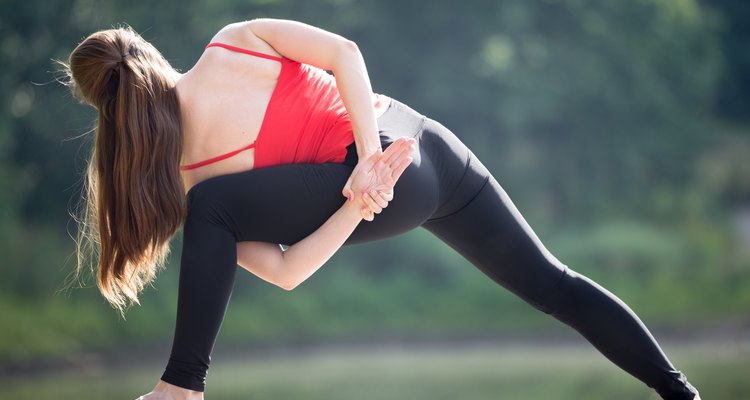
Yoga can't eliminate cellulite, but it could assist other healthy lifestyle habits in reducing its appearance. A healthy diet that's rich in leafy greens and fresh fruits offers vitamins, minerals and antioxidants to improve skin health. Drinking enough water also improves skin appearance. Yoga can reduce stress and make you more mindful at meals, so you're less likely to resort to unhealthy eating habits.
Moving from pose to pose in yoga helps increase circulation and the flow of lymphatic fluid. The fat cells that make up cellulite tend to stay put when your blood and lymphatic, or waste, fluids don't flow smoothly through your body.
Yoga poses, especially twists, increase blood flow, as a review in the International Journal of Yoga showed in 2011. This can help you eliminate waste products from cells so the appearance of cellulite diminishes and, most importantly, you don't accumulate more.
Related Articles

Is Cellulite a Permanent Condition?
Do Body Wraps Help Cellulite?
Anti-Aging Face Exercises

Does Tanning Help Cellulite?
Home Remedies for Cellulite With Castor ...

What Do the Horizontal Lines on the ...
How Exercise Increases Hair Growth
How to Dress a Woman With Slim Hips

How to Get Rid of Cellulite & Spider ...
Exercises for Bags Under the Eyes & ...

How to Remove Shaving Scars
Can You Do Neck Exercises to Prevent ...
The Best Anti-Cellulite Supplements
How to Look Good in a Speedo

Does Exercise Reduce Wrinkles?
Easy Exercises to Tighten Loose Skin
L-Carnitine for Cellulite

How to Avoid Cutting Yourself While ...
How to Get Rid of Hereditary Eye Bags

How to Stop Stubble Itch
References
Writer Bio
Andrea Boldt has been in the fitness industry for more than 20 years. A personal trainer, run coach, group fitness instructor and master yoga teacher, she also holds certifications in holistic and fitness nutrition.