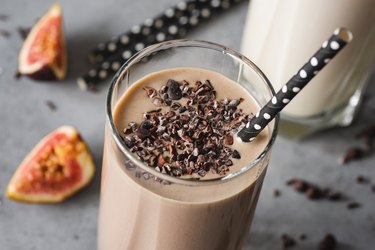
Protein as a macronutrient is all the rage in diet plans — and for good reason. Protein is a building block of every cell, and thus every tissue, in the body. Protein is also harder for the body to digest, so it helps teens stay full. Protein is tasty too — chicken tenders, burgers, sausage and steak are only some of its delicious forms.
Teenagers, in particular, need ample protein because they're still growing. Protein is an essential part of the process of developing muscle tissue and healthy organs. Active teens need more protein than their sedentary peers to aid in recovery from practice and build muscle to use on the court, field or track.
Video of the Day
Video of the Day
Sometimes, getting all the protein needed through meals just isn't possible, and a teen may turn to a protein shake as a supplement. Not all packaged protein shakes are the same, however.
His best choice is to create a shake at home using as many whole ingredients as possible, including milk, nut butter and fruit. If he must have a grab-and-go shake off the shelf, he should read the nutrient label and ingredient list thoroughly to get the best one possible.
Tip
The best protein shake for a teen is one made with whole food ingredients, such as milk, nut butter and fruit.
Protein’s Importance for Teens
Protein supports growth and development, allows for tissue repair and generation, boosts immune system health, coordinates cell activity and provides energy.
In short, if a teen wants healthy muscles, hair, skin and nails, she wants adequate protein, explains a review published in Paediatrics Child Health in 2013. Protein provides energy for activity when a teen exercises for long periods by helping to maintain blood sugar levels. (Carbohydrates are still favored for quick energy bursts.)
Read more: Healthy 7-Day Meal Plan for Teens
About Protein
Each gram of protein equals 4 calories, contributing to a teen's healthy intake of energy throughout the day. The average teen boy needs between 2,000 and 3,200 calories per day, depending on his age, size and activity level. The average teen girl requires 1,600 to 2,400 calories daily, also depending on these factors, says the Academy of Nutrition and Dietetics.
Protein is made up of amino acids, the building blocks of tissue. Not all proteins are created equal, though. Ideally, a teen should seek out complete proteins, which contain all the amino acids in the right ratios to support his body's needs. Meat and dairy are examples of complete proteins.
Protein and Muscle Development
While protein does contribute to muscle growth and repair, eating protein alone doesn't stimulate this activity. The work done when lifting weights or playing sports breaks down muscle fibers that then repair stronger and thicker, making a teen (or adult for that matter) a better athlete with more-developed muscles.
When a person has the amino acids from protein in her system, her body is better able to build or repair muscles. Protein supports muscle development, but doesn't cause it. So eating a ton of protein without exercise won't make anyone more buff.
Read more: Protein Intake for Kids
Teen Protein Needs
The research in Paediatrics Child Health notes that protein should make up about 10 to 30 percent of a teen's total calorie intake. An athletic teen should aim for the higher end of this recommendation.
The Academy of Nutrition and Dietetics says teen athletes need about 0.45 to 0.6 gram of protein for every pound they weigh. This means a 130-pound teen needs between 59 and 78 grams of protein daily.
Too Much Protein
Although protein is an essential nutrient, it's possible for a teen to consume too much. The body can only use so much protein, and the rest doesn't result in more muscle and greater health. Extra calories from protein are stored as fat.
Excessive protein intake can also overwhelm a person's kidneys and promote dehydration. Most teenagers, athletes included, get ample protein daily through the whole foods they consume at breakfast, lunch and dinner.
Protein Sources
Before a teen reaches for a protein shake to meet his protein needs, he should try whole foods: Lean meat, poultry, fish, eggs, dairy products, beans and nuts, and soy are good whole food protein sources.
The Academy of Nutrition and Dietetics suggests a number of good sources of protein for teen athletes (or anyone):
- 4 ounces of chicken
breast for 33 grams of protein
- 4 ounces of
salmon for 29 grams of protein
- 4 ounces of ground
beef for 26 grams of protein
- 1 cup of milk
for 8 grams of protein
- 1 egg for 6
grams of protein
- 1/2 cup of tofu for
11 grams of protein
- 1 ounce of nuts
for 6 grams of protein
A teen can spread his protein out over the course of the day to optimize intake.
For example, he may consume eggs or milk at breakfast, chicken at lunch, and a burger or seared salmon for dinner — and he'll likely get enough protein to support his body's needs. He can add snacks, such as nut butter, hard-boiled eggs, tuna packets or Greek yogurt, to further boost his intake.
Protein Shakes for Teens
Protein shakes shouldn't replace whole foods, but may serve as a supplement if a teen can't eat enough protein or can't find a convenient source. For example, it's not always possible for a teen athlete to chow down on a chicken breast after a big game, but a protein shake is portable and convenient. Even a make-your-own shake is easily transported in a thermos or tumbler.
Protein shakes may also be a good bet when a teen rushes off to school in the morning without breakfast or skips lunch because whole food is unappealing or takes too long to eat. A protein shake is a better option than not eating at all.
Homemade Protein Shakes
A homemade protein shake made with whole ingredients is the best option for a teen. Ingredients and flavors may be tweaked to her liking. A homemade shake also allows for control of the amounts and types of protein included.
To make an easy protein shake, she can add nut butter to fruit, milk and ice in a blender and whip it until smooth. Two tablespoons of nut butter add between 7 and 8 grams of protein, and a cup of milk adds 8 grams, so this protein shake contains 14 to 16 grams of protein, total.
Add a cup of Greek yogurt and bring the protein count up another 18 to 22 grams (even 1/2 cup would greatly raise the protein count).
Protein Powders
For a protein shake with a greater amount of protein, a teen would need to add a protein supplement, such as whey, soy, egg, hemp or pea protein. The type selected depends on his personal preferences and any dietary restrictions he might have.
Before dumping protein powder into a shake, however, he should consider if the extra 20 to 30 grams are really necessary. Many times, this is in excess of what the body needs to thrive.
Whey Protein
Whey protein is often considered the gold standard of supplements when the goal is to repair muscles after exercise or build muscle. Nutrients published research in 2016, noting that whey protein is high in the amino acid leucine, which is valuable to muscle protein synthesis.
Whey is also fast digesting, so it gets to the worked muscles quickly when consumed around the time of exercise. This research supports whey's use for young and old adults; it's likely an effective protein powder for teens too.
When purchasing whey protein powder to add to a homemade smoothie, a teen should look for one that doesn't have added carbohydrates, fillers, supplements, fats or excessive sugar.
Whey and Acne
Research does show that too much whey protein, which is derived from milk, may increase the incidence of acne in some teens. Anais Brasileiros de Dermatolotgia, an official publication from the Brazilian Society of Dermatology, published a 2013 study showing an association between whey protein supplementation and the onset of acne.
Prepurchased Protein Shakes
Prepurchased protein shakes sound convenient and are marketed as a workout support food, so they seem as if they would be healthy. Often, however, these shakes contain a lot of sugar, carbohydrates, chemicals, preservatives and other ingredients that aren't appropriate for a teen.
Some of these over-the-counter shakes (and protein powders too) can be contaminated with steroids, hormones and heavy metals — all of which can pose a danger to health. A Consumer Reports exposé , updated in 2018, found that many of these protein supplements are laced with heavy metals, including cadmium, mercury, arsenic and lead. They also can contain toxins, such as bisphenol A (BPA), which lines food cans and is a component in plastic containers.
Because prepackaged protein drinks are considered "supplements," they're not closely regulated by the U.S. Food and Drug Administration. Supplements for a teen should be closely reviewed by her doctor.
For quality protein drinks to purchase off the shelf, teens and parents should look for brands OK'd by Eat This, Not That, including CalNaturale Svelte Organic Protein Drink made with non-GMO soy protein, Organic Valley Organic Fuel High Protein Shake made with filtered skim milk and cream, and Odwalla Strawberry protein shake made from milk and soy protein that has less sugar than many other Odwalla offerings.
Comprehensive Diet
Overemphasis on any one nutrient is not advisable for a teen, regardless of whether or not he's an athlete. Carbohydrates, such as whole grains, potatoes and fruits, remain a mainstay in a teen's diet as this macronutrient supplies important energy.
Read more: What Are the Benefits of a Protein Shake?
A teen needs to get enough fat too, especially from unsaturated sources. Avocados, nuts and olive oil are excellent options. Omega-3 fatty acids, found in fatty fish like salmon, are supportive of brain health.
A protein shake can be an occasional addition to a teen's meal plan and should be made at home with whole ingredients to keep it as wholesome and nutritious as possible. Whole foods contain the macronutrients, but also supply micronutrients, such as vitamins, minerals and antioxidants to boost well-being.
- Eatright.org: How Teen Athletes Can Build Muscle With Protein
- Eat This, Not That: 26 Best and Worst Grab-and-Go Protein Shakes
- Consumer Reports: Arsenic, Lead Found in Popular Protein Supplements
- Anais Brasileiros de Dermatolotgia: Incidence of Acne Vulgaris in Young Adult Users of Protein-Calorie Supplements in the City of João Pessoa
- Nutrients: Protein Considerations for Optimising Skeletal Muscle Mass in Healthy Young and Older Adults
- Healthline: The Best Types of Protein Powder
- Eatright.org: How Many Calories Does My Teen Need?
- Paediatrics Child Health: Sport Nutrition for Young Athletes
- USDA National Agricultural Library: How Many Calories Are in One Gram of Fat, Carbohydrate, or Protein?