What does fact checked mean?
At Healthfully, we strive to deliver objective content that is accurate and up-to-date. Our team periodically reviews articles in order to ensure content quality. The sources cited below consist of evidence from peer-reviewed journals, prominent medical organizations, academic associations, and government data.
- Journal of Strength and Conditioning Research: Effect of Creatine Supplementation During Cast-Induced Immobilization on the Preservation of Muscle Mass, Strength and Endurance
- Journal of Strength and Conditioning Research: Effect of Creatine Supplementation During Cast-Induced Immobilization on the Preservation of Muscle Mass, Strength and Endurance
- International Journal of Sport Nutrition and Exercise Metabolism: The Effect of Acute Taurine Ingestion on Endurance Performance and Metabolism in Well-Trained Cyclists
- International Journal of Sport Nutrition and Exercise Metabolism: The Effect of Acute Taurine Ingestion on Endurance Performance and Metabolism in Well-Trained Cyclists
- Amino Acids: Role of Taurine Supplementation to Prevent Exercise-Induced Oxidative Stress in Healthy Young Men
- Amino Acids: Role of Taurine Supplementation to Prevent Exercise-Induced Oxidative Stress in Healthy Young Men
The information contained on this site is for informational purposes only, and should not be used as a substitute for the advice of a professional health care provider. Please check with the appropriate physician regarding health questions and concerns. Although we strive to deliver accurate and up-to-date information, no guarantee to that effect is made.
Health Benefits of Body Fortress Super Advanced Whey Protein
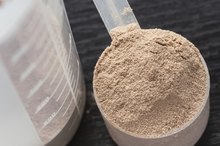
Body Fortress Super Advanced Whey Protein is a supplement intended for use by bodybuilders and other athletes who need high levels of protein to support their activities. If you are not a strength-training athlete, you still may benefit from Body Fortress Super Advanced Whey Protein, as protein is a vital nutrient. According to Body Fortress, the protein supplement is effective for athletes because of its unique blend of proteins and its inclusion of amino acids, including glutamine and leucine, which may offer performance-enhancing benefits.
Increased Muscle Building
Although all protein has the potential to improve muscle building, Body Fortress Super Advanced Whey Protein has benefits other sources may not provide. The protein product is made from whey protein, which is absorbed by your body more quickly than other protein sources. In addition, Super Advanced Whey Protein offers high levels of leucine, a key amino acid in anabolism, or muscle building. The "American Journal of Physiology - Endocrinology and Metabolism" says the addition of leucine to a post-workout protein supplement significantly increases muscle protein and insulin response 1. The researchers note that adding leucine to post-workout protein shakes may be an "effective strategy to increase muscle anabolism."
- Although all protein has the potential to improve muscle building, Body Fortress Super Advanced Whey Protein has benefits other sources may not provide.
- In addition, Super Advanced Whey Protein offers high levels of leucine, a key amino acid in anabolism, or muscle building.
Increased Muscular Endurance
Benefits & Side Effects of HMB
Learn More
Another ingredient contained in Super Advanced Whey Protein that may provide benefits other protein sources cannot is creatine. Although creatine is most often associated with increased muscle size, it may improve endurance as well. A study published in the "Journal of Strength and Conditioning Research" found that daily supplementation of creatine significantly improved muscular endurance compared to a placebo 2.
Improved Fat Oxidation
Fat oxidation is the process by which your body burns fat to produce energy. This is important because it can improve your body composition and ensure that the weight you lose on a diet plan is from fat, rather than muscle. Because Super Advanced Whey Protein contains the amino acid taurine, it may improve fat oxidation. The "International Journal of Sport Nutrition and Exercise Metabolism" reported that taurine supplementation increased fat oxidation during exercise 3.
- Fat oxidation is the process by which your body burns fat to produce energy.
- This is important because it can improve your body composition and ensure that the weight you lose on a diet plan is from fat, rather than muscle.
Reduced Oxidative Damage
Colostrum & Weight Loss
Learn More
Another benefit provided by the taurine contained in Super Advanced Whey Protein is that it may reduce oxidative damage. Oxidative damage refers to damage to your cells induced by stress, such as physical exercise 4. Oxidative damage is of particular concern for athletes involved in intensive training. According to a study in the journal "Amino Acids," supplementation of taurine "may attenuate exercise-induced DNA damage and enhance the capacity of exercise due to its cellular protective properties. 4"
Related Articles

Benefits & Side Effects of HMB
Learn More

Colostrum & Weight Loss
Learn More

Creatine Vs. Nitro Tech
Learn More

How Much Protein Do You Need When Lifting Weights?
Learn More

What are the Benefits of ProArgi9 L-Arginine?
Learn More
The Side Effects & Dangers of Creatine Supplements
Learn More

What Are the Benefits of Amino Fuel?
Learn More

Protein Vs. No Protein for a Workout
Learn More

Does Taurine Help With Weight Loss?
Learn More

Can Xyience Energy Drinks Help You Lose Weight?
Learn More
References
- American Journal of Physiology - Endocrinology and Metabolism: Combined Ingestion of Protein and Free Leucine With Carbohydrate Increases Postexercise Muscle Protein Synthesis in Vivo in Male Subjects
- Journal of Strength and Conditioning Research: Effect of Creatine Supplementation During Cast-Induced Immobilization on the Preservation of Muscle Mass, Strength and Endurance
- International Journal of Sport Nutrition and Exercise Metabolism: The Effect of Acute Taurine Ingestion on Endurance Performance and Metabolism in Well-Trained Cyclists
- Amino Acids: Role of Taurine Supplementation to Prevent Exercise-Induced Oxidative Stress in Healthy Young Men
- Hoffman, J. R., & Falvo, M. J. (2004). Proteinâwhich is best?Journal of Sports Science and Medicine, 3(3), 118.
- Luhovyy, B. L., Akhavan, T., & Anderson, G. H. (2007). Whey proteins in the regulation of food intake and satiety. Journal of the American College of Nutrition, 26(6), 704S-712S.
- Frestedt, J. L., Zenk, J. L., Kuskowski, M. A., Ward, L. S., & Bastian, E. D. (2008). A whey-protein supplement increases fat loss and spares lean muscle in obese subjects: a randomized human clinical study. Nutrition & Metabolism, 5(1), 8.
- Baer, D. J., Stote, K. S., Clevidence, B. A., Harris, G. K., Paul, D. R., & Rumpler, W. V. (2006). Whey protein decreases body weight and fat in supplemented overweight and obese adults. The FASEB Journal, 20(4), A427-A427.
Writer Bio
Brian Willett began writing in 2005. He has been published in the "Buffalo News," the "Daytona Times" and "Natural Muscle Magazine." Willett also writes for Bloginity.com and Bodybuilding.com. He is an American Council on Exercise-certified personal trainer and earned a Bachelor of Arts in journalism from the University of North Carolina.