If your visits to the bathroom are sporadic at best, your bowel habits might fall within the definition of constipation. With this condition, you have no more than three bowel movements per week. A variety of factors can cause constipation, but changes to your diet -- including eating figs -- can help to restore the healthy functioning of your bowels.
Understanding Constipation
Video of the Day
In addition to infrequent bowel movements throughout the week, constipation can also cause you to have hard or large stools that are difficult to pass. In addition, your bowel movements might be painful. Constipation can result from factors such as a low-fiber diet, a shortage of exercise, dehydration, certain medications and even stress. If you don't take the opportunity to have a bowel movement upon feeling the urge, you might also experience constipation.
Video of the Day
Make Fiber a Priority
Increasing your fiber intake is a simple home remedy that can often relieve constipation. On average, American adults only get about 15 grams of total dietary fiber per day. Your recommended dietary allowance of fiber is significantly higher and based on your gender and age. Women between the ages of 19 and 50 should consume 25 grams of fiber per day, while men in the same age range should get 38 grams of fiber per day.
Fiber-Rich Dried Figs
Although no specific amount of dietary fiber will automatically cure your constipation, eating figs provides a significant dose of fiber that can help your bowels begin to operate correctly. Dried figs are loaded with fiber -- a single dried fig contains 0.8 gram of total fiber. Four dried figs provide more fiber than you'd get in three medium-sized prunes, one small apple, one small orange or 1 1/4 cup of fresh strawberries.
Benefits of Fresh Figs
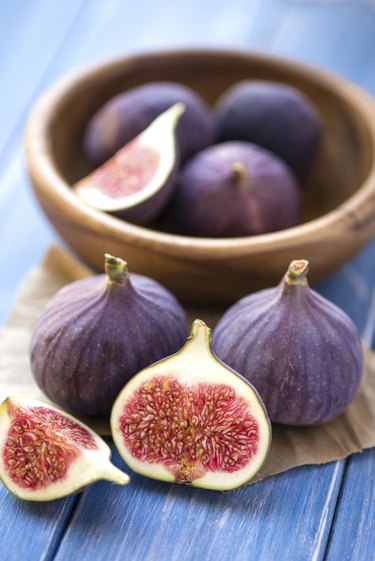
If you can find fresh figs in the supermarket, they provide a different type of taste to conventional fruits while also boosting your fiber intake. A large, fresh fig, with a diameter of about 2.5 inches, contains 1.9 grams of total fiber. A small, fresh fig, with a diameter of about 1.5 inches, has 1.2 grams of total fiber. A handful of fresh figs, regardless of their size, has the potential to lessen your constipation. Add fresh figs to your diet by roasting them with shallots and herbs or slicing them on top of a green salad. Watch out for spoilage -- fresh figs only stay good for a couple of days after purchasing.
Cure Your Constipation Naturally
Figs aren't the only potential remedy for constipation. MedlinePlus advises drinking at least eight glasses of water every day to help restore healthy bowel function while also increasing the amount of physical activity you get. Exercises such as jogging, riding your bicycle or walking provide a multitude of health benefits but might also help to relieve your constipation. Continue these healthy habits even once you're no longer constipated, as they can help you avoid future bouts with this condition.
- MedlinePlus: Constipation
- University of California, San Francisco: Increasing Fiber Intake
- Institute of Medicine: Dietary Reference Intakes (DRIs): Recommended Dietary Allowances and Adequate Intakes, Total Water and Macronutrients
- Harvard University Health Services: Fiber Content of Foods in Common Portions
- U.S. Department of Agriculture National Nutrient Database for Standard Reference: Figs, Dried, Uncooked
- U.S. Department of Agriculture National Nutrient Database for Standard Reference: Figs, Raw