What does fact checked mean?
At Healthfully, we strive to deliver objective content that is accurate and up-to-date. Our team periodically reviews articles in order to ensure content quality. The sources cited below consist of evidence from peer-reviewed journals, prominent medical organizations, academic associations, and government data.
- National Digestive Disease Information Clearinghouse: Irritable Bowel Syndrome
- Cleveland Clinic: Foods to Choose if You Have Mixed Irritable Bowel Syndrome
The information contained on this site is for informational purposes only, and should not be used as a substitute for the advice of a professional health care provider. Please check with the appropriate physician regarding health questions and concerns. Although we strive to deliver accurate and up-to-date information, no guarantee to that effect is made.
Food List for Irritable Bowel Syndrome
An estimated 10 to 15 percent of the population in the United States has a condition called irritable bowel syndrome, or IBS 2. The gastrointestinal disorder is characterized by a series of symptoms including abdominal pain, cramping and changes in bowel movements. Although IBS is not well understood, dietary therapy seems to help many people. Talk to your doctor before changing your diet, particularly if you are taking medication.
If you are experiencing serious medical symptoms, seek emergency treatment immediately.
Food Journal
A low-fat, high-fiber diet is generally recommended for patients with IBS, according to the University of Pittsburgh Medical Center. However, every person with IBS has unique triggers -- foods or beverages that exacerbate symptoms or cause a flare-up. The Cleveland Clinic recommends keeping a food journal to discover your triggers, and make a food list tailored to your illness. Write down everything you eat with corresponding times, and take detailed notes about how you are feeling. Review the journal for trends. For instance, if you consistently have cramps after your morning coffee, you may need to eliminate the beverage.
- A low-fat, high-fiber diet is generally recommended for patients with IBS, according to the University of Pittsburgh Medical Center.
- However, every person with IBS has unique triggers -- foods or beverages that exacerbate symptoms or cause a flare-up.
High-Fiber Foods
Good Foods to Eat for IBS Sufferers
Learn More
Dietary fiber can help bind loose stools and make hard, rocky stools easier to pass. The UPMC recommends that people with IBS get 20 to 35 grams of dietary fiber per day. IBS is an unpredictable illness and you may have to modify your diet as symptoms change. Certain foods -- beans, some raw vegetables and nuts -- can produce loose stools or make you gassy and uncomfortable, according to UPMC and the Cleveland Clinic. The same foods may have the opposite effect and can improve symptoms. Increase your fiber intake slowly -- by 2 to 3 grams per day -- to minimize your chance of ill-effects.
- Dietary fiber can help bind loose stools and make hard, rocky stools easier to pass.
- IBS is an unpredictable illness and you may have to modify your diet as symptoms change.
Replenishing Electrolytes
If you have IBS with diarrhea or mixed IBS, chronic diarrhea may strip your body of electrolytes including sodium and potassium. To restore electrolyte balance, UPMC recommends nutrient-dense foods such as:
- avocado
- bananas
- fish
- nectarines
- peaches
- apricots,
- boiled or mashed potatoes
To alleviate diarrhea, try binding foods such as
- applesauce
- barley
- oats
- green beans
- cooked carrots
Foods to Avoid
How to Stop Diarrhea with Household Items
Learn More
Sensitivity to foods varies, but it's generally a good idea to limit your consumption of high-fat foods. UPMC recommends choosing low-fat dairy and baked, instead of fried, foods whenever possible. If you have trouble with diarrhea, a low-residue diet may be helpful. This means limiting raw produce and bran-based grains and opting for soft, cooked fruits and vegetables.
- Sensitivity to foods varies, but it's generally a good idea to limit your consumption of high-fat foods.
- UPMC recommends choosing low-fat dairy and baked, instead of fried, foods whenever possible.
Related Articles
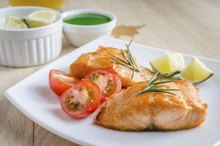
Good Foods to Eat for IBS Sufferers
Learn More
How to Stop Diarrhea with Household Items
Learn More

Gas, Abdominal Pain & Bloating After Eating
Learn More
What Makes the Body Not Absorb Nutrients?
Learn More

Caffeine Withdrawal & Diarrhea
Learn More
Diet for Diarrhea With Bloating
Learn More

Stomach Pain After Eating With Diarrhea
Learn More

What Are the Causes of Diarrhea With Flatulence?
Learn More
Unexplainable Stomach Pains After Every Meal
Learn More

Causes of Intermittent Diarrhea & Gas
Learn More
References
Writer Bio
Carolyn Robbins began writing in 2006. Her work appears on various websites and covers various topics including neuroscience, physiology, nutrition and fitness. Robbins graduated with a bachelor of science degree in biology and theology from Saint Vincent College.