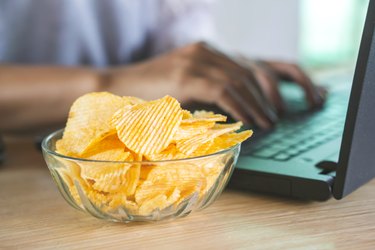
You munched on a bag of potato chips while watching TV, and afterward you felt the familiar burn of acid reflux. Is it the salt in those chips that brings on heartburn? You might be thinking that salt is the culprit, but it's likely eating too much of certain other foods that cause heartburn.
Read more: Signs and Symptoms of Too Much Salt in the Diet
Video of the Day
Video of the Day
Salt and Acid Reflux
Acid reflux happens when stomach contents leak into the esophagus. Stomach acid irritates the lining of the esophagus, causing heartburn. When acid reflux happens frequently, it's called GERD, or gastroesophageal reflux disease. GERD damages the esophagus and can lead to Barrett's esophagus, a precancerous condition, according to the American College of Gastroenterology.
Acid reflux often has a physical cause, says John Dumot, DO, gastroenterologist and director of University Hospitals Digestive Health Institute in Cleveland, Ohio. These can be a hiatal hernia, when the upper part of the stomach protrudes up through the diaphragm, or a loose lower esophageal sphincter, the valve that keeps stomach contents from backing up.
"There's some experimental evidence that the lower esophageal sphincter does relax after a salty meal. Theoretically, it's possible," Dr. Dumot says. However, he adds, "many, many people salt their food and don't have acid reflux."
Obesity, eating too much and some specific foods — particularly meat products and foods high in fat — increase the risk for acid reflux, he says.
"It's the volume and type of food," Dr. Dumot says. "The more fat in the meal, the longer it stays in the stomach. The larger the meal, the more acid is produced."
Too much salt might lead to fluid retention, but that's not the same as obesity, he notes. People who get heartburn after a salty meal might consider what that meal contained.
"Is it really the salt or the type of food that's salty?" Dr. Dumot asks.
Very few studies have raised the possibility that a high salt intake might contribute to acid reflux.
Dr. Dumot says there's little solid research supporting the idea that salt intake worsens or causes acid reflux. That's probably why it's not mentioned in the American College of Gastroenterology's guidelines for diagnosis and management of reflux disease, he says.
Foods That Cause Acid Reflux
Some foods can trigger or worsen acid reflux. But trigger foods vary from person to person, according to Beth Israel Lahey Health's Winchester Hospital. Keep a record of what you eat for a couple of weeks and note which foods seem to cause heartburn for you so you can avoid them in the future.
Among the foods most commonly reported as troublesome for acid reflux are:
- Fatty and fried foods
- Acidic foods, such as tomato sauce and citrus fruits
- Spicy foods, including hot peppers and onions
- Carbonated drinks
- Peppermint
- Coffee
- Alcohol
To keep symptoms at bay, follow these tips from Beth Israel Lahey Health:
- Eat smaller meals.
- Eat slowly.
- Avoid lying down during or after a meal.
- Avoid eating within three hours of bedtime.
- Limit stress.
- Quit smoking.
- Chew non-mint gum.
Could Some Salt Be Good for Reflux?
If you search the internet for acid reflux and salt, you may come across claims that some salt is good medicine, especially pink Himalayan salt. Although popular, pink salt only differs from sea salt and table salt in the trace amounts of impurities it contains. All are mostly sodium chloride.
"Salt is salt," Dr. Dumot says. "Whatever [other] types of things that might be in there are secondary."
As far as using salt to buffer stomach acid, he says, "salt does not neutralize acid at all."
Dr. Dumot urges anyone who has frequent heartburn or heartburn at night to see a gastroenterologist.
Salt does bring out flavor in food, which Dr. Dumot says is fine if it helps people eat more vegetables and less fat and meat.
"Salt in moderation, especially on a plant-based diet, I'm all for it," Dr. Dumot says. "When I tell patients to eat Brussels sprouts and broccoli, I want it to be as palatable as possible. I would never tell people to not salt it."
- American College of Gastroenterology: “Overview: What Is Barrett’s Esophagus?”
- John Dumot, DO, gastroenterologist, director, University Hospitals Digestive Health Institute, and professor, Case Western Reserve University School of Medicine, both in Cleveland, Ohio
- Beth Israel Lahey Health: Winchester Hospital: “GERD Diet”
Is this an emergency? If you are experiencing serious medical symptoms, please see the National Library of Medicine’s list of signs you need emergency medical attention or call 911.