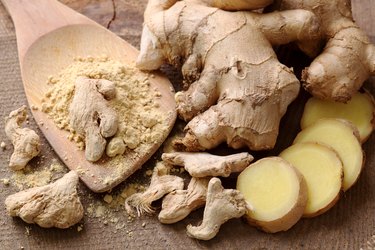
Eating raw ginger might not sound appetizing, but it can be helpful. Ginger, or Zingiber officinale as it's scientifically known, has been used as both food and medicine for thousands of years and is still the go-to treatment for motion and morning sickness.
This underground stem, which is used as both a spice and herb, is packed with active ingredients that play a variety of roles in your body. It's available in various forms, such as dried powder, crystallized, in capsules, and as an extract. But eating raw ginger allows you to benefit quickly from its healing powers.
Video of the Day
Video of the Day
Tip
Specific uses of ginger dictate the amount that you should consume. Talk to your doctor about ginger and any other supplements you are taking to avoid dangerous side effects.
Read more: Benefits of Garlic & Ginger
Determine the Recommended Amount
The amount of ginger you should consume varies depending on the reason you're eating it. According to the Arthritis Foundation, ginger might reduce joint pain and inflammation caused by arthritis. Up to 2 grams of ginger can be taken, in three divided doses per day. Ginger can also be consumed in tea — up to 4 cups per day.
In a 2010 study published in European Oncology, researchers found the greatest effectiveness for decreasing nausea when one quarter teaspoon of ground ginger was given to patients. The authors pointed out that raw ginger was not studied, and could possibly produce different results.
Recognize Active Compounds
Some of the healing compounds in ginger are pungent anti-inflammatory phenols called gingerols and shogaols, according to a 2016 article published in Integrative Medicine Insights.
Ginger has antiinflammatory properties, and has been shown to suppress inflammatory molecules called leukotreines. According to the Arthritis Foundation, it could potentially be more effective than over-the-counter and prescription antiinflammatory medications.
Know the Uses of Ginger
In terms of motion sickness, ginger consistently performs as effectively or more effectively than a drug commonly prescribed for motion sickness, dimenhydrinate, says a February 2010 article published in Oncology Nursing. It is suggested to consume ginger for 1 to 2 days prior to a trip where motion sickness may be an issue and continuing on the trip.
Ginger does not cause drowsiness, which can be a side effect of nausea medications. According to the National Center for Complementary and Integrative Health, some people could have mild side effects of eating ginger root, including diarrhea, abdominal cramping, heartburn or gas.
However, side effects from eating raw ginger are rare. If you are prone to them, you might find some relief by taking ginger supplements, making ginger tea or sprinkling ginger powder into your foods.
Read more: Ginger Water Benefits
Be Aware of Potential Concerns
While the FDA lists ginger on its generally regarded as safe list, you should always check with your physician before eating raw ginger to treat an ailment.
Finally, speak to your doctor about taking ginger if you are on blood-thinning medications or taking other blood-thinning herbs. Ginger could potentially impact how effective these drugs work.
- Integrative Medicine Insights: "The Effectiveness of Ginger in the Prevention of Nausea and Vomiting during Pregnancy and Chemotherapy"
- Oncology Nursing: "Ginger"
- National Center for Complementary and Integrative Health: "Ginger"
- FDA: "Substances Generally Recognized As Safe"
- Arthritis Foundation: "Ginger"
- European Oncology: "Treatment of Chemotherapy-Induced Nausea in Cancer Patients"