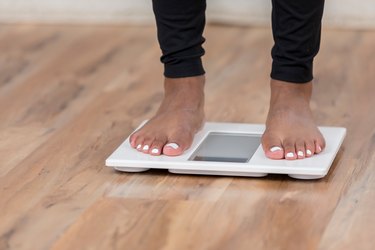
The body mass index, or BMI, is a tool that uses your height and weight to predict the amount of body fat you have. Widely used by doctors, insurance companies and other health institutions, the BMI measurement can give you a general idea of your overall health.
However, the BMI can be inaccurate, especially for athletic individuals. If you want a more accurate picture of your health, consider alternative measurements that can give you a more complete understanding of your body composition.
Video of the Day
Video of the Day
Read more: What Does a BMI of 25 Mean?
What Does BMI Measure?
The BMI uses your height and weight to calculate the amount of body fat you have, according to the National Institutes of Health (NIH). This formula uses general averages to determine whether you are underweight, normal, overweight or obese.
The formula used to calculate BMI is simple: just divide your weight in kilograms by your height in meters squared, according to the Centers for Disease Control and Prevention (CDC). But if you prefer to use pounds and inches, the equation is as follows:
BMI = [weight / (height x height)] x 703. Or, you can simply use LIVESTRONG.com's BMI calculator.
Here's how BMI generally breaks down:
- Less than 18.5: Underweight
- 18.5 to 24.9: Normal
- 25 to 29.9: Overweight
- 30 or higher: Obese
Can You Be Healthy With a High BMI?
Although your BMI is a fairly accurate estimate of your overall body fat, it's not the best indicator for some people.
For one, BMI often largely overestimates the body fat in those with a muscular build, according to the NIH. Why? Muscle has a higher density than fat and weighs more. So, it's easy for a BMI calculation to misinterpret muscle mass for a much larger amount of fat.
BMI also neglects waist circumference, which can help screen for possible health risks associated with obesity, according to the NIH. If most of your body fat is located around your waist, rather than your hips, it is possible that you're at a greater risk for heart disease and type 2 diabetes.
Other Measurements of Health
While your body mass index can give you a peek into your health, there are other measurements to consider. Your waist circumference, mentioned above, is another easy-to-measure metric that can give you an additional window into the status of your health. Typically, measurements greater than 35 inches for women or 40 inches for men indicate potential increased health risk, according to the NIH.
While it requires some additional resources, measuring your body composition is a better method to determine how much of your body is actually made up muscle, or fat, according to the CDC. One of these methods involves using calipers to measure skinfold thickness. These measurements can then help determine the ratio of fat to muscle in your body.
Other more advanced measures include bioelectrical impedance, underwater weighing or dual energy x-ray absorption. While these methods are certainly on the more accurate end, they can be difficult to access and expensive.
For general health purposes, taking waist and skinfold measurements can give you a fairly accurate picture of your health. Especially if you're an active, athletic individual, your BMI may indicate overweight or obese levels by misinterpreting your muscle mass as body fat.
Was this article helpful?
150 Characters Max
0/150
Thank you for sharing!
Thank you for your feedback!