Diseases That Affect the Tendons
Several diseases can affect the tendons. According to the American Academy of Family Physicians, or AAFP, an accurate diagnosis of a tendon-related problem requires a health care provider to assess the cause of the patient's pain or discomfort and the anatomy of the involved region, along with performing appropriate orthopedic testing and other physical examination maneuvers 1. While trauma-related tendon injuries are relatively common, diseases may also affect the tendons and cause considerable pain.
If you are experiencing serious medical symptoms, seek emergency treatment immediately.
Tendinosis
Tendinosis is a disease that affects the tendons. According to the AAFP, tendinitis or tendon inflammation is commonly confused with tendinosis, which is a degenerative condition with chronic symptoms. The AAFP notes that acute inflammatory tendinopathies do exist, but most patients seen and treated by physicians for chronic tendon problems will have tendinosis, not tendinitis. Tendinosis may be caused by small tears in or around the tendon's connective tissue, which causes an up-regulation of tendon repair cells. The connective tissue tears may lead to decreased tendon tensile strength, which increases the likelihood of a tendon rupture. The AAFP states that about 80 percent of patients with overuse tendinopathies fully recover within three to six months, and that common treatment methods for tendinosis include ultrasound, shock wave therapy, massage and activity modification.
- Tendinosis is a disease that affects the tendons.
- The AAFP notes that acute inflammatory tendinopathies do exist, but most patients seen and treated by physicians for chronic tendon problems will have tendinosis, not tendinitis.
Enthesopathy
What Are the Causes of Lateral Foot Pain?
Learn More
Tendon enthesopathy is a disease that affects the tendons 2. The Medcyclopaedia website states that tendon enthesopathy is an abnormality associated with the attachment of a tendon to a bone, and that the location where a tendon or ligament attaches to a bone is called an enthesis 2. According to the Medcyclopaedia website, inflammatory abnormalities of entheses are often seen in spondyloarthopathies, such as:
- ankylosing spondylitis
- Reiters syndrome
- psoriatic arthritis
- rheumatoid arthritis 2
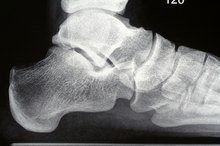
Common signs or symptoms associated with inflammatory tendon enthesopathy include edema or swelling, bone erosion and proliferation of nearby bones and a hardening or sclerosis of tissues 2. The Medcyclopaedia website notes that tendon enthesopathy may also be caused by degenerative disorders, which may lead to bony outgrowth and enthesophytes or bony proliferation at an enthesis 2. Numerous enthesopathy-related changes are visible on X-rays of an affected area 2.
Tenosynovitis
Tendons in the hands, wrists and feet are most frequently affected, states UMMC, and tenosynovitis caused by an infected cut to the hands or wrists may lead to a medical emergency that requires surgery as an intervention 3. Fever, swelling and redness are signs of an infection.
Related Articles
What Are the Causes of Lateral Foot Pain?
Learn More

Vitamins for Tendinitis
Learn More
Knee Cap Pain & Swelling
Learn More
What Is Plantar Calcaneal Enthesophyte?
Learn More

Vitamin B-6 & Tendonitis
Learn More

Hand Tendon Exercises
Learn More

Muscles Involved in Hip Flexion
Learn More

What Causes Pain to the Back of Your Ankle & Heel When You Walk?
Learn More
Causes of Pain in the Upper Left Hip
Learn More

Recovery Time for a Torn Plantar Fascia
Learn More
References
Writer Bio
Martin Hughes is a chiropractic physician, health writer and the co-owner of a website devoted to natural footgear. He writes about health, fitness, diet and lifestyle. Hughes earned his Bachelor of Science in kinesiology at the University of Waterloo and his doctoral degree from Western States Chiropractic College in Portland, Ore.