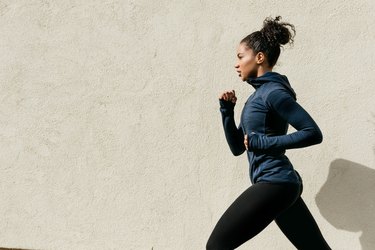
Due to iron's role in transporting oxygen through your body, low ferritin levels and athletic performance go hand-in-hand — if you have low levels of iron, exercise may be to blame. You are especially at risk if you engage in heavy training or endurance sports.
Tip
Exercise can lower the iron levels in your blood, especially if you exercise at a high intensity or for long periods of time.
Video of the Day
Iron and Exercise
Iron deficiency anemia is the most common mineral deficiency in the world, according to a study published in August 2012 in Medicine & Science in Sports & Exercise. This includes the United States, where 3 to 5 percent of the population are affected by iron deficiency anemia. An even higher percentage are low in iron stores but not yet anemic.
Video of the Day
Iron plays a major role in transporting oxygen and energy production in aerobic exercise. Because of this, one of the main symptoms of iron deficiency is decreased exercise performance, reported a review published in October 2018 in the European Journal of Heart Failure. Other primary exercise-induced anemia symptoms include fatigue, weakness, shortness of breath and dizziness, according to the Mayo Clinic.
There are many causes of iron deficiency, including an inability to absorb enough through diet because of celiac or Crohn's diseases, abnormally long or heavy menstruation and certain types of cancer, reports the U.S. National Library of Medicine.
Read more: The Best Iron Supplement for Low Ferritin Levels
Low Iron From Exercise
According to Oregon State University Athletic Sports Nutrition, iron deficiency in athletes is usually the result of not getting enough of the mineral through diet. However, excess losses of iron through sweat can also lead to low iron levels.
Other, more complex, factors may be at play. As explained by authors of a review published in the Strength and Conditioning Journal in April 2016, post-exercise inflammation increases levels hepcidin, a hormone that regulates iron iron in the body. High hepcidin levels can inhibit iron absorption in the intestine, according to an article in Frontiers in Physiology in October 2019.
The Strength and Conditioning Journal review reports that people who engage in prolonged high-intensity exercise, especially types that include repetitive foot strikes — such as running — are most at risk. Females are at an even higher risk due to iron losses in menstruation.
Preventing Low Iron and Anemia
There are several reasons that you could have lower than normal blood iron levels; however, if you regularly engage in prolonged exercise — and if you have other risk factors — you should tell your doctor about your concerns.
The best way to prevent low iron is to get enough in your daily diet. People who have the capacity to get pregnant need 18 milligrams a day, according to the National Institutes of Health. People who don't need 8 milligrams a day. Foods rich in iron include:
- Fortified breakfast cereals
- Oysters
- White beans
- Dark chocolate
- Beef liver
- Lentils
- Spinach
- Tofu
- Kidney beans
- Sardines
- Chickpeas
If your deficiency is mild, you may be able to bring your levels up just by eating more of these foods. However, if you have moderate to severe deficiency that has progressed to anemia, you will need supplemental iron.
It is best to visit your doctor for a blood test before deciding to take a supplement. Fatigue and poor exercise performance are not due to iron deficiency in the majority of cases, says Oregon State University. Instead it is often due to inadequate calorie intake for the amount and intensity of exercise or not getting enough sleep.
Excess iron intake is also a concern for males who take large doses of supplemental iron. Oregon State University reports that hemochromatosis — high blood iron levels — is a major concern among athletes, especially younger white males.
- National Institutes of Health: Office of Dietary Supplements: "Dietary Supplement Fact Sheet: Iron"
- Oregon State University Athletic Sports Nutrition: "Iron Screening Protocol"
- Medicine & Science in Sports & Exercise: "Iron Status Is Associated with Endurance Performance and Training in Female Rowers"
- European Journal of Heart Failure: "Screening, Diagnosis and Treatment of Iron Deficiency in Chronic Heart Failure: Putting the 2016 European Society of Cardiology Heart Failure Guidelines Into Clinical Practice"
- Mayo Clinic: "Iron Deficiency Anemia"
- U.S. National Library of Medicine: "Iron Deficiency Anemia"
- Strength and Conditioning Journal: "Exercise-Associated Iron Deficiency"
- Frontiers in Physiology: "Hepcidin and Anemia: A Tight Relationship"
Is this an emergency? If you are experiencing serious medical symptoms, please see the National Library of Medicine’s list of signs you need emergency medical attention or call 911.