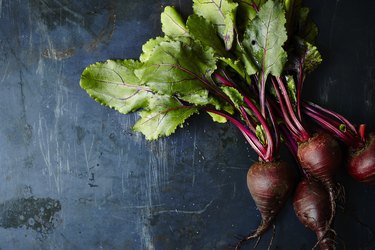
Not only are beets colorful and full of flavor, they are rich in nutrients and fiber that have a positive effect on the health of your bowels and your whole body. With excess consumption of beets, diarrhea may be a side effect for some people.
However, beets are a rich source of nutrients, especially potassium, copper, manganese and folate. In addition, beets are heart healthy and can reduce the risk of bowel cancer.
Video of the Day
Video of the Day
Macronutrients in Beets
A serving of two raw beets, each 2 inches in diameter, contains only 71 calories, according to USDA. Beets provide a small amount of protein with about 2.6 grams in two beets, but they have practically no fat and no cholesterol.
Your body needs carbohydrates for energy. A serving of two beets contains 5 percent of your daily value with 15.7 grams. The British Journal of Sports Medicine advises that carbohydrates can enhance your training capacity and recommends consuming 30 to 60 grams of carbs per hour while exercising to maintain blood glucose levels.
Beets have a high sugar content. Two raw beets provide 22 percent of your daily value (DV) for sugar. Unlike refined table sugar, the sugar in beets is in the form of complex carbohydrates. These are slower digesting and provide a steadier blood sugar level.
Beets and Bowel Movements
Beets are an excellent source of fiber, and two raw beets contain 4.6 grams or 18 percent DV. Dietary fiber is the part of food that bypasses digestion and adds bulk to your stool. This helps keep your bowel movements regular and prevents digestive conditions such as constipation, irritable bowel syndrome, hemorrhoids and diverticulitis.
If you are not used to a high-fiber intake and eat too many beets, diarrhea, bloating, cramps, gas or other gastrointestinal symptoms may result.
Beets and Bowel Cancer
Fiber is also associated with a lower risk of chronic diseases, including bowel cancer, also known as colon cancer. Fiber helps keep an optimal pH in your intestines, which may prevent microbes from producing carcinogenic substances, according to the University of Michigan.
A study published in the International Journal of Food Sciences and Nutrition in 2019, examined the role of fiber in reducing the incidence of cancer and concluded that adding 7 grams of fiber per day to your diet could reduce your risk of colorectal cancer by 8 percent.
Red Stool After Eating Beets
Don't be alarmed if your urine is bright red, or your stool is discolored after eating beets. Beets contain a pigment called betacyanin, which is harmless.
Not everyone has the same reaction after eating beets. The intensity of color in urine or red stool after eating beets depends on the amount of beets consumed, the acid content of your stomach, the type of beet, and the presence of other dietary or medicinal components, according to McGill University.
Although beet pigment in your urine is not normally a cause for concern, if your stool looks black and tarry for a prolonged length of time, or you have associated pain, you could have bleeding or other injuries in your gastrointestinal tract and should contact your doctor immediately.
Beets for a Healthy Heart
Beets contains natural chemicals called nitrates that your body changes into nitric oxide, a compound that may help with improving cardiovascular disease and other disorders caused by chronic inflammation. Nitric oxide contributes to the proper regulation of blood flow, muscle contraction and respiration in your body.
A systematic review and meta-analysis published in the Advances in Nutrition Journal in November 2017, assessed over 40 studies to determine the potential of inorganic nitric oxide in beetroots on hypertension and heart disease. Researchers found that beetroot had a significant effect on reducing both systolic and diastolic blood pressure.
In addition to nitrates, beets contain minerals that are beneficial to controlling hypertension. These are potassium, calcium and magnesium. Potassium is required to relax the walls of your blood vessels, needed to regulate blood pressure. Calcium helps your blood clot and muscles contract and relax. Magnesium helps in the transport of calcium and potassium.
- MyFoodData: "Nutrition Facts for Beets (Raw)
- British Journal of Sports Medicine: "Carbohydrate Requirements of Elite Athletes"
- International Foundation for Gastrointestinal Disorders: "Dietary Fiber"
- Mayo Clinic: "Mayo Clinic Q and A: Diet, Lifestyle Choices Can Lower Risk of Diverticulosis Developing into Diverticulitis"
- University of Michigan: "High Fiber Diet"
- International Journal of Food Sciences and Nutrition: "Dried Fruit and Public Health – What Does the Evidence Tell Us?"
- McGill: "Beets and Urine"
- Gatpraid Sports Science Institute: "Dietary Nitric Oxide Precursors and Exercise Performance"
- Advances in Nutrition Journal: "The Nitrate-Independent Blood Pressure–Lowering Effect of Beetroot Juice: A Systematic Review and Meta-Analysis"
- Harvard Health Publishing: "Key Minerals to Help Control Blood Pressure"