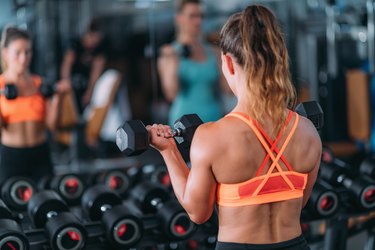
Opinions are all over the map when it comes to the best time of day to exercise for muscle growth. What works for some people doesn't necessarily work for others, whether due to personal preferences or scheduling concerns.
In general, whatever time of day you can consistently commit is your own best time to lift weights. See how your body responds to lifting weights at night and in the morning and then decide what works best for you.
Video of the Day
Video of the Day
Tip
The best time of day to exercise for muscle growth largely depends on your preferences and your ability to stick to a consistent routine. Try both options and see how you feel so that you can determine what works best for you.
Best Time to Lift Weights
The American Council on Exercise points to three primary hormones to keep in mind as you decide on the best time of day to exercise for muscle growth. They all relate to your body's circadian rhythm, a 24-hour body clock that's influenced by light and darkness.
With a consistent sleep cycle whereby you rise and go to bed at roughly the same time daily, your hormones can do their intended jobs:
Cortisol: Also called the stress hormone, cortisol typically rises in the morning. Cortisol is like caffeine, helping your body sustain energy and alertness throughout the day.
If you work out in the morning, you might not need to consume caffeine first. You can always have that cup of coffee afterward if you want, but holding off until after you exercise gives your body a chance to energize itself, unassisted.
Adenosine: This hormone starts to kick in as cortisol levels drop in the afternoon. It helps to facilitate tiredness by the end of the day.
Some people may benefit from lifting at this time of day, giving the body a burst of energy. Others might feel better taking a short nap or engaging in meditation or light exercise, especially if they have chronically low cortisol from long-term stress.
Melatonin: The "sleep hormone" begins to kick in at night, close to bedtime. Meanwhile, your core body temperature drops — and in the morning, it rises again, along with your cortisol levels.
Lifting weights at night can cause core blood temperature to rise and suppress melatonin, then drop several hours later, throwing off your sleep cycle. ACE advises stopping your workout three to six hours before bedtime to prevent sleep disturbances.
Strength-Train Twice a Week
Most people start losing muscle mass around age 30, with a 3 to 8 percent drop every decade thereafter, according to the Academy of Nutrition and Dietetics. Several factors contribute to this muscle loss, including lower testosterone levels in men and less estrogen in women, changes in nerve and blood cells, and the body's own reduced ability to convert amino acids into muscle tissue.
Because of this muscle loss, it becomes more important than ever to maintain a consistent strength-training routine after age 30. Whether you prefer lifting weights at night or in the morning, the key is to strength-train all major muscle groups at least twice a week, according to the Physical Activity Guidelines for Americans.
The guidelines further recommend getting at least 150 to 300 minutes of moderate physical activity a week. That could mean walking, cycling, jogging or any other types of activities that get your body moving. If you like more vigorous workouts, such as running or high-intensity interval training, you can shorten your workout time, performing 75 to 150 minutes weekly.
Eat the Right Foods
In addition to considering the best time to lift weights, make sure you're eating the right foods. Getting the proper balance of proteins, carbohydrates and fats will help fuel your workouts and the recovery afterward. It will also help your muscles grow and combat age-related muscle loss.
To build muscle, aim to eat 10 to 35 percent of your daily calories from protein, according to the Academy of Nutrition and Dietetics. Healthy sources of protein include skinless, white-meat chicken, salmon, low-fat or nonfat dairy, quinoa and black beans.
Carbohydrates get partially converted to glycogen, which is stored in your muscles and used when you exercise. At least half of your daily calories should come from healthy carbs, such as whole grains, fruits, vegetables and low-fat milk or yogurt.
Lastly, eat a small amount of heart-healthy fats, such as extra-virgin olive oil, walnuts, almonds, avocados and fatty fish. It's easy to overdo it on fats if you're grabbing a fistful of almonds since fat contains twice the number of calories of carbohydrates as it does protein. Be mindful to control portions and aim to consume 20 to 35 percent of your calories from fats daily.
Time Your Meals with Workouts
Timing your meals is an important part of your workout routine — and it's something to consider as you decide on the best time to lift weights. The Mayo Clinic recommends finishing breakfast at least one hour before working out.
With the proper nutritional fuel, you'll likely be able to work out longer and at a higher intensity. On an empty stomach, you may feel sluggish or lightheaded while lifting weights. Keep your breakfast fairly light with a morning workout. Whole-grain cereals or bread, a banana, yogurt or other carbs will provide a quick source of energy.
If you're lifting weights in the evening, you'll probably have had at least two or three larger meals during the day. To avoid feeling sluggish or getting an upset stomach, the Mayo Clinic recommends working out three or four hours after a large meal.
Most people can also eat a light snack just before or during their workout. If you need extra energy and it has been several hours since your last meal, a quick banana or a peanut butter sandwich might help. Do what works best for you, based on how you feel during and after training.
Read more: What to Eat After a Workout to Build Muscle?
You'll need to eat after lifting weights, too — ideally within two hours. A meal that includes carbs and protein will help your muscles recover and replace glycogen stores. Good options include a smoothie, turkey breast on whole-grain bread, low-fat yogurt or milk, or peanut butter toast.
- American Council on Exercise: "When Is The Best Time of Day to Exercise?"
- Academy of Nutrition and Dietetics: "4 Keys to Strength Building and Muscle Mass"
- U.S. Department of Health & Human Services: "Physical Activity Guidelines for Americans"
- Mayo Clinic: "Eating and Exercise: 5 Tips to Maximize Your Workouts"
Was this article helpful?
150 Characters Max
0/150
Thank you for sharing!
Thank you for your feedback!