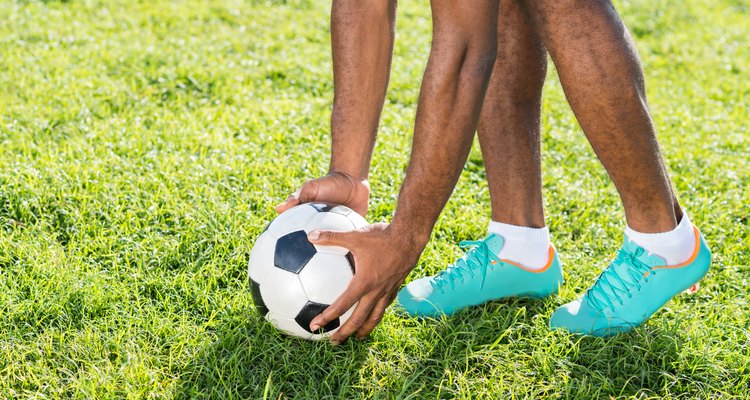
DragonImages/iStock/Getty Images
Your soccer cleats receive a lot of damage during a soccer game, routinely contacting the ground, the ball and even other players' cleats. This frequent contact can leave scuff marks on your shoes that aren't always easy to remove. Removing scuff marks requires a concentrated effort, but doing so is an inexpensive way to keep your shoes looking new.
Wet a melamine foam pad. Hold your shoe in one hand and the pad in another. Rub the pad back and forth across the scuff until mark disappears.
Put water onto scuff marks with a sponge or paper towel. Dip the paper towel into molasses and wipe the towel over the marks to cover the scuff marks with molasses. Let the molasses sit on the marks overnight. Rinse your shoes with water to remove molasses and marks.
Rub a pencil eraser gently across the scuff marks. Do not scrub deep to ruin the shoe's surface.
Rub the scuff mark with non-gel toothpaste and your finger. Rinse the toothpaste from the shoe and allow the shoe to dry. Polish leather cleats with shoe polish after applying toothpaste to the shoe.
Pour a small amount of non-bleach laundry detergent into a plastic disposable cup. Dip an old toothbrush into the laundry detergent. Rub the toothbrush back and forth over the scuff marks until they disappear. Rinse your cleats with water and allow the shoes to dry.
Related Articles

How to Get Scuff Marks Off Skates

How to Get Scuffs Off Vinyl Shoes
How to Clean Diesel Shoes

How Can I Clean the Rubber on My Vans ...
How to Remove Ink From Shoes

How to Wash Mesh Athletic Shoes
How to Clean Scuffed Up Rain Boots
How to Remove the Smell of Mothballs ...
Removing Scratch Marks From Black Dress ...

How to Clean Dry-Erase Marker Off of ...
How to Remove an Odor From Shoes With ...
How to Shrink Stretched Leather Shoes

How to Shine Patent Leather Shoes
How to Protect Canvas Shoes
Can You Clean Scuff Marks on Patent ...

How to Get Scuffs Off Vinyl Shoes

How to Wash Suede Shoes
How to Clean New Balance Tennis Shoes
How to Clean Discolored Shoes
How to Clean Mold Off Leather Shoes
References
Writer Bio
A mother of two and passionate fitness presenter, Lisa M. Wolfe had her first fitness article published in 2001. She is the author of six fitness books and holds an Associate of Arts in exercise science from Oakland Community College. When not writing, Wolfe is hula-hooping, kayaking, walking or cycling.
Photo Credits
DragonImages/iStock/Getty Images