
Seven Basic Ballet Movements
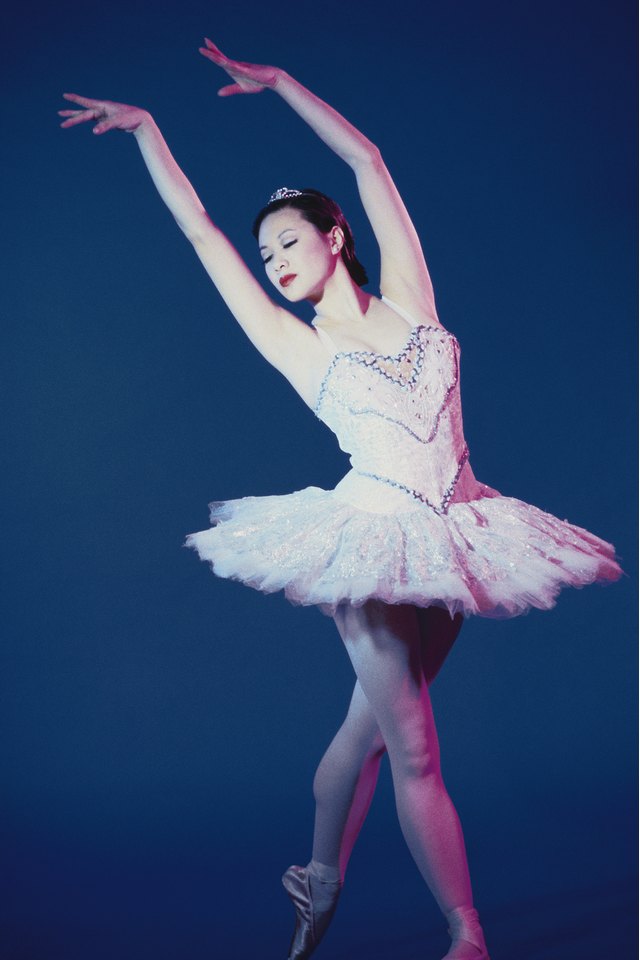
Ballet’s seven movements generally are credited to 18th-century influences Raoul Auger Feuillet and Jean-Georges Noverre. Feuillet, a part of the court of Louis XIV -- the king and ballet dancer who presided over the Renaissance’s glory years -- attempted to create dance notations comparable to musical scores and wrote "Choreography on the Art of Writing Dance." Noverre transformed ballet from a relatively passionless dance form into an active dance form that featured emotional narratives.
Bend, Stretch, Rise Up
“Plier,” in French, means to bend, and most ballet steps begin in a demi-plie, which means bending the knees with both heels firmly on the ground. This essential step in ballet relaxes the dancer and prepares him for jumps and extensions. This position also keeps combinations light and bouncy. “Etendre,” to stretch, is the opposite of the demi-plie. Stretching involves the whole body and gives a dancer lightness and lift. “Relever,” to rise up onto the balls of the feet or onto the tips of the toes, is an essential movement for much of classical ballet.
Leap and Dart
“Sauter,” to jump or leap, is at the heart of ballet’s allegro movements, and is cheerful and brisk. Jumping and leaping moves create a great diversity of allegro combinations. As "Teaching Beginning Ballet Techniques" describes it, these movements often seem to defy gravity, with dancers hovering in mid-air before returning lightly to the ground. “Elancer,” to dart, means to travel quickly through the air.
Glide and Turn
“Glisser,” or gliding, is used in many center steps, especially during the slower movements known as “adagio.” “Tourner,” to turn, is performed in a fixed position, across the floor or in the air. It is essential for the advanced "pirouette" moves involving full turns on the toe or ball of one foot, which requires proper weight transfer and good balance.
Considerations
Ballet evolved from highly formal and rigid court dances, yet it retains a set of elements and steps. Using these seven categories of movement, along with the basic positions of the feet and arms, in different ways allows choreographers and dancers to tell stories, display emotions and interpret music.
References
Writer Bio
Jim Thomas has been a freelance writer since 1978. He wrote a book about professional golfers and has written magazine articles about sports, politics, legal issues, travel and business for national and Northwest publications. He received a Juris Doctor from Duke Law School and a Bachelor of Science in political science from Whitman College.