You've been training for months for your half-marathon and are excited and eager for the big day. You've even been paying close attention to your half-marathon diet to improve your workouts and your race.
You've been eating right all along, but if you want to perform your best on race day, you need to make a few modifications to your usual diet a few days before the race so that your muscles have the energy they need to run those 13.1 miles.
Video of the Day
Video of the Day
Read more: Half Marathon Meal Plan
Half-Marathon Diet: Carb-Loading
For one to three days before the half-marathon, your goal is to store as much glycogen, or energy, in your muscles as possible. As your body's primary source of fuel, carbs should be the focus of your meals.
When carb-loading in your half-marathon diet, eat approximately 4.5 grams of carbs for each pound of body weight, as suggested by the Mayo Clinic. Healthy carb choices include grains such as bread, pasta and rice, as well as fruits, vegetables and beans.
Two days before the race, you might enjoy a high-carb breakfast meal that includes a whole-wheat bagel topped with peanut butter and sliced banana, served with yogurt and a cup of orange juice. For lunch, you might enjoy grilled chicken with a large baked potato, peas, an apple and a cup of milk.
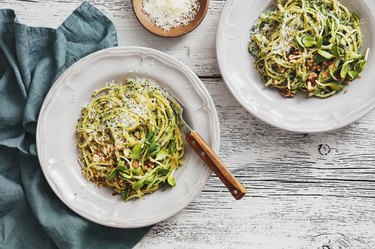
A high-carb dinner meal might include whole-wheat spaghetti tossed with cooked shrimp, broccoli, cauliflower, carrots and Parmesan cheese with a slice of Italian bread and a wedge of fresh watermelon.
Fuel Up the Day Before
You want to continue your high-carb diet the day before the race. To prevent discomfort and indigestion during your half-marathon, stick with carbs that you've been eating all along. Additionally, your dinner meal should be low in fat and fiber to prevent abdominal cramping during your race.
Be sure you are staying hydrated in the days leading up to your race. According to the Academy of Nutrition and Dietetics, the biggest cause of fatigue during a race is dehydration. Drink enough water so that your urine turns pale yellow.
On race day, consider drinking a beverage containing electrolytes and some carbs in addition to your water, but stop drinking about 30 minutes prior to the start of your race to allow yourself a bathroom break.
Breakfast Before a Half-Marathon
You should eat your last meal three to four hours before you start your half-marathon. According to an article published in the January 2018 edition of the journal Nutrition Today, high-carbohydrate foods and drinks are preferred before exercise as they are easily digested and provide muscles with the energy they need to sustain activity.
The authors point out that although fats and proteins also provide energy for physical activity, they are not broken down quickly enough to fuel high-intensity exercise.
Consider carbohydrates, such as bread, cereal, fruits or vegetables, for breakfast before a half-marathon so you have a steady source of energy when running. A pre-half-marathon meal might include lean turkey stuffed into a whole-grain pita with a banana for dessert.
Was this article helpful?
150 Characters Max
0/150
Thank you for sharing!
Thank you for your feedback!