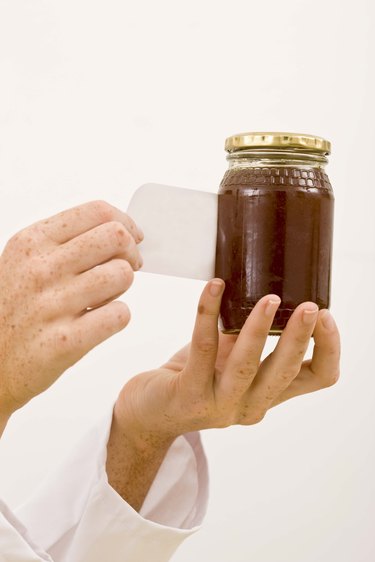
Manuka honey, a particular type of honey that comes from New Zealand's manuka tree, appears to stimulate the body's immune responses to help fight infection. Manuka honey has high antibacterial properties. To use manuka honey for infections, it must be sterilized in a laboratory and receive a potency rating called the "Unique Manuka Factor" of 10 or more. For gum and root infections, manuka honey needs a UMF factor of 15 to be effective.
Gingivitis and Periodontal Disease
Video of the Day
A 2004 study by authors H.K. English and colleagues published in the "Journal of the International Academy of Periodontology" found that volunteers who, after eating, chewed on or sucked a manuka honey product for 10 minutes, three times a day for 21 days, reduced plaque and bleeding gingivitis.The researchers concluded that manuka honey may be effective in treating gingivitis and periodontal disease, which can affect teeth, bones, roots, gums and ligaments.
Video of the Day
Mouth Infections from Chemotherapy
In healthy people, mouth wounds heal quickly, which is not the case with many cancer patients who undergo chemotherapy. One side effect of chemo is mucositis, which can cause ulcers and infections of the mouth. Patients most likely to get muscositis are those who receive radiation treatment in the head area. Open sores in the mouth are particularly susceptible to infection. According to a 2003 study conducted by Biswal and colleagues and published by the International Association for Hospice & Palliative Care, a dose of 1 1/3 tsp. of pure honey before and after radiation treatment significantly reduced mucositis.
Cavities and Plaque
Sucking on or chewing honey may seem to be counterintuitive for gum and root health because sugary and sticky substances convert bacteria into plaque, which can lead to gingivitis, periodontitis, cavities and tooth abscesses. However, according to the 2004 English study, the manuka honey with high levels of antibacterial activity – 12 or higher on the UMF scale – is not likely to contribute to plaque.
Further Research Needed
The 2004 manuka honey study regarding plaque and gingivitis was a pilot study with only 30 participants. Although results were significant regarding the benefits of manuka honey on certain mouth infections, a larger trial needs to confirm the conclusions. Besides the usefulness of manuka honey treating gum disease, future studies could determine whether manuka honey might prevent it.
- DermNet NZ; Honey; August 2010
- Health Improvement & Innovation Resource Centre; "The Effects of Manuka Honey On Plaque and Gingivitis: A Pilot Study; H.K. English, et al.; 2004
- Children’s Hospital Medical Centre; Medical Honey for Wound Care – Still the ‘Latest Resort’? Arne Simon, et al.; January 2008
- International Association for Hospice & Palliative Care; "Topical Application of Honey in the Management of Radiation Mucositis; Biswal, et al.; June 2003
- MedlinePlus; Dental Cavities; February 2010
- Honeymark International; The Effects of Manuka Honey on Plaque and Gingivitis; June 2011