Candida is a yeast probably responsible for many health problems experienced by Americans, including bloating, constipation, indigestion, cravings, weight gain, joint pain, athlete's foot, depression, mood swings, acne and skin rashes. Because the symptoms are not specific, this condition is hard to diagnose. It is a good idea to get a diagnosis from your doctor and get the recommended treatment, which you can make more effective by following the candida diet.
Candida Diet
Video of the Day
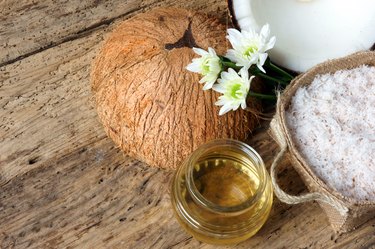
The candida diet is based on the principles that yeasts feed on the sugar and carbohydrate consumed in your diet. The candida diet is a low-carb diet and recommends eliminating all grains, flours, breads, rice, pasta, starchy vegetables such as potatoes, corn, yams and winter squash, legumes, milk, yogurt, fruits, fruit juices, soft drinks, baked goods and any foods containing sugar. The basic foods promoted to feed yourself without feeding candida include meat, eggs, poultry, fish, non-starchy vegetables such as broccoli, onions, zucchini, cauliflower, leafy greens, spinach, green beans, garlic and green peppers, as well as healthy fats from coconut oil, olive oil and avocado. Three and a half tablespoons of coconut oil a day is also recommended because of the anti-fungal properties of the medium-chain fatty acids it provides.
Video of the Day
Die-Off Symptoms
The coconut diet can induce some die-off symptoms, associated with the toxins released by the candida yeasts dying, according to naturopath and coconut oil expert Bruce Fife. This is why coconut oil must be introduced into your diet slowly to avoid most of the unpleasant die-off symptoms. These die-off symptoms are usually felt as an exacerbation of your candida infection symptoms, such as increased fatigue and bloating. You may feel like your condition is actually getting worse, but give it a few days and you will see improvements.
Lower Carb Intake
Because the candida diet encourages a lower carbohydrate intake than what is usually consumed by Americans, it can lead to fatigue, especially during the first couple weeks following the diet. Low-carb diets tend to have a diuretic effect, which can dehydrate you in addition to depleting some important electrolytes, causing feelings of fatigue, weakness, dizziness and even sickness. To prevent you from feeling tired on the candida diet, it is best to drink at least eight 8-oz. glasses of water and to supplement your diet with about 1/2 tsp. salt to maintain a proper fluid and electrolyte balance.
Insufficient Calorie Intake
Some people may feel tired on the candida diet simply because of a lack of energy. If you eliminate all carbohydrate-rich foods from your diet and don't replace these calories with other foods, your body will not be getting the energy it needs and you will feel tired. After decreasing your carbohydrate intake on the candida diet, you need to significantly increase your protein and fat intake. Include a good source of protein at each meal and always accompany your meal with a generous serving of fats, whether it is avocado, olive oil or coconut oil and you will notice an improvement in your energy levels.