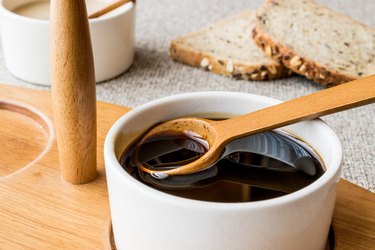
Blackstrap molasses contains nutrients like iron and calcium, though the amount varies depending on the brand. There are plenty of uses for blackstrap molasses in baking and cooking, and some people take doses of it for nutritional purposes.
What Is Blackstrap Molasses?
Video of the Day
Molasses is a sticky, viscous substance created during the sugar refining process. Different types of molasses are made as byproducts during the process. To make table sugar, the juice of sugar cane or sugar beets is extracted and then boiled to concentrate it and create sugar crystals.
Video of the Day
The first boiling produces sweet, light molasses. The second boiling creates medium molasses, sometimes called dark molasses, which is less sweet. And the third and final boiling creates blackstrap molasses, which is more bitter. The lighter versions of molasses are commonly used as sweeteners when baking molasses cookies, pecan pie and other sweet treats.
Blackstrap molasses is used in food products like gingerbread, baked beans and barbecue sauce, and is also often used in livestock feed. It contains a number of vitamins and minerals and has a distinctive bitter taste. It's much lower in calories than both light molasses and medium molasses. Because of the distinctive taste, you can't substitute other sweeteners in any recipe that calls for blackstrap molasses specifically.
Read more: 15 Reasons to Kick Sugar
Blackstrap Molasses Benefits
Blackstrap molasses is lower in calories than other types of molasses, making it a better option for people trying to cut down on sugar or carbohydrates. However, its bitter taste limits the use of blackstrap molasses as a sweetener or in recipes.
Blackstrap molasses also contains iron, calcium and potassium, though the amount varies depending on the brand. Blackstrap molasses contains many more nutrients than the other types of molasses, including iron.
How much iron you need depends on your age and whether you're pregnant or breastfeeding. The recommended daily intake of iron is:
- 11 milligrams for men ages 14 to 18
- 15 milligrams for women ages 14 to 18
- 8 milligrams for men ages 19 to 50
- 18 milligrams for women ages 19 to 50
- 27 milligrams for pregnant people
- 9 to 10 milligrams for breastfeeding people
- 8 milligrams for adults over age 51
Most people can get this amount of iron from their diet by ensuring that they eat plenty of iron-rich foods and don't eat things that inhibit iron absorption.
What Is Iron Deficiency?
Iron is a mineral necessary for many different processes in the body. The National Institutes of Health Office of Dietary Supplements explains that iron is an important component of hemoglobin, the protein in red blood cells that helps transport oxygen from your lungs to your organs and tissues. The body also uses iron for cell function, growth and creating some hormones.
A lack of sufficient iron can contribute to iron-deficiency anemia, meaning your red blood cells don't transport enough oxygen throughout your body. The Mayo Clinic notes that symptoms of iron deficiency include extreme fatigue, weakness, cold hands and feet, dizziness or lightheadedness, shortness of breath, brittle nails and cravings for nonfood items like ice and dirt.
Groups at an increased risk for iron-deficiency anemia include people with heavy menstrual periods, those who've undergone major surgery or lost a lot of blood from an injury, anyone with a condition like Crohn's disease or celiac disease that affects nutrient absorption in the digestive system, pregnant or breastfeeding women and people who have a peptic ulcer. The Centers for Disease Control and Prevention notes that children are also susceptible to iron deficiency.
Iron is available from a wide variety of foods. There are two different forms of dietary iron. Heme iron, from animal sources like meat, seafood and milk, is more easily absorbed by the body. Nonheme iron from plant sources like dark leafy greens, legumes and beans is absorbed less. Because of this, people who eat a vegetarian or vegan diet may be at an increased risk of iron deficiency.
Read more: Fast Ways of Getting Iron in the Blood
Blackstrap Molasses for Anemia
Because it contains certain vitamins and minerals, some people may consider taking blackstrap molasses for iron-deficiency or vitamin-deficiency anemia. However, the vitamin and mineral content varies depending on the brand.
- One serving of Plantation Organic Blackstrap Molasses provides 60 calories, 10 milligrams of calcium, 3 milligrams of iron and 343 milligrams of potassium.
- One serving of Swanson Organic Certified Organic Blackstrap Molasses provides 60 calories and 290 milligrams of potassium. The label also claims that a serving provides 10 percent of the recommended daily calcium intake and 20 percent of the recommended daily iron intake of a person eating 2,000 calories per day.
- One serving of Thrive Market Wholesome Organic Molasses provides 60 calories and 115 milligrams of calcium. The label also claims that one serving provides 15 percent of the recommended daily intake of iron.
There is scant scientific research regarding blackstrap molasses for anemia, so it's not known if that is an effective treatment. Typically, anemia is treated by taking supplemental iron under the supervision of a doctor, and eating increased amounts of iron-rich food.
According to the American Society of Hematology, people with iron-deficiency anemia need to consume 150 to 200 milligrams of elemental iron each day. Specifically, they suggest 2 to 5 milligrams of iron per kilogram of body weight daily. Blackstrap molasses contains iron, but not necessarily enough iron to treat anemia without other forms of iron supplements.
Taking Iron Supplements
There are many different types of supplementary iron you can take to treat iron-deficiency anemia, as pills, liquids or salts. The amount of iron your body can absorb from a supplement — known as elemental iron — varies depending on what type of iron is included. For example, ferrous fumarate is 33 percent elemental iron by weight, compared to 20 percent for ferrous sulfate and 12 percent for ferrous gluconate.
If you have iron-deficiency anemia, your doctor can work with you to find a supplement and dosage of supplemental iron to help treat it. Before taking iron supplements, you should check that iron doesn't interfere with any other medications you might be taking since iron can make some medicines less effective.
Read more: How Much Is Too Much Iron Supplement?
Iron supplements are known to interact with some antibiotics, cholesterol medications, levothyroxine and levodopa, which is used to treat Parkinson's disease and restless leg syndrome. Your doctor may advise you to take iron supplements two hours before or two hours after these other medications to avoid potential interactions.
- Vitacost: "Plantation Organic Blackstrap Molasses"
- Swanson Organic: "Certified Organic Blackstrap Molasses"
- Thrive Market: "Wholesome Organic Molasses"
- American Society of Hematology: "Iron-Deficiency Anemia"
- National Institutes of Health Office of Dietary Supplements: "Iron"
- Penn State Hershey Medical Center: "Possible Interactions With: Iron"
- Mayo Clinic: "Iron Deficiency"
- Centers for Disease Control: "Micronutrient Facts"