
The trillions of bacteria in your gut play vital roles in keeping your body and mind healthy and functioning properly.
But certain foods or lifestyle changes can cause gut problems and even lead to health issues. Here are 12 ways to improve gut health.
1. Aim for Diet Diversity
In a healthy person, the microbiome — the bacterial environment in the GI tract — is characterized by a very wide variety of gut bacteria (known as microbiota), according to a March 2016 article in Molecular Metabolism. In other words, the greater diversity of bacteria species, the better chance they'll contribute to certain health benefits. A decrease in the number of species, on the other hand, may lead to illness.
In order to get richness of microbiota species, you need richness in dietary choices. The more diverse your day-to-day menu is, the easier it will be for your microbiome to adapt to some curve balls you throw at it. Keep in mind that whole foods are the best options.
Related Reading
2. Opt for Plant-Based
Speaking of adding some healthy foods to your menu, try going more plant-based — your gut will thank you.
People following a vegan or vegetarian diet have a different gut microbiota than omnivores, per an October-December 2018 review in Tzu-Chi Medical Journal, possibly because vegan diets may deliver more fiber. When you up the fiber through plants, you're increasing the growth of more beneficial bacteria that provide anti-pathogenic and anti-inflammatory effects, as well as cardiovascular protection.
A plant-based diet is an effective way to not only support your gut microbiome, but also to maintain overall optimal health.
"Try adding some more chicory root, leeks, cabbage, chickpeas, lentils and beans to your diet because they are super high-fiber foods that also serve as prebiotics, which promote good bacteria in your gut," says Jenny Champion, RD, CPT.
Related Reading
3. Up Fermented Foods and Probiotics
Fermented foods are quite buzzy lately, and for good reason. These foods help strengthen your gut microbiome, according to Harvard Health Publishing. Using a tried-and-true method, fermented foods are preserved not only for a longer shelf life, but to boost nutritional value, too — probiotics included.
Probiotics are specific strains of bacteria that add to the population of beneficial microbes in the gut, per the Mayo Clinic. If you see the words "naturally fermented" on food labels, you've found another gut-friendly food.
Probiotic-Filled Fermented Foods
- Yogurt
- Kefir
- Kimchi
- Tempeh
- Miso
- Buttermilk
- Sauerkraut
- Certain pickles
4. Don’t Forget About Prebiotics
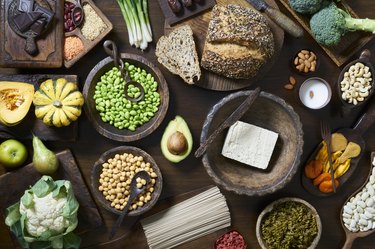
Another way to maintain a healthy balance of gut bacteria is by helping the beneficial microbes that are already in your microbiome to grow.
Enter prebiotics, plant fibers that act like fertilizers to stimulate growth, according to the International Food Council Foundation. You can find prebiotics in high-fiber fruits, veggies, whole grains and legumes, i.e. whole foods containing complex carbs. Since your body can't fully digest those carbs, they become food for your gut bacteria.
5. Avoid Sugar Substitutes
Sure, artificial sweeteners can be an easy way to save some calories when battling the scale, but your gut can take a beating if you have too much. Not only do they cause gas and diarrhea, but sugar substitutes can increase blood sugar and weaken insulin response by changing the composition of gut microbiota, according to a January 2019 article in Advances in Nutrition.
"If you're trying to kick that artificial sweetener habit, snack on more fresh fruit," Champion says. "It's always a safe bet when you need a sweet treat that's also good for you."
6. Have All the Polyphenols
Dietary polyphenols are substances found in plants that help feed those beneficial gut microbes.
Coffee, tea, red wine, chocolate, fruits and vegetables are great ways to give your gut nice doses of polyphenols, per a February 2019 article in Food and Function.
"Most polyphenols are not absorbed in the small intestine or upper GI tract, and go down to the large intestine where they are broken down by bacteria," gastroenterologist Jacqueline Wolf, MD, tells LIVESTRONG.com.
The products created as bacteria break down polyphenols may potentially have an effect on depression and other health conditions, she says. "There are studies showing that polyphenols can protect against chronic diseases such as cancers and cardiovascular diseases and have an impact on obesity."
7. Practice Good Oral Hygiene
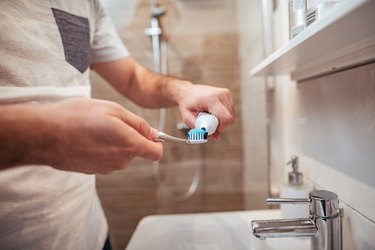
Just like your gut, there are tons of bacteria living in your mouth. Oral bacteria involved in chronic gum infections can move down to the gut and alter the microbiota there, where they may play a role in certain metabolic disorders as well as some cancers, according to a March 2019 article in the Journal of Microbiology.
So, brush your teeth twice a day, floss, visit your dentist for cleanings and voice any concerns about your oral health: You'll be keeping more than your mouth healthy by doing so.
8. Get More Shut-Eye
Getting more sleep is a on a lot of people's to-do lists, and for good reason. Yes, you're more alert and perform better with an adequate night's rest. But health problems can arise when you're not getting enough — and can even possibly affect your gut, according to the Gastrointestinal Society.
"There's evidence from studies in irritable bowel syndrome that poor sleep is associated with increased abdominal pain the next day. This is supported by research in chronic pain, which suggests that sleep deprivation increases sensitivity to painful stimuli," says GI health psychologist Sarah Ballou, PhD.
"The activity of the digestive system depends on circadian cues so that, in general, the digestive system is less active at night," Ballou says. That means that when your circadian rhythm gets out of whack, it could lead to increased GI symptoms, she adds.
Related Reading
9. Keep on Moving
It's a well-known fact that exercise does wonders for you — mentally and physically. And recent studies show its effects can even reach the tiny bacteria in your gut.
Working out can boost your amount of beneficial gut bacteria species, enrich your microbiota diversity and help in the development of new bacteria, according to a March 2017 article in Oxidative Medicine and Cellular Longevity. Exercising seems to be particularly beneficial for bacteria that can contribute to reducing weight and easing some GI and metabolic disorders.
Aim for 150 minutes of moderate activity each week, per the Mayo Clinic.
10. Go Easy on the Drinks

Having a drink here and there is perfectly OK, but when "here and there" turns into "one too many" pretty often, you can cause chaos in your gut.
Alcohol promotes dysbiosis (when environmental factors disrupts bacterial imbalance) and bacterial overgrowth, which can lead to inflammation, per a 2017 article in Alcohol Research Current Reviews. Cancers, liver disease and neurological pathologies may also be aggravated.
"Alcohol (particularly red wine) in moderation can actually be good for gut health, but of course too much of a good thing isn't necessarily better," Champion says. "Excessive booze-drinking can cause gut inflammation, reduce healthy bacteria while increasing harmful bacteria and cause chronic bloating and constipation."
11. Avoid Unnecessary Antibiotics
Sometimes prescription antibiotics are warranted in order to kill a bacterial infection, but they can cause gut disturbances. That's because antibiotics also kill "good" gut bacteria along with the "bad" bugs making you sick, creating dysbiosis, according to a May 2019 article in the Chinese Medical Journal. Different antibiotics or their combinations will result in different changes to the microbiome.
"With a change in the gut flora, diarrhea can occur due to the imbalance of the bacteria," Dr. Wolf says. "Some antibiotics are more likely to result in the overgrowth of Clostridia difficile that can cause severe diarrhea and colitis. Clindamycin and ciprofloxacin are two antibiotics with a higher risk for C. difficile. These two antibiotics cause a marked loss of mucosal barrier and immune function in the gut."
If you're currently on antibiotics, it's generally a good idea to eat plenty of probiotic-rich foods to help restore good-for-you gut bacteria.
12. Don’t Stress
OK, easier said than done. But life stressors can significantly change your microbiome. Microbes can respond to hormones and neurotransmitters that are involved in your stress response, according to February 2017 article in Hormones and Behavior. This can change the composition of your gut bacteria — but more research is required to fully understand how this actually occurs and the effects.
Nonetheless, cramps, constipation, diarrhea and changes in appetite can all occur due to stress-related changes in gut bacteria, according to the Anxiety and Depression Association of America. And once you start dealing with one of these conditions, the condition itself can be a source of stress and anxiety, in turn worsening gut symptoms.
Breathing techniques, meditation, regular exercise and seeking out a mental health professional can all be helpful to try to lift some weight off your shoulders.
Is this an emergency? If you are experiencing serious medical symptoms, please see the National Library of Medicine’s list of signs you need emergency medical attention or call 911.