Herbal Cancer Treatments for Lymphoma
Lymphomas are types of cancers that arise in the lymphatic system, which includes the spleen, thymus, lymph nodes and bone marrow, according to the University of Maryland Medical Center 1. The lymphatic system is responsible for producing, storing and transporting white blood cells in the body. Three main types of lymphoma cancers exist, which include cutaneous T-cell lymphoma, Hodgkin’s lymphoma and non-Hodgkin’s lymphoma. Several different herbs can help to treat lymphoma cancers, but some of the herbs haven’t been studied extensively in treating lymphoma.
Green Tea
Green tea has antioxidant, anticancer and immunity-boosting effects, says the University of Maryland Medical Center 1. The phyotchemicals in green tea help to “shut down glycolysis,” which is the cancer cell’s main energy supplier, explains the A.P. John Institute for Cancer Research 222. This effectively starves the lymphoma cancer cells until they die. For treating lymphoma, the University of Maryland recommends taking 250 to 500mg daily of green tea standardized extract 1.
Parsley
Herbal Remedies for Leukemia
Learn More
Parsley has been used in traditional medicine to treat tumors, and the tea was used to treat cancers, notes the Herb Growing & Marketing Network 34. The roots, leaves and seeds are all used in medicinal preparations, which include teas and extracts. Parsley can stop the growth and spread of lymphoma cancer cells, says the A.P. John Institute for Cancer Research 222. Parsley contains compounds that “help shut down certain enzymes called Epithelial Growth Factors, which stimulate the growth and spread of cancer,” the Institute explains.
Licorice
In some countries, licorice root is used to treat cancers, according to the Herb Growing & Marketing Network 34. Licorice root extract produces steroid-like effects in the body, helping lymphoma patients to gain weight, says the A.P. John Institute for Cancer Research 222. Licorice also helps to “inhibit the growth of lymphomas and leukemias,” the Institute notes.
Reishi Mushroom
Oldenlandia Diffusa Side Effects
Learn More
Reishi mushrooms have anticancer and immune system-supporting effects. The University of Maryland Medical Center advises taking 150 to 300mg two to three times daily of the standardized reishi mushroom extract or 30 to 60 drops two to three times daily of the tincture 1.
Milk Thistle
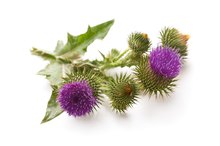
Milk thistle is helpful in detoxification support. Milk thistle’s chemical properties act in the body to protect cells from toxins and increase glutathione, a substance needed for detoxification reactions in liver cells, says the Herb Growing & Marketing Network 34. The University of Maryland Medical Center recommends taking 80 to 160mg two or three times daily of the milk thistle seed extract 1.
Related Articles
Herbal Remedies for Leukemia
Learn More
Oldenlandia Diffusa Side Effects
Learn More
Bitter Melon & Weight Loss
Learn More
Lapacho Tea Benefits
Learn More
Herbs for Liver Cysts
Learn More
Can Milk Thistle Help Hair Loss?
Learn More
Lemongrass & Cancer
Learn More

Triphala for Children
Learn More
Herbal Treatment for Liver Cirrhosis
Learn More
Side Effects of Herbal MenoSense
Learn More
References
- University of Maryland Medical Center: Lymphoma
- A.P. John Institute for Cancer Research: Hodgkin's Disease
- Herb Growing & Marketing Network: Medicinal Herb Uses–Licorice, Milk Thistle
- Herb Growing & Marketing Network: Medicinal Herb Uses–Parsley
- LaCasce AS, Freedman AS, Rosmarin AG. Patient education: Hodgkin lymphoma in adults (Beyond the Basics). UpToDate. Updated January 11, 2018.
- Shenoy P, Maggioncalda A, Malik N, Flowers CR. Incidence patterns and outcomes for hodgkin lymphoma patients in the United States. Adv Hematol. 2011;2011:725219. doi:10.1155/2011/725219
- Venkataraman G, Mirza MK, Eichenauer DA, Diehl V. Current status of prognostication in classical Hodgkin lymphoma. Br J Haematol. 2014;165(3):287-99. doi:10.1111/bjh.12759
- LaCasce AS, Freedman AS, Rosmarin AG. Patient education: Hodgkin lymphoma in adults (Beyond the Basics). Updated January 11, 2018.
- Shanbhag S, Ambinder RF. Hodgkin lymphoma: A review and update on recent progress. CA Cancer J Clin. 2018;68(2):116-132. doi:10.3322/caac.21438
- American Cancer Society. What Causes Hodgkin Lymphoma? Updated May 1, 2018.
- American Cancer Society. Survival Rates for Hodgkin Lymphoma. Mar 21, 2019.
- American Cancer Society. Hodgkin Lymphoma.
- Hutchings M. How Does PET/CT Help in Selecting Therapy for Patients With Hodgkin Lymphoma? Hematology Am Soc Hematol Educ Program.2012;2012:322-7. doi:10.1182/asheducation-2012.1.322
- National Cancer Institue. Drugs Approved for Hodgkin Lymphoma. Mar 22, 2017.
- National Cancer Institute. Surveillance, Epidemiology, and End Results Program. SEER Incidence Data, 1975-2016.
- Townsend W, Linch D. Hodgkin's Lymphoma in Adults. Lancet. 2012 Sep 1;380(9844):836-47. doi:10.1016/S0140-6736(12)60035-X
Writer Bio
Sarah Terry brings over 10 years of experience writing novels, business-to-business newsletters and a plethora of how-to articles. Terry has written articles and publications for a wide range of markets and subject matters, including Medicine & Health, Eli Financial, Dartnell Publications and Eli Journals.