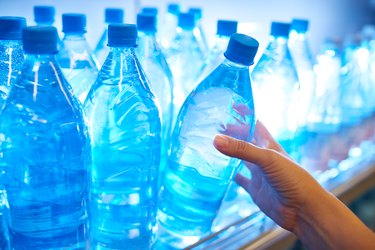
Water is an important but often ignored nutrient. The age-old adage of drinking eight glasses of water a day may not be right for you. A general guideline for daily water consumption for healthy adults is approximately 3.7 liters — around 15 cups — for men and 2.7 liters, or around 11 cups for women, according to The National Academies of Sciences.
The most recent statistics from the Centers for Disease Control and Prevention indicate that, on average, men drink 3.46 liters and women drink 2.75 liters per day, very close to the recommended amounts.
Video of the Day
Video of the Day
Your body needs water for digestion, maintaining good blood pressure, joint health, regulating body temperature, ridding the body of bacteria, prevention of constipation and maintaining electrolyte balance. Your age, health, physical activity and the temperature of your environment can affect the amount of water you need to stay hydrated.
Tip
A disposable plastic bottle is typically around 16 ounces, so you would need roughly eight bottles of water for men and six for women. Reusable water bottle sizes vary greatly, but the most common size is around 24 ounces. For these types of bottles, men would need just a little over five bottles and women would need just four bottles of water per day.
Water From Foods
The general recommendation on how much water you should drink in a day includes any beverages, not just water. Coffee, tea, sports drinks, juice and other beverages also contribute to fluid intake. It is no longer believed that moderate caffeine consumption contributes to dehydration.
A 2014 study published in PloS One found that moderate daily caffeine consumption in 52 healthy men did not cause significant dehydration.
The guideline also includes foods that may contain large amounts of water. Some foods such as watermelon, cantaloupe, lettuce, celery and strawberries are 90 to 99 percent water, according to a 2011 study published in Nutrition Reviews. Eating foods high in water content is a great way to get in the recommended amount of water per day.
Read more: Is Alkaline Water Extra Healthy or a Hoax?
How Much Water a Day?
According to Harvard Health Publishing, you may not need to drink the recommended amount of water. Many factors can affect the amount of water your body needs each day, to include age, size and physical activity. If you live or work in a hot or dry environment, you may lose more water through sweat. The more skin is exposed in these environments, the faster hot, dry air will cause body water loss.
If you lead a highly active lifestyle or sweat excessively, you will require more water daily to replenish water loss. Additionally, the more you weigh, the more water you need to drink. Focus on replacing the water you lose per day. Adjust the recommended intake upward if you have higher-than-normal fluid loss.
A great way to measure water loss is to weigh yourself before and after a workout and replace the water weight in ounces. Water loss as little as 1.5 pounds for a 150-pound person can impair cognitive abilities, according to 2013 research published in the American College of Sports Medicine Health and Fitness Journal.
The average adult will lose around 2550 milliliters or 86 ounces of water daily through the skin, breathing, urination and gastrointestinal outputs. The goal is to balance water input with output.
Dehydration From Too Little Water
Dehydration occurs when your body doesn't have enough water to function properly. You can become dehydrated if you don't drink enough water, especially if you are losing an increased amount due to activity level or environment. Harvard Health Publishing indicates the signs of dehydration include dark urine, weakness, dizziness, confusion and low blood pressure.
Thirst is the body's natural mechanism to signal that you need water. Thirst may not be a good indication of when you need to drink water. By the time you feel thirsty, you could be headed for dehydration. The sense of thirst diminishes as we age, so older adults may not know if they are dehydrated.
Precautions With Drinking Water
With any nutrient, certain conditions can affect your needs, including water. Anyone with kidney problems or congestive heart failure should consult their doctor to obtain a recommended amount of water per day.
Also, those taking medications such as diuretics, nonsteroidal anti-inflammatory drugs (NSAIDs), ibuprofen, or naproxen should talk to their doctor because a certain level of hydration is essential when taking these. Conditions such as diarrhea and vomiting will also lead to a greater need for water.
How to Increase Water Consumption
If you aren't a fan of drinking plain water, there are some ways to jazz up your drink. Adding fresh fruit, such as raspberries, blueberries or orange slices can make boring water more exciting.
Drinking juice can add a lot of sugar to your diet, but diluting your juice with water can be a way to add more water each day. If soda is your drink of choice, try flavored sparkling water to get the fizz you love without all of the sugar and calories.
- World Health Organization: "Water Requirements, Impinging Factors, and Recommended Intakes"
- National Academies of Sciences: "Report Sets Dietary Intake Levels for Water, Salt, and Potassium to Maintain Health and Reduce Chronic Disease Risk"
- Harvard Health Publishing: "Water and Health: Follow Your Thirst"
- Nutrition Reviews: "Water, Hydration, and Health"
- Harvard Health Publishing: "How Much Water Should You Drink?"
- Centers for Disease Control and Prevention: "Daily Water Intake Among U.S. Men and Women, 2009–2012"
- PLoS One: "No Evidence of Dehydration With Moderate Daily Coffee Intake: A Counterbalanced Cross-Over Study in a Free-Living Population"
- ACSM Health and Fitness Journal: "The Hydration Equation: Update on Water Balance and Cognitive Performance"