What does fact checked mean?
At Healthfully, we strive to deliver objective content that is accurate and up-to-date. Our team periodically reviews articles in order to ensure content quality. The sources cited below consist of evidence from peer-reviewed journals, prominent medical organizations, academic associations, and government data.
- PubMed Health; Menopause; September 2010
- PubMed Health; Menopause; September 2010
- “Journal of Toxicology; Clinical Toxicology;” Toxicity of Passiflora Incarnata L; A Fisher, et al.; 2000
- “Journal of Toxicology; Clinical Toxicology;” Toxicity of Passiflora Incarnata L; A Fisher, et al.; 2000
- “Journal of Clinical Pharmacy and Therapeutics;” Passionflower in the Treatment of Generalized Anxiety: A Pilot Double-Blind Randomized Controlled Trial with Oxazepam; S. Akhondzadeh, et al.; October 2001
- “Journal of Clinical Pharmacy and Therapeutics;” Passionflower in the Treatment of Generalized Anxiety: A Pilot Double-Blind Randomized Controlled Trial with Oxazepam; S. Akhondzadeh, et al.; October 2001
The information contained on this site is for informational purposes only, and should not be used as a substitute for the advice of a professional health care provider. Please check with the appropriate physician regarding health questions and concerns. Although we strive to deliver accurate and up-to-date information, no guarantee to that effect is made.
While some women breeze through menopause with nary a hot flash, others experience symptoms that seriously impact their quality of life. Passionflower, an over-the counter herbal preparation made from the Passiflora incarnate plant, may help with mood alterations and other changes that can occur in menopause. Ask your doctor before taking Passionflower, since the herb can interact with some medications.
If you are experiencing serious medical symptoms, seek emergency treatment immediately.
Symptoms
Menopausal symptoms occur when estrogen levels fall; and symptoms vary from woman to woman. For some women, low estrogen levels can cause depression, irritability, anxiety and difficulty sleeping. Passionflower may improve these symptoms but has not been suggested to help treat other symptoms, such as hot flashes, night sweats, skin flushing, sweating, vaginal dryness or heart palpitations.
Effects
What Are the Herbs I Should Avoid While Taking Lamictal?
Learn More
Passionflower may help reduce anxiety by increasing the levels of gamma-aminobutyric acid, also known simply as GABA, a chemical in the brain. This chemical induces relaxation and reduces anxiety by decreasing the activity of some brain cells. Alkaloids in passionflower may inhibit monoamine oxidase, which would give the herb a similar effect to monoamine oxidase inhibitors, prescription medications sold as anti-depressants. A study entitled "Passionflower in the treatment of generalized anxiety: a pilot double-blind randomized controlled trial with oxazepam," published in the October 2001 “Journal of Clinical Pharmacy and Therapeutics” found that passionflower was as effective as oxazepam as treating generalized anxiety disorder and had fewer side effects 4.
- Passionflower may help reduce anxiety by increasing the levels of gamma-aminobutyric acid, also known simply as GABA, a chemical in the brain.
- Alkaloids in passionflower may inhibit monoamine oxidase, which would give the herb a similar effect to monoamine oxidase inhibitors, prescription medications sold as anti-depressants.
Doses
You can take passionflower as a tea by steeping 1 tsp. in boiling water for 10 minutes; if you’re taking this herb to help with insomnia, drink one hour before bedtime. Passionflower is also available as a liquid extract or as a tincture; follow the directions on the bottle. The dosage may vary depending on the condition being treated. Passionflower is also often combined with other anti-anxiety herbs.
- You can take passionflower as a tea by steeping 1 tsp.
- Passionflower is also available as a liquid extract or as a tincture; follow the directions on the bottle.
Risks
What Herbs Interact With Paxil?
Learn More
Passionflower may increase the sedation effects of prescription drugs such as barbiturates, benzodiazepines such as Valium or Xanax, or insomnia drugs such as Ambien or Lunesta. This herb can also increase the effects of anti-depressants as well as blood thinners. In a case reported by Australian researchers from The Canberra Hospital in the 2000 “Journal of Toxicology; Clinical Toxicology,” a woman taking this herb developed severe nausea and vomiting, drowsiness, rapid heartbeat and electrocardiograph changes 3. Other potential side effects include confusion, dizziness and inflammation of blood vessels, called vasculitis.
- Passionflower may increase the sedation effects of prescription drugs such as barbiturates, benzodiazepines such as Valium or Xanax, or insomnia drugs such as Ambien or Lunesta.
Related Articles
What Are the Herbs I Should Avoid While Taking Lamictal?
Learn More
What Herbs Interact With Paxil?
Learn More

Side Effects of Bacopa Monnieri
Learn More
Is There a Difference Between Valerian Root Tea and Capsules?
Learn More
Herbal Remedies for Xanax Withdrawal Symptoms
Learn More
Herbs for Post Nasal Drip
Learn More
Natural Alternatives to Larazapam
Learn More
L-Theanine for Weight Loss
Learn More
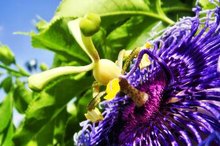
The Best Dosage of Passionflower for Treating Anxiety
Learn More
Maca & Anxiety
Learn More
References
- University of Maryland Medical Center; Passionflower; Steven Ehrlich; March 2009
- Drugs.com; Passion Flower; 2009
- “Journal of Toxicology; Clinical Toxicology;” Toxicity of Passiflora Incarnata L; A Fisher, et al.; 2000
- “Journal of Clinical Pharmacy and Therapeutics;” Passionflower in the Treatment of Generalized Anxiety: A Pilot Double-Blind Randomized Controlled Trial with Oxazepam; S. Akhondzadeh, et al.; October 2001
- Liu L, Liu C, Wang Y, Wang P, Li Y, Li B. Herbal Medicine for Anxiety, Depression and Insomnia. Curr Neuropharmacol. 2015;13(4):481-493. doi:10.2174/1570159X1304150831122734
- Miroddi M, Calapai G, Navarra M, Minciullo PL, Gangemi S. Passiflora incarnata L.: Ethnopharmacology, clinical application, safety and evaluation of clinical trials. J Ethnopharmacol. 2013;150(3):791-804. doi:10.1016/j.jep.2013.09.047
- National Center for Complementary and Integrative Health. Passionflower. Updated September 2016.
- Akhondzadeh S, Kashani L, Mobaseri M, Hosseini SH, Nikzad S, Khani M. Passionflower in the treatment of opiates withdrawal: A double-blind randomized controlled trial. J Clin Pharm Ther. 2001;26(5):369-373. doi:10.1046/j.1365-2710.2001.00366.x
- Movafegh A, Alizadeh R, Hajimohamadi F, Esfehani F, Nejatfar M. Preoperative Oral Passiflora Incarnata Reduces Anxiety in Ambulatory Surgery Patients: A Double-Blind, Placebo-Controlled Study. Anesth Analg. 2008;106(6):1728-1732. doi:10.1213/ane.0b013e318172c3f9
- Miyasaka LS, Atallah ÁN, Soares B. Passiflora for anxiety disorder. Cochrane Database Syst Rev. 2007;(1):CD004518. doi:10.1002/14651858.CD004518.pub2
- Ebrahimie M, Bahmani M, Shirzad H, Rafieian-Kopaei M, Saki K. A Review Study on the Effect of Iranian Herbal Medicines on Opioid Withdrawal Syndrome. J Evid Based Complementary Altern Med. 2015;20(4):302-309. doi:10.1177/2156587215577896
- Parashar B, Bhatoa PK, Bhatoa A, Yadav V. Anxiety: A Common Problem with Human Beings. The Pharma Innovation. 2012;1(5):10.
Writer Bio
A registered nurse with more than 25 years of experience in oncology, labor/delivery, neonatal intensive care, infertility and ophthalmology, Sharon Perkins has also coauthored and edited numerous health books for the Wiley "Dummies" series. Perkins also has extensive experience working in home health with medically fragile pediatric patients.