Bloating & Fibroids
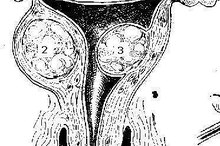
Fibroids are benign muscular growths that develop in the wall of the uterus. According to Women’s Health, fibroids are also referred to as leioymas or myomas. Fibroids usually develop in groups, but it is possible for just one fibroid to grow. Fibroids can also range in size from microscopic to weighing several pounds.
Statistics
Fibroids usually affect women of childbearing age, which is defined as the time after the first menstrual cycle to the beginning of menopause. According to Medline Plus, approximately one in five women in this age group has fibroids 1. Fibroids are the most common pelvic tumor and affect African American women more frequently than Caucasian women. Overweight women also develop fibroids more often than women who are at their ideal weight.
- Fibroids usually affect women of childbearing age, which is defined as the time after the first menstrual cycle to the beginning of menopause.
- Fibroids are the most common pelvic tumor and affect African American women more frequently than Caucasian women.
Types
Signs of Fibroid Shrinkage
Learn More
There are two types of fibroids: submucosal and subserosal. Submucosal fibroids grow in the inner cavity of the uterus and often pose a problem for women trying to get pregnant. Subserosal fibroids occur on the outside of the uterus and can exert pressure on the rectum, according to MayoClinic.com.
Causes
The exact cause of fibroids has not been determined, but MayoClinic.com lists a number of factors that are thought to contribute to the development of fibroids. One of these factors is genetic mutations in the genes that are responsible for the growth of the uterine muscle. Another factor is the imbalance of the two female hormones, estrogen and progesterone.
Symptoms
Can Omega 3 Shrink Fibroids?
Learn More
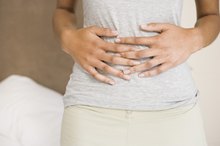
As a fibroid grows in size, it can cause the abdomen to bloat and become visibly swollen. The bloating can cause a sensation of fullness in the abdomen and increased pressure on the pelvis. Other symptoms of fibroids include:
- heavy periods
- prolonged bleeding during menstruation
- frequent urination
- difficulty completely emptying the bladder
- constipation
- pain in the back
- according to MayoClinic.com
Treatment
Small fibroids do not usually require any treatment. If fibroids are small, they will be monitored regularly and treated only if they grow in size. If a fibroid causes a significant amount of pain, over-the-counter or prescription pain relievers may be used to reduce the severity of the pain. Low dose birth control pills may also be used to maintain hormonal balance and stop the growth of fibroids, according to Women’s Health. A medication called a gonadotropin releasing hormone agonist may be given to decrease the size of fibroids. If medications are ineffective or the symptoms of fibroids interfere with daily life, surgery may be needed.
A myomectomy is used to remove only the fibroids from the affected area of the uterus. If there are a large number of fibroids present, a hysterectomy, which is the removal of the entire uterus, may be necessary.
- Small fibroids do not usually require any treatment.
- If there are a large number of fibroids present, a hysterectomy, which is the removal of the entire uterus, may be necessary.
Related Articles

Signs of Fibroid Shrinkage
Learn More

Can Omega 3 Shrink Fibroids?
Learn More

Side Effects of Fibroids
Learn More
Should People With Fibroids Take Milk Thistle?
Learn More
Fibroids & Magnesium
Learn More
How to Shrink Fibroid Cysts Naturally
Learn More
Signs of Fibroid Degeneration
Learn More

Black Cohosh & Fibroids
Learn More
Flaxseed for Fibroids
Learn More

Inguinal Hernia Symptoms in Women
Learn More
References
- Medline Plus: Uterine Fibroids
- Merck Manual Consumer Version. Fibroids. Updated June 2019.
- Yang Y, He Y, Zeng Q, Li S. Association of body size and body fat distribution with uterine fibroids among Chinese women. J Womens Health (Larchmt). 2014;23(7):619-26. doi:10.1089/jwh.2013.4690.
- Merck Manual Consumer Version. Fibroids. Updated June 2019.
- Dalton-Brewer N. The Role of Complementary and Alternative Medicine for the Management of Fibroids and Associated Symptomatology. Curr Obstet Gynecol Rep. 2016;5:110-118. doi:10.1007/s13669-016-0156-0.
- Yang Y, He Y, Zeng Q, Li S. Association of body size and body fat distribution with uterine fibroids among Chinese women. J Womens Health (Larchmt). 2014;23(7):619-26. doi:10.1089/jwh.2013.4690.
- Roshdy E, Rajaratnam V, Maitra S, Sabry M, Allah AS, Al-hendy A. Treatment of symptomatic uterine fibroids with green tea extract: a pilot randomized controlled clinical study. Int J Womens Health. 2013;5:477-86. doi:10.2147/IJWH.S41021.
- Liu T, Yu J, Kuang W, et al. Acupuncture for uterine fibroids: Protocol for a systematic review of randomized controlled trials. Medicine (Baltimore). 2019;98(8):e14631. doi:10.1097/MD.0000000000014631.
Writer Bio
Lindsay Boyers has a Bachelor of Science in nutrition from Framingham State College and a certificate in holistic nutrition from the American College of Healthcare Sciences. She is also a licensed aesthetician with advanced training in skincare and makeup. She plans to continue on with her education, complete a master's degree program in nutrition and, ultimately, become a registered dietitian.