
You'd be forgiven if pH levels were something you learned about in chemistry class and then promptly forgot. But unlike the inner workings of a frog (anyone else dissect amphibians in anatomy class?), this is one high school factoid that actually applies to your everyday life.
Your body pH — a measure of acidity or alkalinity — plays a critical role in your health. Indeed, if your body's acid-base balance is outside of the normal pH range (that's 7.35 to 7.45, for the record), it can be life-threatening, since it can negatively affect your vital organs.
Video of the Day
Video of the Day
The lungs, kidneys and buffering systems in the body all work to tightly control your body's pH, but what you eat may also influence your levels. That's where an alkaline diet comes in.
What Is the Alkaline Diet Plan?
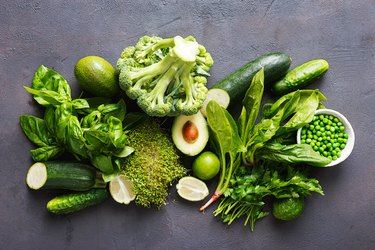
In a nutshell, an alkaline diet plan pushes fruits and vegetables and restricts meats, dairy, grains and processed foods. Although the majority of fruits and vegetables are acidic — with a pH below 7 — these foods promote alkalinity in the body after digestion, as measured by changes in the urine. Meats, dairy foods, grains and processed foods promote higher acid levels in the urine.
"The premise is that an acidic diet is harder on maintaining body balance, and that eating more alkaline foods will improve overall health by decreasing inflammation, recharging one's immune system (not boosting) and possibly aiding in weight management," Nancy Farrell Allen, RDN, FAND, spokesperson for the Academy of Nutrition and Dietetics, tells LIVESTRONG.com.
The alkaline diet is also touted to help with bone health and reduce cancer risk.
Related Reading
Foods to Eat on an Alkaline Diet
The main focus of an alkaline diet is fruits and vegetables, ensuring at least 80 percent of your food choices are alkaline forming, according to a report in Today's Dietitian.
In summary, these are the alkaline-promoting foods to emphasize:
- Most fruits and vegetables
- Nuts and seeds
- Healthy oils such as avocado or olive oil
- Tofu, soybeans, beans
- Herbal and green teas
- Water
Foods to Limit or Avoid on an Alkaline Diet
- Dairy foods, such as milk, yogurt, cheese and eggs
- Meat, pork, fish and chicken
- Processed foods, like canned and packaged snacks, frozen meals and other convenience foods
- Refined grains, such as white bread, white rice and white-flour tortillas (grains are only slightly acid-forming, according to the Today's Dietitian report, so it's best to choose whole grains — whole-wheat bread, corn tortillas, brown rice — when consuming these foods)
- Alcohol and caffeine
- Sugar-sweetened beverages
- Candy and desserts
Related Reading
Pros of the Diet
1. It's Similar to a Plant-Based Diet, Which Has Proven Health Benefits
"An alkaline diet can be equated with a strict vegetarian meal pattern. A plant-based eating style is supported by research in decreasing risk for several health conditions, such as heart disease and some cancers, as well as improving bone health, controlling blood sugar levels and managing body weight," Farrell Allen says.
In fact, the most commonly-recommended food patterns in the U.S. include more alkaline-promoting foods — notably, the Mediterranean diet and the DASH diet, according to a May 2017 article in Today's Dietitian.
2. It Might Lower Your Risk of Kidney Disease
In addition, a higher protein intake has long been suspected to increase the risk of chronic kidney disease (CKD), and the diets commonly recommended to manage this condition contain less meat, chicken and fish and more plant-based foods, including fruits and vegetables.
While the benefits of these diets are probably not solely related to the increase in alkaline-promoting foods, eating more fruits and vegetables and less animal-based protein is considered a healthy diet change, according to the U.S. Department of Health & Human Services.
Cons of the Diet
1. It's Very Restrictive
Depending on your food selections and the variety of foods you eat, this diet can lead to a lack of essential vitamins and minerals as well as insufficient calorie and protein intake. Plus, the diet is so restrictive that many people may find it challenging to follow in the long term.
2. There's Not Much Research to Support It
Following such a restrictive diet when the science is unreliable may not be the best plan for your health.
Does the Alkaline Diet Live Up to the Claims?
Despite the health claims, the pH of the human blood is tightly regulated by the body, and how you eat doesn't change your blood pH.
Urine pH can be affected some by diet, according to Mayo Clinic Laboratories, as vegetarians have more alkaline urine and heavy meat eaters can have more acidic urine.
However, more research is needed on the heath impacts of this diet, according to a 2012 report published in the Journal of Environmental and Public Health. Farrell Allen concurs, "While the alkaline diet is promoted, there is little research to support or negate its health benefits."
Specific to the diet's common health claims about cancer and bone health, a review published in the June 2016 issue of BMJ Open found one quality study that showed no association between an alkaline diet and cancer risk. In addition, the researchers found no studies that actually investigated the alkaline diet for the treatment of cancer.
Research also doesn't conclusively link an alkaline diet to improved bone health, according to an April 2018 report in Nutrients.
So, Should You Try It?
Whether or not you try the alkaline diet depends on your personal health situation —and expectations. Remember, this diet will not change your blood pH but can slightly alter your urine pH. Whether eating to create a more alkaline urine will improve your health is still unclear.
If you are in good health and are not under a doctor's care for any health conditions, you could give it a try — provided you take steps to balance the diet more. Include some lean chicken or fish unless you are planning to consume plant proteins only, add some whole grains at least a few times each day and add some milk, yogurt or plant-based milks.
If you have a medical condition, it's best to talk to your doctor first. Explain what you plan to do and your doctor can give you feedback if the diet is safe for you to follow. Depending on your health condition, your doctor may refer you to a dietitian for a personalized and evidence-based food plan that's designed to help your health.
- Journal of Environmental and Public Health: "The Alkaline Diet: Is There Evidence That an Alkaline pH Diet Benefits Health?"
- Merck Manual Consumer Edition: "Overview of Acid-Base Balance"
- International Food Information Council Foundation: "A “Basic” Examination of the Alkaline Diet"
- BMJ Open: "Systematic Review of the Association Between Dietary Acid Load, Alkaline Water and Cancer"
- British Journal of Nutrition: "Urine pH is an Indicator of Dietary Acid-Base Load, Fruit and Vegetables and Meat Intakes: Results From the European Prospective Investigation into Cancer and Nutrition (EPIC)-Norfolk Population Study"
- Mayo Clinic Laboratories: "Test Catalog: pH, Random, Urine"
- Nutrients: "Acid Balance, Dietary Acid Load, and Bone Effects—A Controversial Subject"
- Today's Dietitian: "Ask the Expert"
- Today's Dietitian: "Chronic Kidney Disease Prevention — Part One in a Two-Part Series"
- U.S. Department of Health and Human Services: "How to Eat Healthy"