What does fact checked mean?
At Healthfully, we strive to deliver objective content that is accurate and up-to-date. Our team periodically reviews articles in order to ensure content quality. The sources cited below consist of evidence from peer-reviewed journals, prominent medical organizations, academic associations, and government data.
The information contained on this site is for informational purposes only, and should not be used as a substitute for the advice of a professional health care provider. Please check with the appropriate physician regarding health questions and concerns. Although we strive to deliver accurate and up-to-date information, no guarantee to that effect is made.
Allicin Garlic Side Effects
Allicin, a medicinal extract of garlic bulb, shows tremendous promise as a treatment for several forms of cardiovascular disease 1. Medline Plus, a service of the U.S. National Institutes of Health, states that scientists have found good clinical evidence to support garlic's traditional use as a cholesterol-lowering supplement; other uses include the treatment of hypertension, blood pressure and atherosclerosis 1. Unfortunately, like all supplements, allicin garlic extract is associated with some side effects 1. While most of these complications are mild, others may cause users to stop taking these health-boosting supplements.
If you are experiencing serious medical symptoms, seek emergency treatment immediately.
Halitosis
Garlic is notorious for causing halitosis, or bad breath 1. The sulfur-based medicinal compounds in garlic bulb can coat the saliva, teeth, gums and oral tissues, leading to an unpleasant odor 1. Some people taking garlic also report an unpleasant taste or reflux 1.
Body Odor
Garlic for High Triglycerides
Learn More
Because the sulfuric compounds in garlic distribute throughout the body, garlic odors may emanate from the sweat glands and soft tissues 1. This complication is most common at higher doses.
Allergic Reaction
According to the National Centers for Complementary and Alternative Medicine (NCCAM), allergic reactions are among the most common side effects associated with garlic 1. Symptoms of a garlic allergy are similar to other food allergies and include hives, rash, wheezing, vomiting and diarrhea 1. People with a known allergy to the garlic plant should avoid allicin supplements 1.
Anticoagulant Effects
Herbs for Toenail Fungus
Learn More
NCCAM warns that garlic has a mild anticoagulant (blood-thinning) effect 1. The organization recommends that users stop supplementing with garlic one week before surgery or dental work 1. People with bleeding disorders like von Willebrand disease or hemophilia should use garlic supplements with caution 1.
Drug Interactions
According to NCCAM, garlic is known to interact negatively with saquinavir, a drug used in the treatment of HIV and AIDS 1. In theory, garlic may also interact with warfarin and other blood thinners; people taking anticoagulant drugs should avoid garlic supplements unless they have consulted an experienced practitioner 1.
Related Articles
Garlic for High Triglycerides
Learn More
Herbs for Toenail Fungus
Learn More
Garlic Treatment for Warts
Learn More
Benefits & Side Effects of Garlic Leaves
Learn More
Garlic for Herpes
Learn More
Garlic for Chest Congestion
Learn More
Can Too Much Garlic Cause Lips to Swell?
Learn More
Can Garlic Lower Blood Sugar?
Learn More
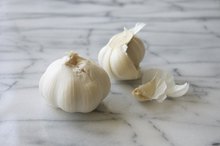
Side Effects of Kyolic Garlic
Learn More
Clove of Garlic for Bacterial Vaginosis
Learn More
References
- NCCAM: Garlic
- Bayan L, Koulivand PH, Gorji A. Garlic: a review of potential therapeutic effects. Avicenna J Phytomed. 2014;4(1):1-14.
- Garlic. National Center for Complementary and Integrative Health
- Garlic. Penn State Hershey. Milton. S. Hershey Medical Center.
- Garlic. Herbal Safety. UT El Paso / Austin Cooperative Pharmacy Program & Paso del Norte Health Foundation.
- Garlic. Therapeutic Research Center. Natural Medicines Database.
- Garlic. National Institutes of Health National Center for Complementary and Integrative Health.
- Garlic. Memorial Sloan Kettering Cancer Center. About Herbs, Botanicals, and Other Products.
- Garlic. Michigan Medicine. University of Michigan.
Writer Bio
Juniper Russo, an eclectic autodidact, has been writing professionally since 2008. Her work has appeared in several online and print-based publications, including Animal Wellness. Russo regularly publishes health-related content and advocates an evidence-based, naturopathic approach to health care.